The PGA-PIF partnership will have wide-ranging implications for golf on TV.
Nearly a week removed from the monumental announcement that the PGA Tour and DP World Tour would partner with the Public Investment Fund of Saudi Arabia to create a global professional golf behemoth, there is still little in the way of details regarding how it will all work.
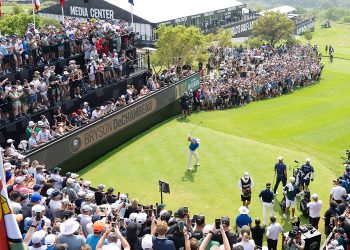
Sunday, the golf world was treated to a poignant reminder about why we care about any of this in the first place, when Canadian golfer Nick Taylor rolled in a 72-foot bomb for eagle on the fourth playoff hole to win his country’s national championship. And if we needed more reminder? The circus makes its way to Los Angeles Country Club this week for the U.S. Open.
There are plenty of media implications that will play out over the course of the next few months as the PGA-PIF superleague hammers down the format and schedule for the upcoming season. Let’s go over a little of what we know now, a lot of what we don’t know, and what we can expect prior to next season.
What we know
Back in 2020, as rumors of Saudi Arabian interest in professional golf bubbled, but before LIV Golf came on the scene, the PGA Tour struck a new set of rights deals with three domestic broadcast partners: CBS, NBC, and ESPN. The deals run from 2022 through 2030 and are worth in the neighborhood of $700m annually. All three broadcast partners were seemingly kept in the dark about a partnership between the PGA Tour and the PIF.
Prior to their second season in 2023, LIV Golf agreed to a broadcast deal with Nexstar Media Group to air tournaments on The CW. Financial terms of this agreement are sparse, but we know it involves some sort of revenue sharing between LIV and Nexstar. It’s expected that the remainder of the current LIV Golf season will air on The CW as planned.
Important to note as well are the broadcast agreements for the four majors, who operate independently from the PGA Tour and have largely stayed above the fray during the drama between the PGA Tour and LIV Golf. NBC holds broadcast rights to the U.S. Open and The Open Championship through 2027 and 2029 respectively. CBS and ESPN hold PGA Championship rights through 2030 as well as broadcast rights to The Masters; although that is technically renewed on a year-by-year basis, CBS has broadcast the tournament since 1956. These deals likely will not be impacted by the ongoing changes in professional golf.
What we don’t know
Despite the PGA Tour holding broadcast agreements through 2030, these deals will likely be renegotiated. It’s typical for these types of contracts to contain trigger clauses that open negotiating windows early should a considerable event like the PGA-PIF partnership occur. This is similar to how conference realignment in college football has recently led to new television deals.
The question surrounding what a new set of deals would look like will be dependent on the inventory being offered. The biggest unknown of this new partnership will be the schedule. The ongoing PGA Tour season is the first of a reformatted structure designed to place the league’s top golfers in the same fields at “designated” events. The upcoming fall “swing season” is the first designed to place Tour players that missed the FedEx Cup Playoffs against players looking to earn full status on the PGA Tour.
It’s difficult to assess just how similar a new schedule will look to this current format, but it’s safe to say that decision makers for the new joint tour will take a holistic view of the schedule, not beholden to the old calendar. Realistically, the PGA Tour had a lot of mouths to feed pre-PIF partnership. The Tour hosted 44 regular season events and 3 events comprising the FedEx Cup Playoffs, each with its own title sponsor and unique agreements with the Tour. With the move to the designated event structure, a select few sponsors were treated to elite fields full of the top players, but the vast majority were stuck fighting the perception that they were a second-tier event. Now, with the financial backing of the PIF, the new tour will not be as reliant on sponsors, and could potentially trim the schedule to create something more coherent for players and fans alike.
Another question mark revolves around whether LIV Golf will remain in some capacity under the new joint tour. Last week’s press release stated the intention to keep some element of team golf under the new partnership, but it’s unclear if that will include the LIV branding. If so, questions will be raised as to whether The CW will continue to hold broadcast rights to these events. It seems far-fetched that any golf tournaments of consequence would air on the channel, but at the very least one would expect Nexstar to lay claim to the inventory.
What to expect
With new broadcast negotiations likely on the horizon, we’ll surely hear how the reunification of golf’s top talent will produce a better product on the course, which would translate to higher viewership and more value for television partners and sponsors. To what extent this is true is unclear. But it’s fair to say that the PGA Tour’s television partners likely feel a bit burned by all of this. PGA Tour commissioner Jay Monahan expended a lot of goodwill the Tour had built up with the networks over the years by agreeing to this partnership behind their backs. Now, if he expects to take a seat at the negotiating table and ask these same partners for more money, he might be met with more pushback than he expects — even if the product truly is more valuable.
But in all likelihood, a marginal increase in television revenue for the new golf tour won’t be anything that will impact the bottom line. Saudi Arabia and the PIF made their intentions very clear through the nature in which they operated LIV Golf, and their willingness to partner with the PGA Tour. More than anything, Saudi Arabia desires influence over professional golf, and will pay exorbitant amounts of money for that privilege. To them, the return on investment is not made in dollars but in the reputational benefits that come with association to a global sport like golf, played by the worlds rich and powerful.
The incentive structure for professional golf has been altered in a seismic way. Most professional sports leagues operate within a model that aligns fan satisfaction with financial incentives. If the fans are happy, more people will watch, go to games, buy merchandise, etc. That isn’t necessarily the case for golf anymore. While fans may initially benefit from a unified tour, what happens when Saudi Arabia wants something the fans don’t? If the massive contracts handed out to LIV golfers are any indication, the financial backing of the PIF will far outweigh any revenue gained from television partners and sponsors. It’s clear what side the new tour would come down on in that scenario.