Last night’s Mike Tyson–Jake Paul superstar boxing event on Netflix was marred with technical issues that left many viewers unable to access the stream at all. If Netflix can’t commit to addressing and correcting those issues, is their future as a major player in the live sports marketplace down for the count?
Technical difficulties will never be completely eliminated. It is an incredible feat requiring coordination across hundreds of personnel to pull off an event like last night. But when given a shot on the biggest stage, Netflix fell flat. Regardless of which party was actually responsible for the issues, the Netflix brand was all over this event, and the reputational hit was immediate. Social media users were quick to respond and suggest Netflix is not ready for major events like this.
This is not the first time Netflix has encountered technical difficulties with a live event. Last March, the streamer presented a live finale to season 4 of its popular reality show “Love Is Blind”, which also encountered technical difficulties.
Fans resorted to other means to catch the action. At one point before the main event, at least 1.4 million viewers were watching an unauthorized stream on Twitter from former NFL WR Antonio Brown‘s phone, who was in an upper-level suite at AT&T Stadium.
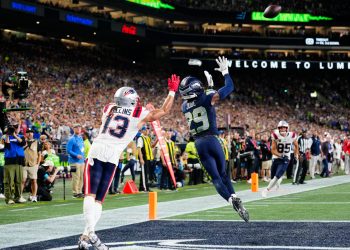
But if this fight was the undercard, the main event will be on December 25, when Netflix will televise two NFL games, both involving AFC playoff contenders. If the same issues are present during those games, that may very well spell the end of Netflix’s run with major live sports. CBS Sports will produce the games, but it will be Netflix’s servers that will have to handle the traffic.
Tech companies have signaled willingness to put up large sums of cash for streaming rights to major sports events, but if the infrastructure isn’t ready, the frustration felt by fans may cause more harm than good. Amazon, on the other hand, regularly handles audiences exceeding 10 million for its Thursday Night Football coverage, although that may be well short of last night’s audience.
Netflix was the first major player in the streaming space, and still dominates the monthly streaming viewership thanks to its popular original series and enormous library of content. Its premium content was principally responsible for the start of the cord-cutting trend more than a decade ago. Now, the cable industry is on the brink of collapse, and all sports fans will be left with are internet companies whose record with major live events is somewhat hit-or-miss. The streaming era was initially heralded as a win for consumers, who could finally break the chains of the monopolistic cable contracts. Sports fans today are longing for the reliable technology and convenience that put all of their favorite sports in one place.
Perhaps no moment encapsulated the event better than when Dallas Cowboys owner Jerry Jones was interviewed, who said that the Netflix was absolutely a part of the NFL’s future into a mic that didn’t work, moments before the stream went down.
If Netflix is to succeed in the live sports marketplace, addressing these issues will be critical. The company will begin televising WWE’s “Raw” series in January, which will give them plenty of time to refine the product with a smaller audience. Previous reporting has indicated UFC may be interested in a partial deal with Netflix in its next cycle, although those hopes may have taken a major blow last night.