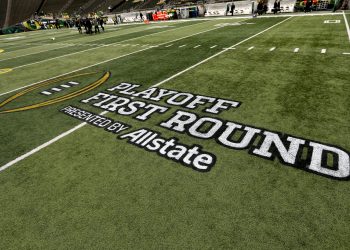
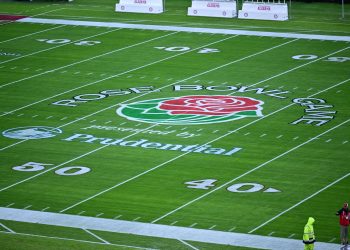
“We need to change the calendar,” ESPN analyst and former Alabama coach Nick Saban said from his “College Gameday” perch on a rainy New Year’s Day morning at the Rose Bowl. “If we’re going to change things in college football, we’ve got to get Congress to have some kind of antitrust legislation, because the NCAA can’t enforce their own rules … that’s how we got where we are right now.”
While Saban’s comments were mostly pointed at the issues surrounding the transfer portal as it relates to coaching changes, the structure of the college football season has been a contentious topic for years. The idea that after Rose Bowl the season is still 18 days away from its conclusion may seem unthinkable to those who grew up accustomed to the national title being awarded in the first week of the new year.
The current state of college football has prompted a wide variety of proposals from coaches, media members, and fans. “We can’t serve the purpose of bowl season and do a playoff at the same time,” said Fox Sports analyst Joel Klatt on his podcast this week. “We should play the playoffs through December, and we should be ending by January 1st. We should be ending with the Rose Bowl; that should be the tentpole event for college football. Everybody that has made the decisions necessary to create what he have right now, they have made the wrong decisions, almost every single turn.”
While Klatt’s sentiment is a popular one, it’s easy to blame “everybody” without considering who “everybody” is. Playing multiple rounds of playoff games on college campuses or backing up the first round sounds enticing, but these universities are generally not equipped to hold on-campus mega-events with less than a week’s notice in the middle of December. One of the CFP’s issues is finding satisfactory television windows for playoff games that extend into mid-January, where the weekends have been the territory of the NFL playoffs for decades. The result is that the final three games of the tournament this year and last year are played on weeknights, hardly characteristic of a sport so closely tied to Saturdays. Returning to Saban’s claim that the NCAA can’t enforce it’s own rules, it seems that a lack of leadership in the sport is responsible for the current state of college football.
The response to this void was the formation of the College Sports Commission last year, an attempt to create a new governing body to address some of the concerns around athlete compensation and revenue sharing. The CSC sent participation agreements to all 68 Power Four schools in November, promising oversight in exchange for waiving schools’ right to legal action, a proposal that was quickly rebuffed by state attorneys general, leaving the CSC without any real enforcement mechanism.
So if the NCAA is handicapped, and the CSC is meaningless, then what of Saban’s suggestion to invoke congressional involvement? After all, it is only by a 1961 act of Congress that college football’s whole season has not been steamrolled by its professional counterpart. Two pieces of legislation exist with very different approaches to resolve the stalemate. The first is the SCORE Act, which provides the NCAA with legal protection and addresses athlete compensation but specifically prohibits college athletes from being classified as employees, limiting their ability to collectively bargain. The bill received bipartisan support, was backed by major conferences, and received heavy promotion on major networks during CFB games this fall, but was pulled before a vote last month.
The second is the College Athletics Reform Act, which includes more athletes’ rights provisions, and was endorsed by the players associations of the NFL, MLB, NBA, NHL, and MLS. The proposal also calls to amend the 1961 Sports Broadcasting Act to include protections for college sports, a move that Texas Tech booster Cody Campbell has called for publicly.
The amendment would provide an antitrust exemption for any group of 136 or more schools that pool their media rights. The large number of requisite members ensures that the antitrust exemption can’t just be applied to any one conference or just the Power Four schools, it would have to be all 136 FBS schools. Campbell and others have argued that this would vastly increase revenue for all schools, a claim with some key questions worth examination: When would a new pooled contract go into effect, given that all the conferences have current contracts with varying end dates? How would game selection and scheduling be coordinated between nine conferences and multiple networks? How would the revenue be distributed across member schools? Surely SEC and Big Ten schools would not be content to receive equal media rights revenue as Sun Belt and MAC schools? And would the networks really pay more for a pooled contract, or would networks like NBC and CBS decide they’d rather be out of the college sports business altogether?
Both pieces of legislation introduce sweeping reforms in exchange for antitrust protection, but both have key issues that may make them untenable. Back on the GameDay set in Pasadena, both Kirk Herbstreit and Pat McAfee seemed to be calling for the creation of some sort of all-powerful college football executive role to be filled by Saban, a suggestion that ignores the myriad competing interests and legal issues any governing body would face. For now, road to college football reform seems to be a long one, with the weak NCAA and the weak College Football Playoff appear to be headed for a continuance of the status quo.