The consensus among sports media observers is that NBC made the perfect choice when it named Jason Benetti its lead MLB play-by-play voice. Just weeks into the role, Benetti is receiving regular acclaim for his work in the “Sunday Night Baseball” booth.
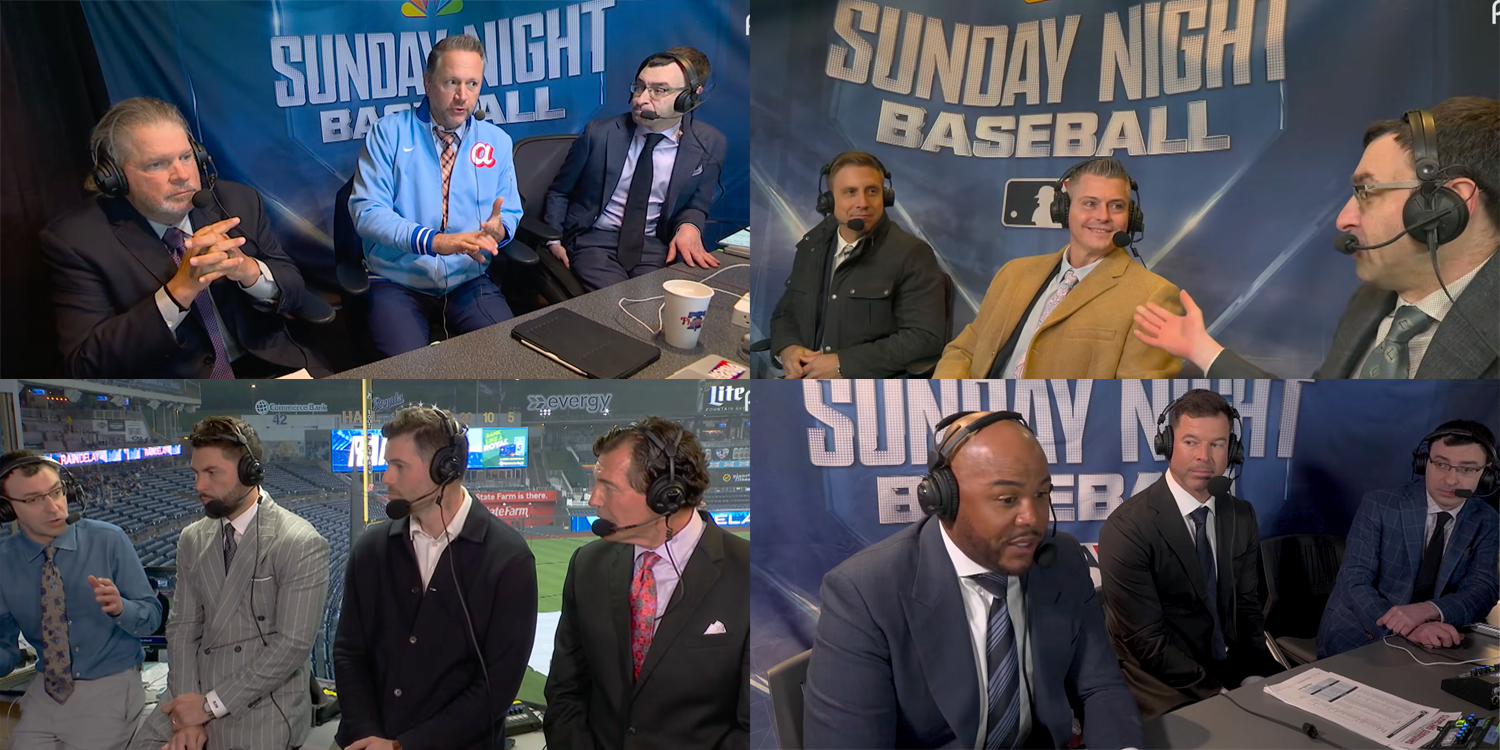
What makes his performance particularly noteworthy is NBC’s unique approach to its production. Each week, Benetti is paired with analysts who have “connections to each participating team,” as NBC returns to a tactic the company employed back in 2022, when Peacock aired its “MLB Sunday Leadoff” games.
According to a recent column from Sports Business Journal’s Richard Deitsch, Benetti learns who his partners will be just a couple weeks before a game. So far, the results have been mixed.
NBC’s first primetime broadcast of the season, a contest between NL West rivals Arizona and the LA Dodgers, was well-received. Benetti worked with former Diamondbacks hero Luis Gonzalez and Dodgers legend Orel Hershiser. As he has been for the last two decades, Hershiser was a bright spot. Before becoming an analyst for the Dodgers on SportsNet LA in 2014, Hershiser was one of ESPN’s most prominent baseball voices, working the World Series on ESPN Radio, as well as “Sunday Night Baseball,” Little League Baseball and the College World Series for ESPN television.
When NBC has used experienced television personalities, the broadcasts have been solid. While Benetti said in the SBJ column that NBC’s unconventional strategy places no pressure on him, it is hard to deny the lift a broadcast receives when game callers understand their roles.
The opposite is also true. Certain broadcasts — and Benetti’s exquisite play-by-play — have been dragged down by unseasoned analysts who have not worked in television long enough to master the mechanics.
Look no further than last month’s broadcast of Guardians vs. Braves. Two-time Cy Young Winner Corey Kluber (Guardians) and newly elected Hall-of-Famer Andruw Jones (Braves) joined Benetti in the booth. The former players are highly respected within the organizations they represent but with little combined on-air experience, the broadcast was doomed from the start. During the open, it seemed neither analyst knew when to look at the camera and when to look at his boothmates. The awkward tension continued through the broadcast, forcing Benetti to abandon traditional play-by-play and serve as more of a host, cleverly eliciting any commentary he could from his painfully inexperienced boothmates.
Sports television producers are always looking for a way to place a unique stamp on a broadcast, but it would best serve fans if NBC — and other networks — abandoned this particular method.
As difficult as it is to admit, there are not many top-tier analysts in baseball. Fans may grouse on social media during his broadcasts, but there is a noticeable difference in the depth of John Smoltz’s analysis vs. many of the other commentators in the sport.
David Cone, Jeff Francoeur, Ron Darling, Tom Verducci and Adam Wainwright join Smoltz near the top of the heap, but on the whole, there is a dearth of quality baseball voices. That is especially the case at the local level.
Consider the reasons the New York Mets television crew of Gary Cohen, Darling and Keith Hernandez have received such widespread praise for so many years. Cohen’s spirited play-by-play, along with Darling’s incisive analysis and Hernandez’s eccentricities have made the booth one of the best in sports television. But those booths are hard to find, nationally or locally.
Given the prestige of “Sunday Night Baseball,” fans should watch a broadcast that elevates the viewing experience. Benetti is more than capable of that; he needs and deserves an analyst who can match his excellence.
Fans like to hear voices, nationally or locally, they feel have an emotional investment in the teams for which they cheer. But the decisions of network executives should be driven by the talent and the quality of the commentators, rather than a need to have voices who represent the teams involved.
Plus: The clear line between content creation and journalism
For the last month, sports media figures have offered their takes on the Dianna Russini-Mike Vrabel scandal. What began as a juicy social media-driven microdrama eventually turned into a legitimate news story. Russini resigned from The Athletic and Vrabel, the head coach of the AFC champion New England Patriots, stepped away from part of last weekend’s NFL Draft to seek counseling.
As one would expect, the suggestive headlines have opened Pandora’s Box, providing nonstop fodder for anyone with a platform.
Numerous personalities, including former players and columnists who now host their own podcasts and run their own YouTube channels, have jumped into the conversation. Some have poked fun, while others have used the situation to address what they feel are broader societal issues.
Given their followings, it can be easy to forget that, often, these commentators have little to no knowledge of the situations about which they speak. When they voice an opinion, it is usually little more than conjecture, gossip or an attempt at increasing their subscriber base. Sometimes, that thirst for clicks can yield disastrous results.
Like last year, when ESPN host Pat McAfee amplified a salacious rumor about an Ole Miss student and her boyfriend’s father.
The unsubstantiated claim spread on a message-based app called YikYak, then gained momentum on X. By mentioning it on his show, McAfee added kindling to a blazing fire of untruth, damaging a young student’s life and sullying her reputation in the name of content.
Stories like that student as well as the Russini-Vrabel controversy are reminders that, while content creation gets people talking, the real work is in the reporting done by respected journalists — people like ESPN’s Ben Strauss, who reached out to Russini, Vrabel and the Patriots. Through the reporting of ESPN’s Mike Reiss, we learned that Vrabel would be stepping away from the draft to seek counseling. Those details — while not nearly as provocative as claims made by others — help add true substance for viewers.
In a perfect world, truth would always be the driving force behind any content that is created — especially when scandal is involved — but the world is not perfect. And content creation is easy and cheap. It can always be presented as harmless fun or “giving the people what they want.” Most of the people who address sports media hot topics are not journalists. Their detachment from the facts allows them to create narratives and belabor them.
Meanwhile, journalists talk to the necessary subjects, and if they don’t get to those directly involved, they speak to those with knowledge of the story. As they gather facts, they carefully add context to frame a story fairly and bring light, not heat.
The last few years have made it clear that there is room for content creators in sports media. At the same time, what should become increasingly clear is that the primary job of those content producers is to get the attention of the viewer, not hold themselves to a journalistic standard.