The Kentucky Derby generated one of its largest audiences in the past three decades for one of the most stunning upsets in the history of the race.
The race portion of Saturday’s Kentucky Derby averaged a 7.7 rating and 15.79 million viewers on NBC, marking the highest rating and viewership for the event in three years (2019: 9.4, 16.34M), the second-largest audience for the race in the past five years, and the seventh-largest audience since 1989. Including additional streaming data not tracked by Nielsen (247K across Peacock and other NBC platforms), the race averaged 16.0 million.
Ratings increased 8% and viewership 7% from last year (7.1, 14.7M), with the across-all-platforms viewership up 8% (from 14.9M).
The impact of out-of-home viewing is clear from the disparity between the household rating and viewership. The 7.7 rating for Saturday’s race tops only the past two years as the lowest for the Derby since 2004 (7.6), despite an audience that ranks among the highest for the race in the past three decades. Just four years ago, Justify’s Derby win was nearly a full ratings point higher (8.5) with nearly a million fewer viewers (14.88M).
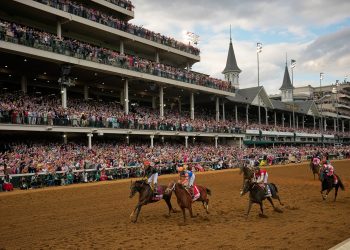
Viewership peaked with 19.0 million viewers from 7-7:15 PM ET, moments after 80-1 longshot Rich Strike stunned the field with a come-from-behind win. NBC says that is the largest peak audience for the race since 2017, surpassing the peak of 18.5 million for the post-race disqualification of Maximum Security three years ago. The viral overhead angle of Rich Strike’s victory has generated more views — nearly 40 million — than any Kentucky Derby video posted to NBC’s social media platforms.
Excluding football and the Olympics, this year’s Derby ranks as the fourth-most watched sportscast since the wave of cancellations and postponements that decimated the industry two years ago. It trails three NCAA men’s Final Four games: North Carolina-Duke (17.66M) and Kansas-North Carolina (17.05M) this year and Baylor-Gonzaga last year (17.08M).
Louisville led all markets Saturday with a 28.5 rating and a whopping 63 share, meaning that 63% of televisions in use were tuned to the race. That compares to a 28.7/59 last year. Ft. Myers, Fla., ranked second at an 18.7/41 (up from an 18.2/36), followed by Cincinnati (16.2/45) and West Palm Beach (14.3/36). Baltimore and Buffalo tied at an 11.5, with the former averaging a 33 share and the latter a 29.
Saturday’s race portion averaged a 2.5 rating in adults 18-49, a 1.7 in 18-34 and a 3.3 in 25-54.
Largest Kentucky Derby audiences