Following last week’s news that ESPN and Major League Baseball are mutually parting ways, ending a 35-year relationship, it’s worth examining the network’s approach to sports rights, its changing distribution methods, and what it all means for the future of the network.
ESPN’s business model has changed drastically even in the last fifteen years. Filling programming hours has to be a priority for a linear cable network, let alone a company that operates six cable networks. That can explain why ESPN’s history is so deeply rooted in college sports, which supply thousands of hours of content annually on a nearly year-round basis. A seven-figure audience is exceedingly rare on ESPNU, but that didn’t matter as long as the transmission fees kept flowing for ESPN. Once the cord-cutting trend began, ESPN knew it had to find an alternate distribution plan.
When the sports streaming boom exploded in the late 2010s, companies rushed to sign deals that would continually provide massive amounts of content. Paramount+ launched headfirst into international soccer, while Peacock focused on Olympic sports. ESPN+, which was launched in 2018, found its niche in airing college sports, mostly large schedules from mid-major conferences with low production costs. ESPN+ also has its own international soccer coverage, as well as supplemental golf coverage, pro lacrosse, and surfing. For a streamer, everything is content, and every content has fans.
While all of these sports have their consumers, it’s not “must-watch” content to a majority of general sports fans. Throughout ESPN+’s life, the company’s highest-profile content has remained on the cable networks. Moving top-tier content (NBA playoffs, college football) onto a lower-priced ESPN+ would further exacerbate the declining linear subscriber revenue figures. With costs still rising, ESPN is set to unveil its “Flagship” direct-to-consumer product this fall, which will offer all of ESPN’s content at a higher price, while attempting to retain as much of the cable money as they can.
One weakness of SVOD platforms is the ability for consumers to cancel their subscription at any time. In a cable bundle, a customer is not likely to cancel their entire video content package, so channels get their transmission fees whether the content is watched or not. A month-to-month streamer allows the customer to cancel their subscription for a time, and come back to it when there’s new content they want to watch. It’s imperative, therefore, that an ESPN platform provides “must-watch” events on a year-round basis.
ESPN pivoted to a more fiscally conservative approach in the early 2020s, focusing on just the most important events that will draw a steady audience. That has meant letting go of longstanding relationships with sports properties, including several just in recent weeks: Formula 1, Top Rank Boxing, and — at least as of now — Major League Baseball. The strategy means that ESPN needs exactly enough sports rights to maintain a “must-have” streamer among a customer’s options, but not anything else. It’s why they spent big to get the SEC game of the week on ABC, but have no issues sublicensing a package of Big 12 games back to TNT. It’s why ESPN executive Burke Magnus described the NBA Finals as a “must-have” for the company, even though they will air fewer overall NBA games in the next package. It’s why ESPN was never a serious contender for a Sunday afternoon NFL package, when one game a week is enough to keep fans subscribed.
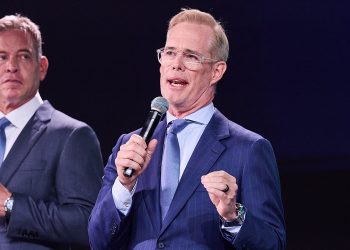
So what is actually important to ESPN? Above all else, football. ESPN has spent massively on its rights to NFL, SEC, CFP, and other college football rights. It also found the cash to bring big football personalities to the network, including Joe Buck and Troy Aikman for its game coverage, Pat McAfee and Jason Kelce for studio coverage, and supplementary content from Peyton Manning and Bill Belichick. ESPN’s improved relationship with the NFL has resulted in the last two years being the network’s two most watched seasons of Monday Night Football since it began airing the series in 2006. Disney is in a stronger financial position than Paramount and Fox when it comes time for the NFL’s expected renegotiation of rights before the 2030 season.
Beyond football, the NBA (and with it, the WNBA) is critical to the network. ESPN still has a wide portfolio of college sports, including most of the College Football Playoff and NCAA championships. The agreements with the NHL expire after the 2028 playoffs, and a renewal there will largely depend on what the NFL chooses to do. If ESPN does return to baseball coverage next year or in the distant future, it will be for a small piece of highly-valued inventory. The reality is ESPN is navigating a constantly changing distribution model, and, as any company is wont to do, must be selective about the price points at which it pays for sports rights.
ESPN’s strategy is perhaps similar to a larger trend among sports fans, who are becoming less interested in the day-to-day coverage of games, scores, and stats and more interested in personalities, high-stakes storylines, and championships. Fans that can see baseball highlights on every platform don’t need to sit and watch a full game on Sunday nights. This would explain ESPN’s heavy spending on high-profile studio personnel to create viral clips while turning down full-season rights to major sports. For now, it seems ESPN will settle for quality over quantity in selecting programming to compete for attention in the fractured video marketplace.