Welcome back to “On the Air,” in which Sports Media Watch Podcast co-host Armand Broady will offer in-depth breakdowns of broadcasters, on-air performance and career journeys, plus chronicle broader trends in the industry.
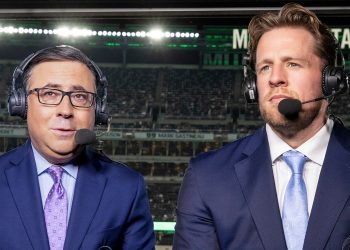
When CBS and TNT Sports removed Greg Anthony from their lead college basketball booth in the middle of the 2014-15 season, longtime play-by-play voice Jim Nantz was left without a partner. Who would fill the void? Steve Kerr, who had called the Final Four from 2011-14, was in his first season as head coach of the Golden State Warriors. Reggie Miller was one of TNT’s prominent NBA analysts and had joined the March Madness roster in 2011, but his calls during the tournament had made him a polarizing figure within the college basketball community. Would it be Clark Kellogg, who had called the Final Four for CBS from 2009-14, but was a more comfortable fit in studio?
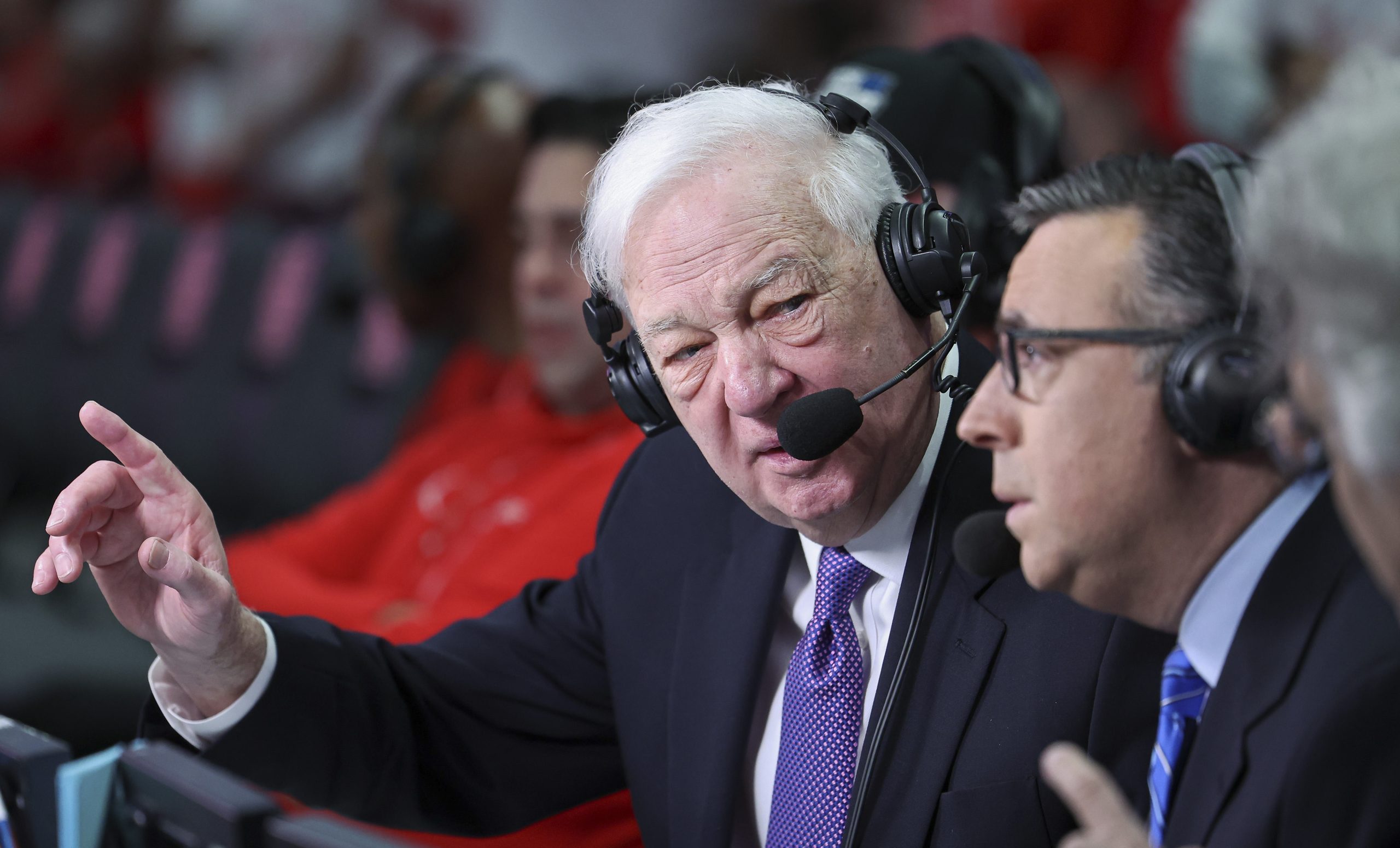
CBS and TNT Sports went another route. After more than 30 years in broadcasting, including 23 years of calling the Final Four on radio, Bill Raftery was finally named lead TV analyst for college basketball’s most prestigious event, sharing duties with TNT’s Grant Hill. Hill — a Naismith Hall of Famer remembered for his perfect pass to Duke teammate Christian Laettner in 1992 — brought instant name recognition and youthfulness, but Raftery was (and still is) the story.
Looking back, elevating Raftery was unquestionably the right call, but at the time, there were risks. Raftery was 71 when CBS and TNT Sports offered him the coveted role. How many commentators get a promotion at 71? By that age, most have plateaued, been demoted or retired. Eleven years after his ascension, Raftery is still at the top of the industry. In a few weeks, he’ll turn 83, a number contradicted by his playful enthusiasm and mental acuity.
“Man to man!” “With a kiss!” “A little nickel-dimer.” “A little lingerie on the deck!” “Get those puppies organized!” “ONIONS!” On the surface these catchphrases, delivered in Raftery’s distinctive voice and staccato speech pattern, are merely tools he uses to charm viewers, but dig deeper and one will learn that Raftery’s colorful lexicon is a tactic he employs to help him balance strong opinions and deep basketball insight with jovial television-appropriate entertainment.
This approach is much different from that of his former CBS colleague Billy Packer, who was often criticized for being grumpy and imperious, robbing college basketball broadcasts of their inherent joy. Packer, who died in 2023, called 34 straight Final Fours, from 1975 to 2008.
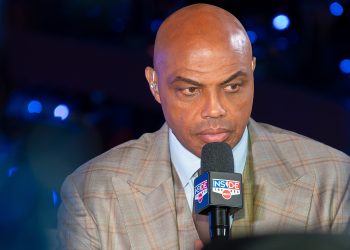
In 2011, three years after his final CBS broadcast, Packer criticized TNT for having NBA analysts like Charles Barkley and Kenny Smith cover the NCAA Tournament.
Barkley responded on air, “Hey Billy Packer, you might be right. We might not be very good at knowing all the players and all the teams on college basketball. But stop being a jack—.”
During an interview on SportsRadio 610 in Texas, Packer issued a challenge.
“I would have no problem debating Charles Barkley (on college basketball),” Packer said. “I have probably forgotten more about college basketball than Charles Barkley ever knew existed.”
That one exchange revealed why so many fans grew tired of Packer’s commentary. While no objective observer can deny his knowledge of the game, Packer often left one fundamental element out of his broadcasting: enjoyment. In a sport characterized by its pageantry and exuberance, Packer’s high-handed ill-temperedness wore thin.
Raftery, meanwhile, never treats the sport or a broadcast like his personal pulpit. He entertains without becoming self-involved; he criticizes without harshness; he educates without insulting.
As ESPN voice Sean McDonough said in a 2012 New York Post interview, “I always say if you don’t like Bill Raftery there’s something wrong with you because there’s nothing about him that’s not likable.”
His contemporaries certainly like him. Raftery has won the Sports Emmy for best event analyst four times.
Viewers like him. His partners — which include voices like Jay Bilas, Dan Shulman, Dave Pasch, Mike Tirico, Ian Eagle, Kevin Harlan, Spero Dedes, Jason Benetti and Gus Johnson — appear to adore him.
Put Bill Raftery on any basketball broadcast with just about any partner and the broadcast will shine.
When he joined Raftery and Nantz in 2015, Grant Hill felt like a third wheel. His commentary lacked the punch and depth of a lead analyst. At the time, Hill had a stronger connection to the NBA, having retired in 2013, less than two years before being named co-lead college analyst. He deferred to Raftery, who would cleverly offer quips and tee-up Hill to feed off his analysis. Raftery’s selflessness has helped turn Hill into a more confident broadcaster. In a few weeks, Hill and Raftery will call their 11th Final Four together, their third with play-by-play voice Ian Eagle.
Someday, a college basketball season will begin and end without Bill Raftery’s sparkling analysis. Until then, viewers will continue to listen closely and prepare to smile, as college basketball’s beloved commentator blends witty observations with astute insights.
Plus: John Wall’s Prime moment
After Thursday night, Amazon Prime Video studio analyst John Wall can lay claim to the title “ball knower.” During Prime’s postgame show “NBA Nightcap,” Wall played a game called ‘Where’d He Go to School?’ The faces of lesser-known NBA players flashed on the screen and Wall had to guess the college of each player. He got 16 of the 20 right, as host Taylor Rooks and analysts Dwyane Wade and Blake Griffin cheered him on.
The sharp distinction between the Prime Video segment and Inside the NBA’s ‘Who He Play For?’ is hard to miss. For more than 20 years, the Inside crew has poked fun at Charles Barkley’s inability to correctly match select NBA players with their current teams. Initially, ‘Who He Play For’ was another humorous bit of self-deprecation from Barkley and the TNT production crew. Over time, it revealed a refusal to attempt to learn more about rank-and-file NBA players.
Meanwhile, Wall’s clip has earned widespread praise from fans and media members. On Sunday, longtime NBA columnist David Aldridge called him “a basketball savant” in a social media post.
Consider the reason for the acclaim. For decades, NBA fans have been worn down by LeBron vs. Jordan debates, personal attacks on players, and “back in my day” arguments from former players who refuse to examine the game in its current form.
To know where NBA players like Daron Holmes, II, Jevon Carter, and Anthony Gill attended school, one must be driven by a sincere passion for the sport and the participants who compete in it.
What is perhaps most encouraging is the fact that Wall is not alone. The on-air performance of other young NBA broadcast talent like Griffin, Candace Parker and Udonis Haslem provides hope that professional basketball will be presented by commentators who can discuss the sport as it is, and don’t find the need to constantly discredit the game or compare it to previous eras.