Fox Sports on Thursday begins its sixth FIFA World Cup and third men’s edition of the tournament, but its first that takes place on home turf. Much of this year’s World Cup story is about expansion — three nations, 16 cities and 48 teams. That extends to the television coverage, which will include more than 70% of matches on the Fox broadcast network and a staff to match the size of the undertaking.
When Fox broadcast the World Cup from Qatar four years ago, its studio coverage primarily leaned on the perspectives of former American and English players. The company has made a concerted effort to compile a more diversified panel of voices. This began with the additions of former French star Thierry Henry and all-time Sweden leading goal scorer Zlatan Ibrahimović, both of whom are working as studio analysts throughout the tournament.
In the weeks leading up to group stage play, all-time Mexico leading goal scorer Javier “Chicarito” Hernández, former Dutch midfielder Clarence Seedorf and former Denmark goalkeeper Peter Schmeichel joined the studio coverage team. Fox Sports recently added three more former soccer stars to its slate of studio panelists in Nigeria defensive midfielder John Obi Mikel, Spain midfielder Thiago Alcântara and Colombia forward Juan Pablo Ángel.
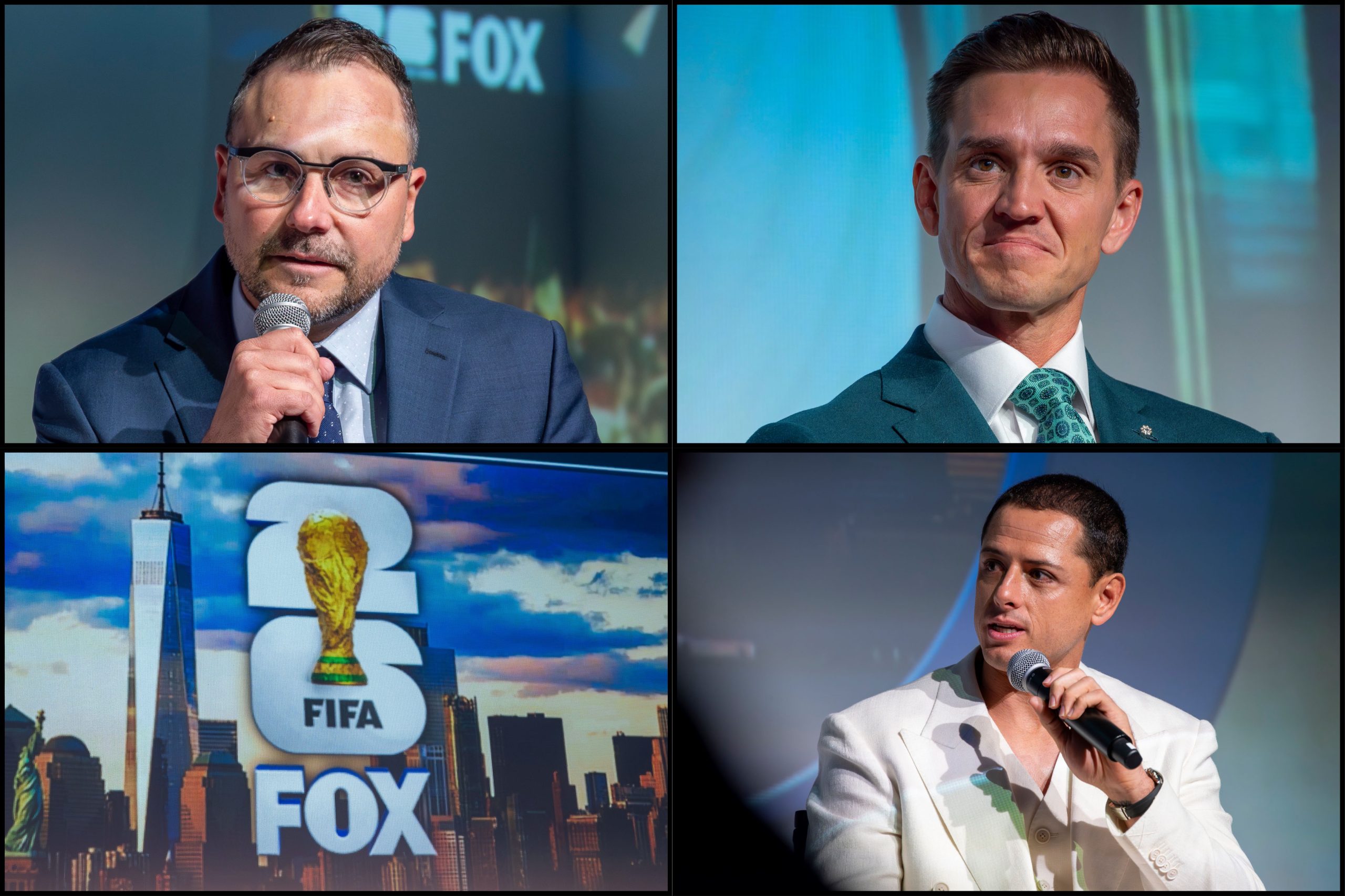
“[W]e knew we needed to cast a wide net, and we knew we needed to take some big swings,” Fox Sports VP/production Zac Kenworthy told reporters last month. “At Fox, we have some legends of the game who have played for the U.S. and U.S. women’s national teams, and we wanted to bring in a bit of international flavor.”
It will be the task of studio hosts Rob Stone and Rebecca Lowe — the latter on loan from NBC Sports — to integrate the expansive cast.
“It’s easy to get everybody involved, right?,” Stone said. “These are A-type personalities. They’re not wallflowers, they’re not going to be sitting on their hand, and I’m going to need to say, ‘Zlatan, your time to talk. Mr. Schmeichel, why don’t you speak on this?’ These are people who live and breathe this game and have for decades, and they understand how big this stage is for them as well as a broadcaster, so it’s going to be super easy to bring everybody in. In fact, I’m probably going to have to pull them back a little bit.”
“They’re so professional, and they’re so hard working,” added Lowe. “They will do their own prep, I don’t need to prep them. I just need to make sure the chemistry is right between us.”
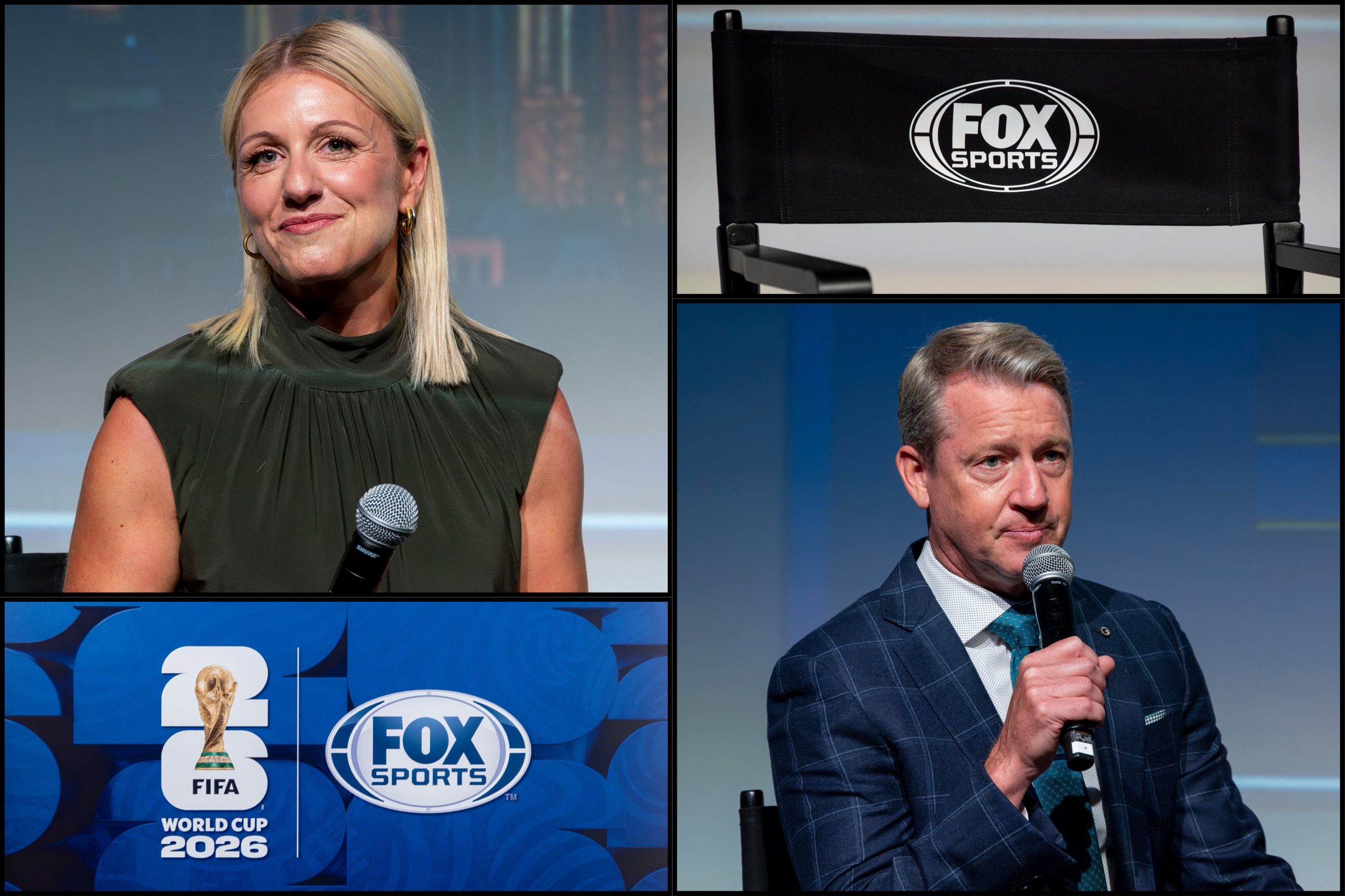
Lowe is participating on studio broadcasts throughout the tournament as part of a “summer transfer” from NBC Sports, where she normally works on Premier League broadcasts. Being able to work the tournament is something Lowe calls “a dream come true” and something she did not expect to happen. When Lowe received word from her agent that Fox Sports wanted her to be part of the broadcasts, she thought she was the subject of a prank.
“There was no way this is true, I’ve never seen that happen,” Lowe said. “It’s a dream because not only is it my biggest passion in life — soccer — but now I’m an American citizen, and I love this country so much. To be able to host my biggest passion in my home country is a dream.”
For their part, Stone and Lowe stressed the necessity of preparation, both for the matches themselves and the six-week grind.
“I get sent a lot of clips and articles about all the different countries, and then I have a way of working where — sue me — I do not use any screens or phones or iPads,” Lowe said. “I am old fashioned, I am pen and paper, so I already have a book and a pen, and I will distill everything I need to know into my book that will come everywhere with me all summer.”
“If you come into this tournament and your tank’s only at three quarters, you’re in trouble,” Stone said. “Your tank needs to be way above that F-line, and you need to be full and ready to go. You also need to be able to pivot on a moment’s notice.”
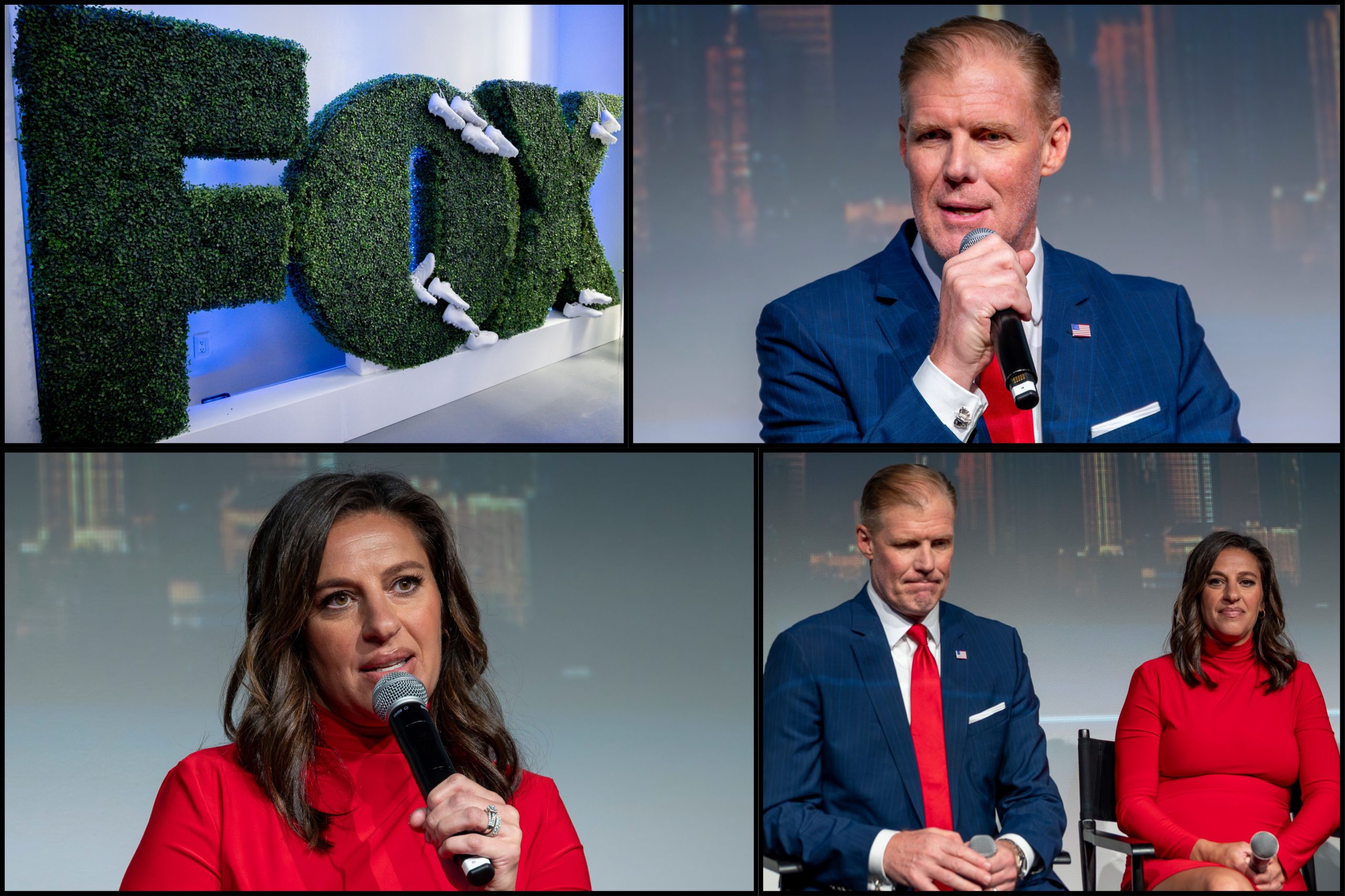
While any World Cup is a career highlight, one hosted in the United States carries a bit more weight, studio analyst Alexi Lalas suggested. “I don’t necessarily think I’m going to be doing anything different in terms of my performance, but I also recognize that this is special and that this is hopefully going to have long-lasting effects, legacy types of things, and so I want to make sure that we do it right,” Lalas said. “I want to make sure that it’s a positive celebration, both of the sport, the World Cup and of the country for that matter.”
Fox Sports has been the broadcast home of the FIFA Women’s World Cup since 2015 and presented three iterations of the tournament over an eight-year span, but that streak will end next year, when Netflix carries exclusive coverage of the Women’s World Cup.
Netflix has been a rising player in sports media, recently expanding its NFL rights deal to five regular-season games next year. The streamer is also in the first year of a new deal with MLB that includes next month’s Home Run Derby.
Fox Corporation, a vocal opponent of sports on streaming services that may have been the driving force behind the government’s recent interest in the topic, will likely face stiff competition for rights to the next men’s World Cup. Netflix VP/sports Gabe Spitzer told Andrew Marchand of The Athletic last month that the media company would “want to have a conversation” with FIFA about securing the rights. Spitzer also added that Netflix wants to acquire global rights where it can, something the company has exhibited through some of its sports content thus far.
Fox, it should be noted, faced no competition for rights to this year’s tournament, which were controversially awarded without a formal bidding process. In fact, the company is paying less than $500 million for this year’s event, according to Tariq Panja of The New York Times, which he reported is believed to be potentially as little as a third of the market price.
It is unclear whether Fox will have the resources to compete in an open market, given the potential of NFL rights renegotiations this year. CEO Lachlan Murdoch said on an earnings call earlier this year that the company could “consider balancing or rebalancing” its sports portfolio to offset a potential increased cost for NFL rights. For now though, the company is focused on maximizing this opportunity before its fall sports slate takes hold.
“I think it’s going to be massive,” said Carli Lloyd, who is covering her third FIFA World Cup for Fox Sports as a studio analyst. “I’m not a numbers person — that’s way out of my wheelhouse where they come up with all those numbers and the predictions. Obviously, depending on what teams are in the final will also dictate the viewership as well, so if you have a France in a final, a Spain in a final, an England in a final, an Argentina, that’s scary what the viewership could be for sure.”
Beyond the obvious ratings implications, a World Cup hosted primarily on American soil offers some additional benefits for the host broadcaster.
“We will be on site at the big marquee matches all summer long,” Kenworthy said. “Our commentators will be calling matches throughout the World Cup, which is really important, and we’re going to bring that feeling from the outside in. But you can’t do 104 matches completely on the road, so this, as a hub back in LA and being able to rely on the full apparatus that is Fox Sports and everything we have [is] — after doing five World Cups on the road, this is a luxury, and we’re really excited about it.”
Fox plans to leverage the proximity to its usual production apparatus by fully implementing HDR — a first for its World Cup coverage — and using Cosm cameras to minimize any perception of inconsistency between the visual quality of game broadcasts as compared to studio shows.
The company has also put together a graphics package that Kenworthy said will reflect the “melting pot” of the 48-team tournament. “We’re going to have tailored graphics to all 48 teams this summer, and those graphics really dive into the culture of that nation, the color of the flags and the colors they wear, the traditions of those nations.”
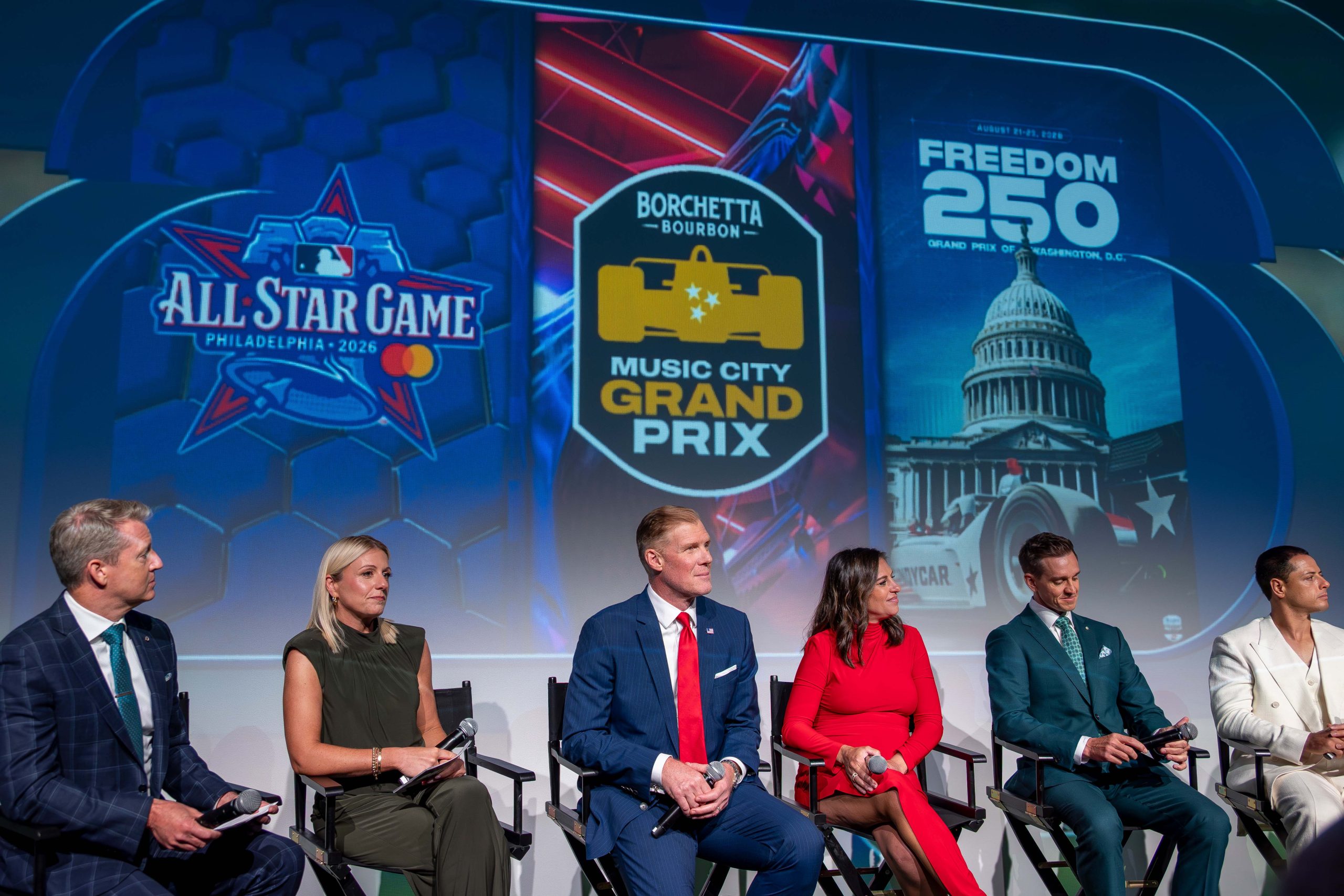
Fox also plans to use its World Cup matches as a springboard to promote its other sports properties. One of the World Cup semifinal matches will precede the network’s presentation of the MLB All-Star Game in July, and a 2024 World Series rematch with the Los Angeles Dodgers and New York Yankees is set to follow the third-place match four days later. IndyCar will get perhaps the best lead-in of all, airing directly after the World Cup Final. (Fox Corporation acquired a minority stake in Penske Entertainment last July, which is the parent company of the racing circuit.)
This year’s tournament also offers rightsholders a new revenue-generation tool in the form of three-minute ‘hydration breaks’ taking place at the middle of each 45-minute half. Broadcasters can air advertisements during those breaks, albeit with certain restrictions.
Henry Bushnell of The Athletic reported that advertisements from FIFA sponsors can air on a split screen instead of a full cutaway mandated for other companies. Miguel Lorenzo, SVP/sports content for Telemundo, said in an interview with Austin Karp of Sports Business Journal that its broadcast would “be staying on the match feed” at these times. Karp reported Thursday that Fox will use a “hybrid approach” for the hydration breaks, mixing split-screen and full-screen commercials.
Ultimately, this year’s tournament offers any number of opportunities to, as Stone said, “really flex your muscles and flaunt.”
“Some of our competitors are — I use the comparison they’re big-chain hotels, and they’re everywhere,” Stone said. “We’re more a boutique hotel at Fox, and we give a different type of experience to our viewers, and I think we’re going to be a very big boutique hotel this summer.”