All around the world, people are making their preparations and counting down the days to December 25. It is, to paraphrase the song, the most wonderful day of the year: the debut of the National Football League on Netflix. Less than two weeks away, here is a look at how Netflix arrived at this deal, and what to expect from the streamer’s first live football contests.
The NFL’s streaming origins
To date, there have been more than 50 streaming-exclusive regular-season and playoff games between Prime Video, ESPN+, Peacock, and earlier platforms like Yahoo/Verizon, but none have carried the level of intrigue as the Christmas Day doubleheader on Netflix, the largest streaming video provider in the country. Netflix has been guarded in its approach to live sports, choosing to focus on documentary series and one-off events with big names in tennis, golf, and boxing, but these Week 17 games are no exhibition — they are real regular-season NFL games with real teams vying for playoff spots in the AFC.
It should be noted that every single NFL game is available over-the-air on broadcast stations in participating markets, and that is not likely to change any time soon. This means that if a Chiefs game is nationally available on Netflix or Peacock or any other platform, a high-quality local broadcast station will deliver the game for free to fans in Kansas City that receive the station via an inexpensive antenna. The NFL may be willing to explore new streaming technologies, but so far it has not signaled any willingness to abandon its foundation in broadcast television.
A year ago, NFL executive vice president for media distribution Hans Schroeder told The Athletic that the league has no plans to play Christmas Day games in years where the holiday falls on Tuesday or Wednesday, including the Wednesday Christmas in 2024. But the 28.7 million viewers the NFL averaged for its Christmas tripleheader last year were too good to pass up. That decision was reversed by March of this year, when Schroeder told The Wall Street Journal it did expect games on Christmas. When the schedule was revealed in April, Chiefs-Steelers and Ravens-Texans were officially on the schedule for Netflix. In order to maintain the mandatory three full rest days in between games, the league moved the Week 16 games of the participating teams to Saturday afternoon, opposite the expanded College Football Playoff on TNT.
What to expect from Netflix
Netflix has gone all-out on hiring established, well-known football TV personalities to lead its coverage, which will begin at 11 AM ET from NFL Network’s Los Angeles studios adjacent to SoFi Stadium. Former NFL Network host Kay Adams will anchor coverage, alongside an eclectic team of analysts: former Saints QB Drew Brees, former Heisman Trophy winner Robert Griffin III, NFL Network analyst Manti Te’o, and ESPN NFL analyst Mina Kimes will all join Adams at the desk. From a secondary set at Acrisure Stadium in Pittsburgh, ESPN host Laura Rutledge will host coverage alongside brothers Devin McCourty of NBC and Jason McCourty of CBS. Additionally, comedians Bert Kreischer and Nate Bargatze will contribute.
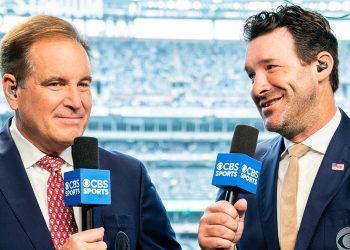
At 1:00 PM, game coverage will commence as the Steelers host the Kansas City Chiefs. A CBS-heavy team of Ian Eagle, Nate Burleson, and JJ Watt will call the game along with sideline reporters Melanie Collins and Stacey Dales. Given the quality of the matchup and the Chiefs’ flair for the dramatic this season, a close, competitive game seems likely.
At 4:30 PM, the Ravens and Texans take center stage in Houston, with NBC’s Noah Eagle on the call with FOX analyst Greg Olsen, along with sideline reporters Jamie Erdahl and Steve Wyche of NFL Network. While the Ravens and Texans are vying for AFC playoff spots, the secondary attraction will come at halftime as Beyoncé takes the stage for a performance.
NFL Network’s Ian Rapoport will contribute breaking news coverage to both games, and CBS rules analyst Gene Steratore will work that role for both games. NFL RedZone host Scott Hanson will join Brees for coverage on a separate feed outside the US. The selection of high-profile traditional NFL personnel shows that Netflix is not trying to reinvent the wheel, but simply deliver a familiar product on an unfamiliar platform.
It does cause one to wonder why Netflix is using this much on-air talent for what is ultimately just two games over a nine-hour telecast. Two three-person broadcast teams and a four-person studio desk staffed with competent but low-profile NFL Network personalities would certainly qualify as a satisfactory broadcast. Attempting to showcase all of these stars has the potential to make the broadcast feel bloated, but perhaps Netflix feels the need to flex its ability to attract talent.
Why does Netflix want these games?
The deal has the potential to be beneficial for both parties. Netflix, which has seen is dominance erode over time, must continue to deliver new content to continue subscriber growth. The NFL has to continue delivering increasing revenue distributions to team ownerships.
The inventory is next to nothing for the NFL: just another slice out of CBS and Fox’s Sunday afternoon packages. The Christmas games can serve as a trial run for a larger package of games. The NFL is said to be planning to reopen its media rights deals prior to the 2029 season to include a full 16-game schedule of international games. A successful showing here would assuage any league concerns about a new partner and put Netflix in the running for a new package.
For Netflix, this represents an opportunity to recoup some positive PR after last month’s Tyson-Paul debacle, which was plagued with technical difficulties and left many viewers unable to view the event at all. The morning after the boxing mega-event, Netflix issued a press release touting a global average minute audience of 108 million during the fight. Media outlets were quick to pick up on the story, omitting important context (the 108M was for all of Netflix, not just the boxing), and making outlandish comparisons to US sports audiences (while parroting Netflix’s global audience figure). For the NFL games, Netflix will partner with Nielsen, so it’s likely a somewhat proper comparison to traditional NFL broadcasts will be possible.
In conclusion, these are of course neither the first nor last games exclusive to streaming, but there is much on the line for both the NFL and Netflix. With a strong performance this Christmas, fans can look forward to more streaming football under the tree for years to come.