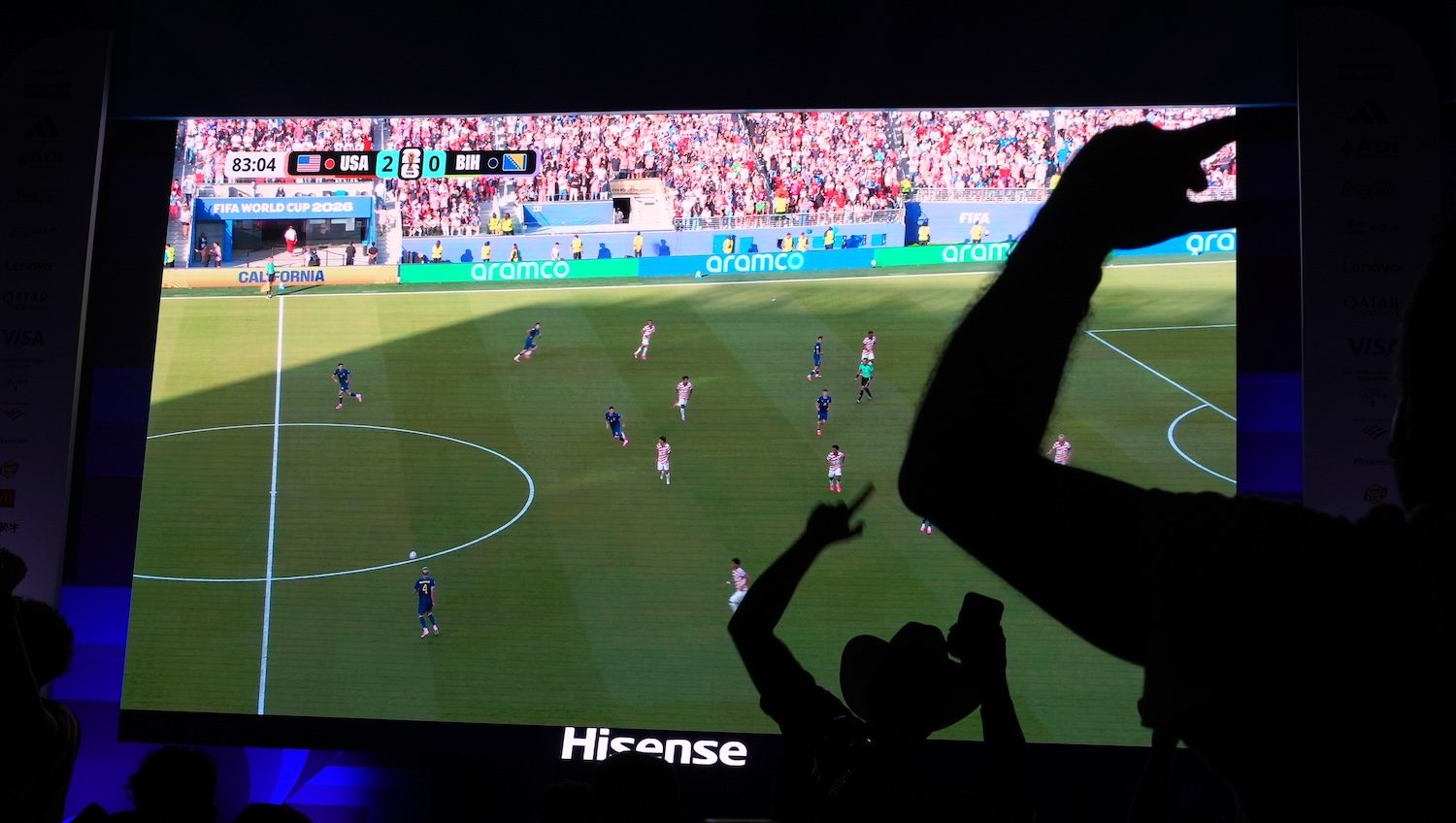
In a year marked by stirring performances by American stars — from Alysa Liu and Jack Hughes ending gold medal droughts to Bryce Harper’s two-run HR to level the World Baseball Classic final, to Malik Tillman’s free kick to send the USMNT to the World Cup Round of 16 — the most-watched international competition by far pit Spain against Argentina.
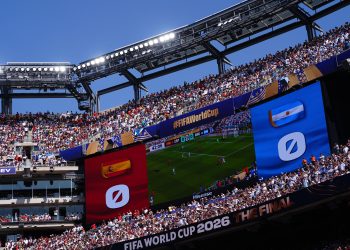
Indeed, the FIFA World Cup Final was by far the most-watched television program of any kind — save for the NFL and news events — since the series finale of “Seinfeld” in 1998, capping a massively successful World Cup and a four-year run of banner audiences for international competition that has extended beyond Team USA.
While global sporting competition has always resonated in the U.S., the current trend can probably be traced back to the functional end of the COVID-19 pandemic in 2023 and the ‘reopening’ of the globe. The COVID-era competitions were either delayed, conducted without fans or both, and while the winter World Cup of 2022 held up well — delayed not due to COVID but due to weather in the host nation Qatar — the Tokyo and Beijing Olympics were a viewership bust. Since then, the 2023 World Baseball Classic, 2024 Summer Olympics, and 2025 Four Nations Face-Off have all shown significant growth building towards the many record-breaking events in 2026.
The record ratings for U.S. hockey, baseball, and soccer are due to a combination of factors, perhaps the most significant being the methodological changes to Nielsen measurement (out-of-home viewing, Big Data) that have given sports broadcasts a significant leg up on ratings prior to 2020. Scheduling is another big factor — World Cup matches aired in U.S. primetime for the first time, and World Baseball Classic games shifted largely from FS1 in 2023 to FOX in 2026.
Another contributing factor to the tournaments’ success has been the presence of high-profile athletes viewers are used to watching year-round. The inclusion of MLB and NHL stars undoubtedly boosted attention paid to the World Baseball Classic and Olympic hockey — and vice versa, as the Olympic halo was likely a driving factor behind the most-watched Stanley Cup Playoffs on record. That is something Major League Baseball must consider valuable as it weighs participation in the 2028 Summer Olympics (assuming any potential labor issues are resolved). American soccer is somewhat disadvantaged in this regard, but avid soccer fans were surely familiar with the USMNT players’ prior work in the MLS and in European leagues.
It can be said to some degree that regardless of the sport, there is a television audience for any group of athletes designated as the “United States” as it gives viewers an automatic rooting interest. NBC has leaned into that phenomenon for decades to get Americans to tune in to watch figure skating and gymnastics at the Olympics. It’s the same phenomenon that gets alumni to watch their schools compete in sports without large national followings like volleyball and softball. As has been stated repeatedly on this site, it is foolish to conclude that a viewer’s decision to watch any television program (sports or otherwise) is an endorsement of any political, social or cultural idea more than it is a decision made out of habit, convenience, or boredom. Nevertheless, it is clear that there is a renewed excitement around U.S. national teams.
And yet, that excitement has not been limited to just the United States team. Following the USMNT’s exit from the World Cup, FOX and Telemundo continued to generate record audiences for the remainder of the knockout stage, culminating with the historic audience for the final. Based on the numbers for Spain-Argentina, one can surmise that a U.S. appearance in the men’s World Cup Final would potentially approach a Super Bowl audience — but 66 million for a game without any North American teams is as impressive a viewership figure as there has been in recent history.
With this year’s major international sporting tournaments in the rearview, it may be worth examining what other international sports are due for a growth moment.
Basketball in particular seems ripe for a viewership uptick given the recent success for foreign-born NBA players and the popularity of the U.S. team at the Olympics. The NBA All-Star Game shifted to a U.S. vs. the World format this year, and while an Olympic lead-in was a major factor, viewership was the highest since 2011. Given the NBA’s expressed desire for expansion into European markets, it should be a top priority for the league and FIBA to create high-profile, competitive national team tournaments catered to American audiences. The most recent FIBA men’s World Cup was in Australia in September, with most games in the overnight and early-morning hours on ESPN+.
A shift to the U.S. would allow for better timeslots, as would relocating to late July or August. In September, football sucks the attention out of the sports media ecosystem. FIBA also needs a U.S. media partner willing to provide marquee exposure for the tournament, including broadcast TV windows on the weekend and for key knockout stage games. TNT Sports, which will air the 2026 FIBA Women’s World Cup in September, is a good start, but primetime exposure on NBC, FOX, or ESPN would really elevate the event to the mainstream.
If sustained, the enthusiasm surrounding the national teams is an early positive sign for NBC’s coverage of the 2028 hometown Olympics. Sports that only break into the mainstream every four years like track, swimming, and gymnastics will probably do well, especially considering the number of American medal contenders. But there is probably more these sports can do in the interim to capitalize on the interest around Team USA.
Consider the annual national championships in those three sports, held on weekends in the summer. Some key events get a few hours on NBC, but the rest is mainly on Peacock. What if during non-Olympic years, those three events were combined into one, held in the same city at the same time in a sort of “mini-Olympics”? Fans attending would get to enjoy a diverse display of elite athletes, and organizers could work with NBC to organize a TV-optimized schedule across a week of primetime. If NBC could commit the storytelling resources it uses during the Olympics, it could create early excitement around U.S. athletes ahead of the Games — perhaps not soon enough for the 2028 event, but for future Olympics down the line.
For U.S. Soccer, the priority needs to be putting its national teams in high-profile competitions every summer. Between the 2022 and 2026 World Cups, the USMNT played in 27 friendlies (mostly on TNT), 12 Nations League games (mostly on Paramount+), 14 matches in continental tournaments (mostly on Fox). The Concacaf Gold Cup will be staged next year, with the potential for the U.S. to again host and participate in the CONMEBOL Copa America in 2028. Beyond that, the USMNT and USWNT need to play big matches against big opponents in quality windows, particularly Sunday afternoons in the spring and summer that do not compete with major championships in other sports. At risk of sounding like a college football message board, why not some “home-and-homes” between the U.S. and ‘power conference’ teams from UEFA and CONMEBOL?
The U.S. soccer media rights deal could use some improvement as well. The current deal with TNT Sports runs through the end of the decade, and includes men’s and women’s friendlies, home World Cup qualifiers, and U.S.-organized events like the SheBelieves Cup. While TNT is a fine platform (with the potential to boost events up to CBS under new ownership) the sporadic scheduling makes discovery challenging for casual fans. Coverage on ESPN or broadcast TV would go a long way in boosting non-tournament games into the mainstream.
There is one more property that could stand to improve its international presence, and that is the Women’s Softball World Cup. The current 12-team tournament is played across nine months on four continents. Despite rosters stacked with recent NCAA stars, coverage is limited to the FAST channel All Women’s Sports Network, with little chance to break into the mainstream. The finals in April will be held in the overnight hours in Australia. If the WBSC and USA Softball want to grow the sport, it probably needs to be staged within a week or two during the summer in softball-hungry Oklahoma City, with everything possible done to get games on ESPN. With the prominence of college softball combined with the success of the other national teams, is there any reason an international softball tournament couldn’t rise to at least a fraction of those other sports?