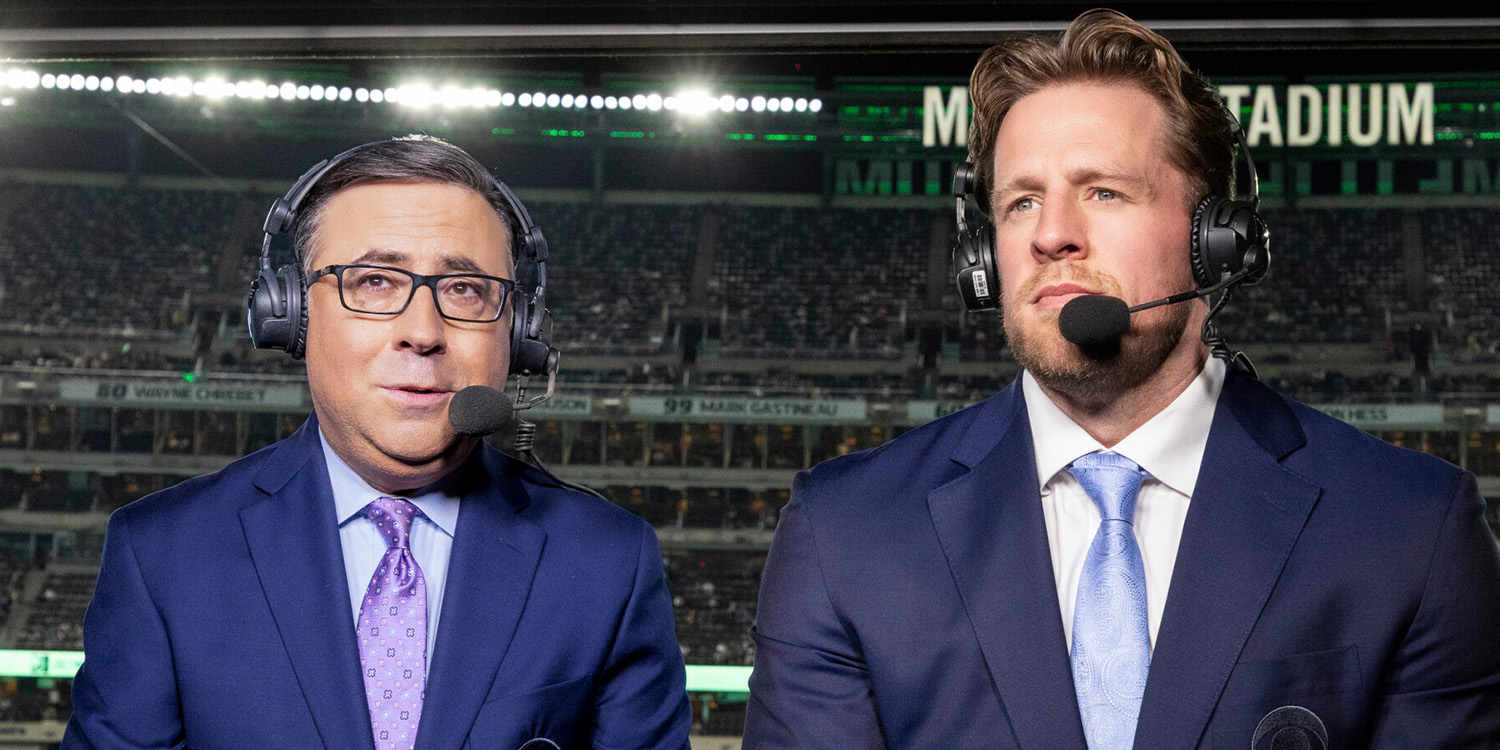
Play-by-play broadcasting is not easy. One must document the game accurately, understand the sport’s rhythms and nuances, get the names and numbers right, weave in anecdotes and statistics when appropriate, read promos, and occasionally toss to a sideline reporter or a studio host for an update.
Any professional announcer should be able to handle all these responsibilities well. The very best play-by-play voices take it one step further. They see each broadcast as a partnership and they strive to give the analysts with whom they work every opportunity to thrive, thereby making the broadcast experience that much more enjoyable. In 2026, no announcer is better at this element of play-by-play than Ian Eagle.
Over more than 30 years in the business, Eagle — much like his broadcasting role model and fellow Syracuse alumnus Marv Albert — has showcased an uncanny ability to tailor his presentation to each analyst with whom he works and give each broadcast a sense of flair.
It’s an approach he honed while working with longtime basketball analyst Bill Raftery on New Jersey Nets broadcasts in the 1990s.
“Raftery showed Eagle that announcing is a mode of being and that your on-air personality should be a slightly heightened version of your real self,” wrote The Ringer’s Bryan Curtis in a 2024 profile of Eagle.
The chemistry between Eagle and Raftery remains as strong as ever. Along with Hall-of-Famer Grant Hill, the longtime partners anchor CBS Sports’ college basketball coverage.
Like few broadcasters working today, Eagle strikes a near-perfect balance between studious reporter and charismatic showman. While one can be sure that an Eagle-led telecast will feature more frivolous chatter than others, those lighter moments do not come at the expense of his on-air colleagues. In fact, Eagle invites his partners to share in the performance.
In the mid-2000s, Eagle worked Nets broadcasts with former NBA guard Mark Jackson. With some assistance from former YES Network producer Frank DiGraci (now the lead producer of the NBA on NBC), he developed an in-game segment for Jackson called “You’re Better Than That!”
One night in early November 2007, Eagle and Jackson turned their collective attention to an unlikely target: future Hall-of-Famer Vince Carter.
“They have really improved the in-arena entertainment around the league,” Eagle said. “Wednesday, it was Halloween, and the Nets got Vince Carter to do a little dance for the folks here inside the IC (Izod Center).”
As viewers watched Carter awkwardly mimic Michael Jackson’s “Thriller” dance, Jackson playfully rebuked the NBA star’s moves.
“I was looking for a treat and I got a trick! Vince Carter, are you kidding me?! This is not dancing! You’re better than that, Vince Carter!””
Bits like these became part of the DNA of Nets broadcasts. Eagle and the crew took a favorite phrase of Jackson’s and incorporated it into the production, providing some levity and demonstrating the kind of on-air harmony that has characterized Nets broadcasts for decades.
Raftery and Jackson are not the only beneficiaries of Eagle’s entertainment-driven approach. Current and former YES Network analysts Richard Jefferson, Greg Anthony, Mike Fratello, Jim Spanarkel, Sarah Kustok, Vince Carter, and Donny Marshall have all shared hours of airtime and lighthearted interplay with the seasoned announcer.
In 2010, CBS paired Eagle with Hall-of-Fame QB Dan Fouts. Four years later, the network elevated the pair to the #2 NFL broadcast team. Despite a nearly 20-year age difference, the duo developed a strong rapport and became known as “The Bird and the Beard,” a nod to Eagle’s last name and Fouts’ trademark facial hair.
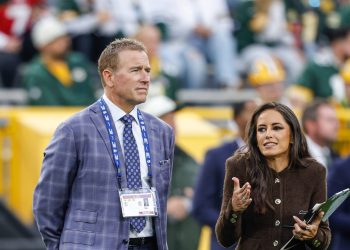
Last season, Eagle and analyst J.J. Watt emerged as an instant hit with NFL fans.
During their call of the Week 1 matchup between the Jets and the Steelers, Eagle and Watt stood side by side during an on-camera segment. At 6’5″ and around 280 pounds, Watt towered over his on-air partner, creating a striking visual that naturally lent itself to witty banter.
“Fortunately, we wear the same size, so we can just switch blazers at halftime,” Eagle said.
“I thought this fit a little snug,” Watt quipped.
Viewers should expect a similar chemistry this season when veteran broadcaster Ross Tucker joins Eagle in the CBS booth. Tucker said on his podcast and to sports media columnist Jimmy Traina that he has worked at least 20 games on radio with Eagle. Viewers who haven’t heard the two on radio should notice the camaraderie right from the start.
Tucker’s arrival is another opportunity for Eagle to showcase the quality that sets him apart from most TV broadcasters: his ability to make everyone around him better. Whether he’s trading jokes with Watt, sparring with Jackson or Fratello, impersonating Raftery, or building chemistry with a new partner, Eagle’s style demonstrates an acknowledgement that the best broadcasts call for more than facts and figures — they are about creating an environment where everyone has the freedom to be the most entertaining version of themselves.
Plus: The problem with baseball’s in-game interviews
Fox lead MLB announcer Joe Davis drew heat during Saturday’s Brewers-Dodgers broadcast for what some viewers considered a subdued home run call.
Calling a Dodgers game nationally comes with an added layer of scrutiny for Davis, who also serves as the team’s television voice on SportsNet LA.
When Davis responded to Brewers SS Joey Ortiz’s two-run shot with a flat call, the critics were ready to pounce. But the context around the call is significant.
It was the second inning and Davis and analyst John Smoltz were conducting an in-game interview with Dodgers hurler and two-time Cy Young winner Tarik Skubal, who was traded to the Dodgers earlier this month.
Skubal’s impressive resume and the freshness of the deal make him a hot topic, but Saturday’s interview underscores what has long been an issue for viewers of MLB and other sports.
The idea sounds good in theory: give viewers special access to a star player and let them provide insight while the game is unfolding.
In practice, the interviews rarely accomplish this objective.
If a player is intently watching an at-bat from the dugout, the chances of an announcer eliciting a memorable answer about strategy, mechanics, or emotions are slim.
Baseball is a sport that often produces sudden chaos, and the commentators (particularly play-by-play announcers) should not be asked to pull their attention away from documenting the game for a fruitless conversation with a guarded or distracted subject.
Joe Davis has proven he is more than capable of producing a spirited home run call. While some (likely Brewers fans, in this case) may argue that the Skubal interview does not excuse Davis’ lukewarm delivery, the larger issue is that the interview (and others like it) is rarely worth the trouble.