After years of complaints and format changes, the Pro Bowl is no more.
The NFL has decided to discontinue the Pro Bowl game, the annual All-Star event that in recent years had lost even a passing resemblance to actual football, the league announced Wednesday. The league will still announce Pro Bowl rosters, but there will be no competition between the honorees.
The event had in recent years been held under the banner of the “Pro Bowl Games,” with the primary competition consisting of a flag football game.
This past year’s edition moved from the traditional Sunday afternoon to a Tuesday night, losing its usual ABC simulcast in the process. The resulting audience of 2.0 million across the ESPN family of networks was easily the lowest ever for the game, not counting a tape-delayed COVID-era edition in 2021 (1.9M). This year’s Pro Bowl finished not only far behind the MLB and NBA All-Star games — both of which averaged 8.79 million, boosted by the Olympics and World Cup respectively — but also the WNBA All-Star Game (3.16M).
Prior to this year’s plunge, Pro Bowl viewership had remained relatively healthy even in the flag football era. The game averaged 4.7 million two years ago, on par with the NBA All-Star Game held the same year — and good enough to make it the most-watched sporting event of that weekend.
All-Star Game viewership, past two decades
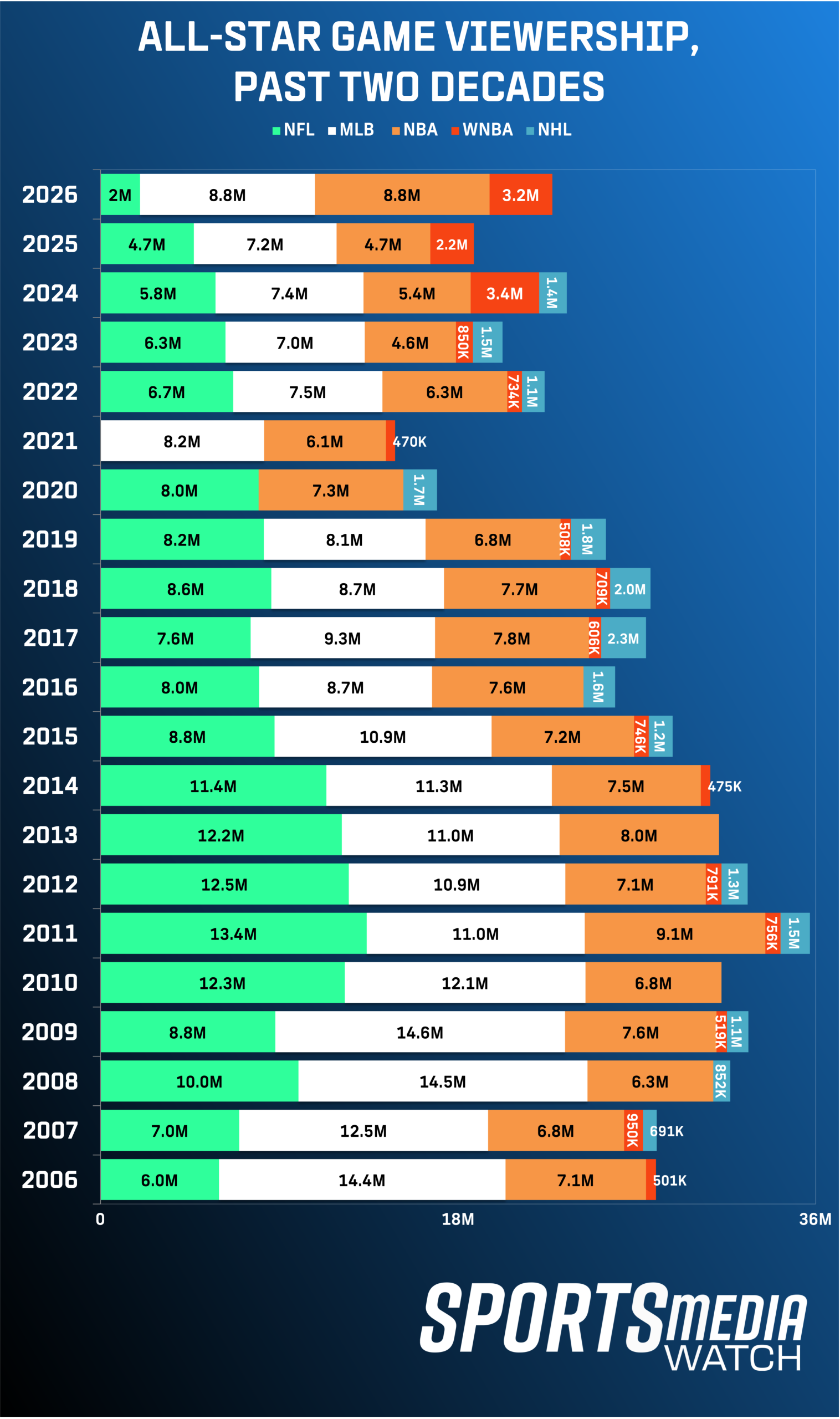
But by NFL standards, the Pro Bowl was a dud even in its prime years. While the MLB, NBA and now WNBA All-Star games are usually among the most-watched non-playoff events in a given season, the Pro Bowl was always a below-average draw for a league that averaged 18.7 million during its most recent regular season. The most-watched Pro Bowl of the past 25 years, the 2011 edition that averaged 13.4 million on FOX, still paled in comparison to the same network’s average of 22.2 million for regular season games that year.
The final Pro Bowl was below average even by preseason standards; last year’s preseason slate averaged 2.2 million.
Beyond the ratings, the NFL had perhaps the most difficult time of any league in trying to adapt its violent game to a light-hearted exhibition format. There was simply no way to incorporate even a modicum of the usual intensity without players endangering themselves.