Sports media has found a new target of criticism, and this one has four legs.
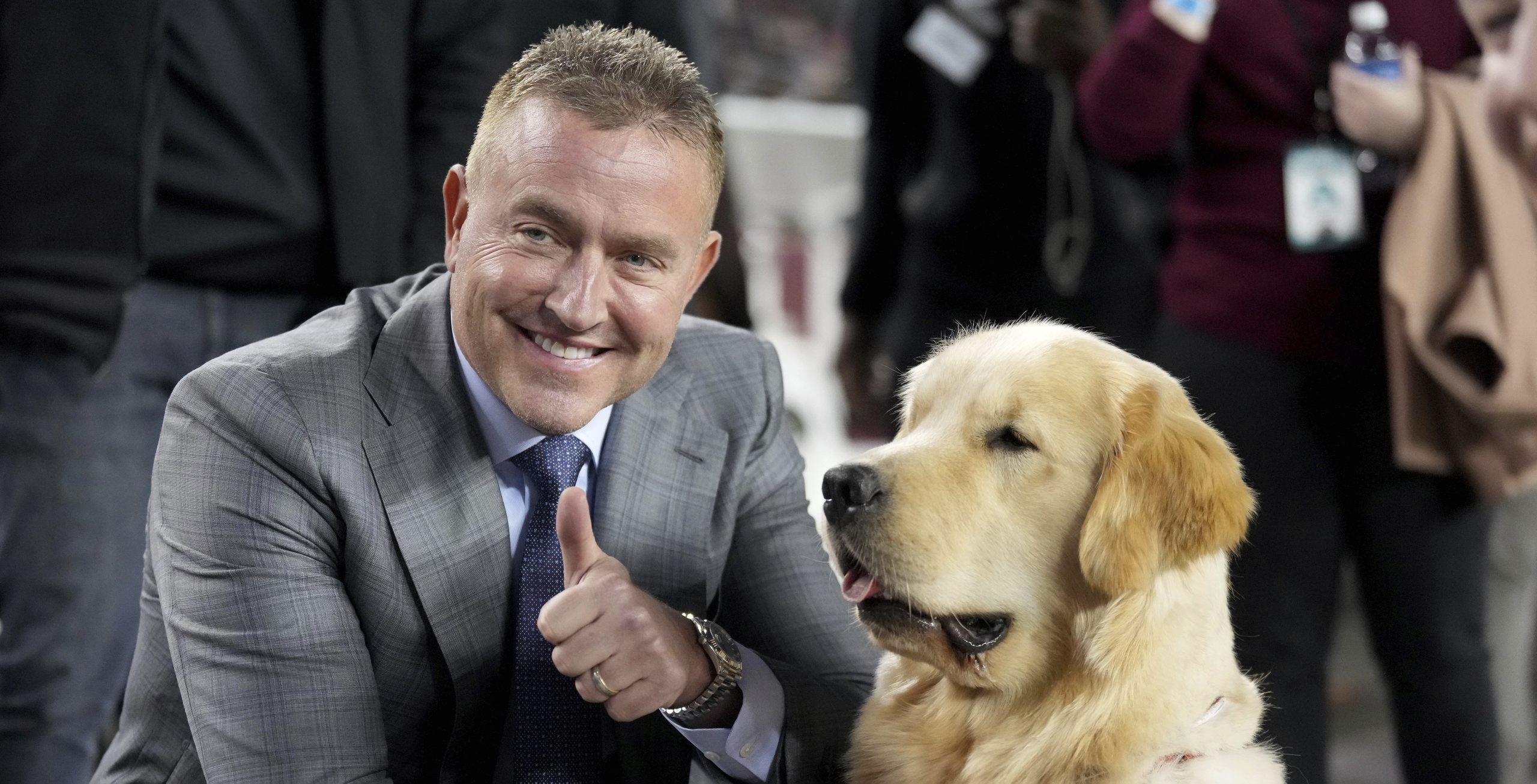
The start of a new football season means plenty of camera time for ESPN and Prime Video analyst Kirk Herbstreit — and his golden retriever, Peter. The two have become increasingly inseparable, and some football fans have had enough. The cries of disapproval have grown, with fans across the country objecting to Peter’s presence at football games and on the set of “College GameDay.” Others have taken issue with the optics of a broadcaster flying his dog around the country on a private jet.
The response wasn’t always this vitriolic. Long before the hue and cry, Herbstreit’s first four-legged traveling companion was Ben, Peter’s older brother. When Ben passed away in November 2024, Herbstreit offered a moving tribute during an episode of GameDay.
It all seemed innocent enough. Animal lovers are well aware of the impact a devoted and caring pet can have on the life of its owner. Four years ago, “SportsCenter” host Scott Van Pelt shared that impact with the world with his tearful on-air tribute to his late dog, Otis.
“If this hurt is the cost of the transaction of being on the receiving end of a mighty love I got to know, then I pay it with enormous gratitude,” Van Pelt said during the segment.
After Ben’s passing, Peter became Herbstreit’s new travel buddy, faithfully accompanying the itinerant analyst across the nation. While not quite “The Call of the Wild” or “Where the Red Fern Grows,” Peter and Herbstreit’s relationship became a symbol of genuine friendship, a gentle reminder amid a progressively toxic media environment.
Over time, however, Peter has become as ubiquitous as his owner, generating constant attention on social media and even scoring a promotional deal with Hertz.
For many, the golden retriever is no longer that emblem of unwavering devotion but evidence of Herbstreit’s celebrity privilege. The private jet, the access, the ability to take his dog wherever he goes — it can all come across as a not-so-subtle reminder that Herbstreit operates by a different set of rules.
Like it or not, Herbstreit’s employers pay him handsomely to front their football coverage, and they’ve created space for him to enjoy the kind of amenities about which others in the business only dream.
That Herbstreit’s dog has become a focus of fan frustration is telling. It suggests the audience’s patience with Herbstreit himself has worn considerably thinner. At one time, he was the conscience of college football, the bright and measured voice of reason in a sport that so often gets in its own way. But broader perception of the Emmy-winning analyst has taken a turn in recent years.
He’s become a fixture to the point of familiarity breeding fatigue. His employers frequently brag about his hectic schedule — Herbstreit called 38 games combined last season — but even the most recognizable TV personalities can reach a point of diminishing returns.
When he isn’t calling “Thursday Night Football” on Prime, working “GameDay” on Saturday mornings, or calling “Saturday Night Football” on ABC, he’s hosting his podcast “Nonstop” with fellow ESPN analyst and former Ohio State teammate Joey Galloway.
For so many years, Herbstreit was the humble straight man to Lee Corso on “GameDay.” He was the thoughtful voice fans heard on Saturday morning and then again during the biggest game of the night. Now, he is everywhere, with Peter in tow. The more ESPN and Amazon rely on him, the less room there is for the audience to miss him. And being missed is valuable in television.
It would be extreme to suggest Herbstreit disappear from television altogether, but his career would benefit from a little less exposure. His credibility is established. He doesn’t need to be on every platform, weigh in on every controversy, or feel compelled to address so much of the toxic chatter that consumes social media.
As annoyed as some may be by Herbstreit’s overexposure and increasingly performative approach, to take it out on the dog seems a bit extreme. After all, Peter doesn’t compete. He doesn’t call the action. Though Herbstreit and his team ensure he draws attention, Peter can easily be avoided.
If the overexposure and the private-jet videos bother you because they strike you as excessive or tone-deaf, that’s a reasonable personal reaction. Herbstreit is wealthy, famous and living a lifestyle most people don’t experience. He doesn’t have to hide that reality, but he also shouldn’t be surprised when displaying it invites commentary.
Ultimately, nothing is more important than the games, themselves. Ironically, sports media would be best served by taking a page from the playbook of Peter — sit, smile, and relax.
Plus: What’s next for Karl Ravech?
Sunday marked the official end of Karl Ravech’s 33-year ESPN tenure. Ravech was laid off in July but agreed to continue working select assignments, including the Little League World Series.
While the company’s handling of his departure was, at best, sloppy, Ravech was ultimately given the farewell befitting a talent of his stature and longevity.
After spending more than half his life at ESPN, Ravech, 61, faces a real dilemma. He is at his best behind the studio desk, but he desires to continue calling games. He’d been ESPN’s primary LLWS announcer since 2012, lead College World Series play-by-play since 2013, and top MLB voice since 2022.
MLB Network would seem like a perfect fit for the longtime ESPN anchor, but would the network pull the trigger and, if it did, would Ravech be willing to accept a less prominent role with fewer prestigious assignments? Economics could also be a factor. According to Andrew Marchand of The Athletic, Ravech was making “well into seven figures a year” at ESPN.
The tributes from his colleagues suggest Ravech was the consummate professional during his time at the network. His layoff, and the slipshod way ESPN executed it, reminds us that not only do things happen quickly in sports broadcasting — they often leave quality talent out in the cold.