Sports broadcasting is often likened to painting. The announcer is the artist, his words the brush, and the competition the canvas. When the drama of a game reaches its climax, broadcasters are expected to create works that will echo through history.
For more than 40 years, the sport of golf has provided the ideal canvas for Jim Nantz to produce his most moving masterpieces. Each April, millions of fans wait for his final call at The Masters, the crown jewel in the sport that naturally matches Nantz’s distinctive voice and style. The measured sentences, the carefully placed anecdotes, the reverent whispers — a perfect fit for a storyteller par excellence.
Yet the qualities that make Nantz such an elegant narrator have not consistently made him an exceptional broadcast partner.
Nantz has extraordinary range and longevity. When he stepped into the national spotlight at just 26 years old, he possessed a smooth and effortless command that quickly drew comparisons to one of his broadcasting heroes, Brent Musburger. After Musburger’s highly publicized exit from CBS in 1990, Nantz became one of the pillars of the network’s sports division. With an impressive resume that includes 32 Final Fours, seven Super Bowls, dozens of golf majors, U.S. Open tennis, and the Winter Olympics, Nantz has more than earned his place among the pantheon of sports broadcasting icons. But if there is a criticism to be made of Nantz’s decorated career, it is that he has rarely developed the easy rapport that distinguishes the strongest broadcast booths.
It would be unfair to assert or even imply that Nantz has sabotaged his partnerships or attempted to stifle his colleagues. But there has often been a missing element to his play-by-play. Not everyone can be a clever showman a la Marv Albert or Ian Eagle, but Nantz broadcasts — of football and basketball, in particular — tend to lack a certain vitality.
For 18 years, he called the biggest games in college basketball with Billy Packer, a man whose surliness frequently overshadowed his brilliant analysis. The duo mastered the basics — Nantz called the action, told the stories, and weaved in the statistics while Packer explained the action and expressed his opinion — but their buttoned-up approach often contradicted the frenzied atmosphere that defines the sport. Over time, many fans came to favor CBS’ #2 team of Verne Lundquist and Bill Raftery. Famously dubbed “The Sunshine Boys” by CBS production crew members, Lundquist and Raftery exuded unbridled joy and infused their NCAA Tournament broadcasts with character and vigor. Nantz and Packer felt like professional announcers documenting a big event; Lundquist and Raftery felt like old friends allowing viewers to eavesdrop on a conversation they’d been having at the bar.
In 2015, Raftery joined Nantz and Grant Hill on CBS/TNT Sports’ lead broadcast team, bringing a flair that enlivened the booth. But that change arguably owed more to Raftery’s natural charisma than to Nantz’s ability to draw it out. When Ian Eagle replaced Nantz in 2024, he and Raftery rekindled a rapport built over more than three decades, rooted in a shared understanding that sports broadcasting could enlighten and entertain in equal measure.
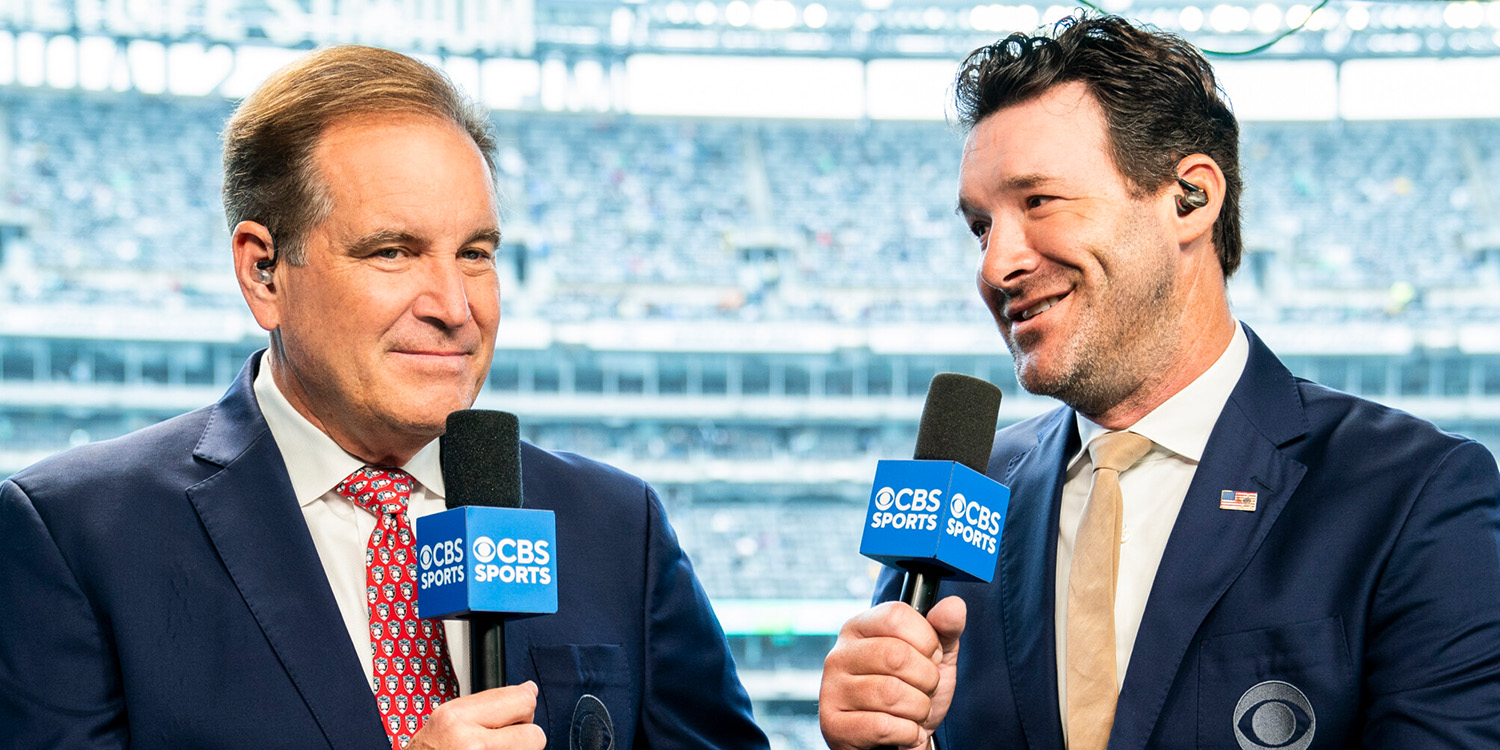
In 2017, CBS hired Tony Romo to join Nantz on the network’s top NFL broadcast crew. After years of stale commentary from longtime lead Phil Simms, it seemed CBS had finally struck gold. Romo’s clairvoyance and boundless energy made the booth — and Nantz — compelling, especially during the Patriots-Chiefs AFC Championship Game of January 2019. But when the freshness faded and it became clear the novelty of Romo had begun to wear off, the booth began to suffer, raising questions not only about Romo, but about Nantz’s efforts to help the partnership evolve.
On Thanksgiving Day 2023, Nantz and Romo were on-camera for a brief segment before the start of the second half of the Commanders-Cowboys game. Romo began talking about Dolly Parton, who had just performed in the stadium at halftime. With a wry grin, Romo began awkwardly discussing the then-77-year-old’s cheerleading outfit and was trying to coax Nantz into joining the conversation. After folding his lips and dropping his head, Nantz asked Romo, “What do you think we’re going to see in the second half?” Romo chose to continue praising Parton saying, “I mean she looks amazing, right? She’s wonderful.” Instances like these became almost routine, underscoring a breakdown in chemistry.
To be clear, the responsibility to improve falls with Romo, but, given the frequency of awkward moments, failed jokes, and on-air gaffes, it is worth questioning if Nantz did enough to cultivate the on-air relationship with his now former colleague.
Ask Fox analyst Tom Brady and he’ll tell you what a willing play-by-play announcer can do for an analyst. When a play-by-play announcer is intentional about the growth of his partner, he asks focused questions and useful follow-ups, he offers timely redirection and room for an analyst’s personality to shine, and he helps guide conversational flow and rhythm.
Looking back over the last few seasons, sports media is within its right to ask was Nantz willing or even able to push Romo to stay on task and sharpen his points? When an explanation became unclear, did Nantz ask the question viewers needed answered? Did their exchanges develop beyond bizarre banter?
We cannot know how much work Nantz put into the relationship behind the scenes. We can, however, judge whether that work produced a more coherent broadcast. With ample evidence, we can conclude that it didn’t, and when Romo’s OWI arrest gave the network an excuse to finalize the divorce it had likely been seeking, CBS pulled the plug in early October.
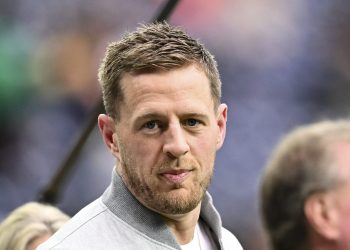
Interim analyst J.J. Watt gives Nantz another opportunity to demonstrate that his experience can help an analyst grow. So far, the results have been mixed. The two have called exciting games in back-to-back weeks, and at times, Nantz’s calls have been colored by a vibrancy that hearkens back to his early days with Romo. At the same time, there’s been obvious room for improvement, like when Nantz restated Watt’s Mike McCarthy-Aaron Rodgers anecdote during their Week 2 broadcast of Steelers vs. Patriots. Watt’s performance will be analyzed until the moment CBS announces its new permanent lead analyst, but he is not alone. Nantz’ performance is under the microscope, as well.
No objective observer can doubt Nantz’s gift for giving a sporting event a feeling of momentousness. The unresolved question is how consistently he gives the person beside him the tools and space to excel. This question is never asked of Ian Eagle, who consistently demonstrates an uncanny ability to get the most out of his partner. Through the first few weeks of the season, Eagle and boothmate Ross Tucker have exhibited a camaraderie that makes the broadcast an easy listen.
Jim Nantz has spent decades finding the right words for the moment. With longtime partner Tony Romo now out of the company for good, Nantz’s next challenge is helping the man beside him find his.