In 20 years writing about sports television ratings, there have been a few recurring themes. One is the tension between what viewers actually watch, and what others believe they should.
Time and time again, the viewership is higher — considerably so — when certain teams make the championship round. Sometimes these are the teams with storied histories. Sometimes these are the teams with iconic stars. Sometimes, they are merely the teams from the largest television markets in the country. And sometimes, they are a mix of all three.
The Los Angeles Dodgers would certainly qualify on all three fronts. Few teams are as etched into the history of the nation’s oldest game, or boast a star as world famous as Shohei Ohtani, or play in a market as large as Los Angeles. Since the Cubs’ curse-breaking victory in 2016, the three most-watched World Series have each featured the Dodgers — their seven-game loss the Houston in 2017 (18.9M), seven-game win over the Blue Jays last year (15.7M) and five-game rout of the Yankees in 2024 (15.2M).
Time and time again, viewers watch in larger numbers when the Dodgers are in the Fall Classic. They watch in large enough numbers that even the sizable Los Angeles market alone cannot fully explain it. Yes, audiences become fatigued with seeing the same team over and over. A sense of inevitability can be a ratings drag, particularly if a team is so dominant that their games and series are mere walkovers. But there is no indication that viewers on television are as antagonized by the Dodgers as users of social media.
Now consider the opposite. Not the big market dynasty, but the unheralded upstart. Sometimes these are teams with little in the way of history — maybe a championship series appearance here or there, but no titles. Sometimes, these are teams whose best players are All-Stars, but not Hall of Famers. Sometimes, these are teams from small markets, but not always. (Often, the ‘small market’ is among the very largest in the nation, just smaller than Los Angeles or New York.)
When title series feature such teams, the response on social media is twofold. First, immediate predictions of ratings doom, then outraged responses questioning why anyone should care about the ratings. And, often, the suggestion that anyone concerned about the ratings is not a real fan.
Yet for all the righteous indignation, title series featuring these low-profile teams often underperform — and that is an understatement — in the ratings. When the Rangers-Diamondbacks World Series matchup was set three years ago, social media users aimed all manner of invective at the data analyst Nate Silver after he suggested that it was “the least compelling World Series matchup in a long time, maybe ever.” Then, they didn’t tune in. Rangers-Diamondbacks was the lowest rated and least-watched World Series on record, even after a walk-off finish in Game 1.
The argument is that you’re not a real baseball fan if you need the big market teams involved. You’re not a real baseball fan if you don’t tune in to the lower-profile series. And frankly, perhaps there is some truth to that. The number of ‘true fans,’ the ones who will watch no matter what, is probably smaller than any league would care to admit. The casual fans are the ones who make the difference in the television ratings, and by and large, they are looking for compelling stories and hooks. Those can be familiar names and teams, particular storylines (historic droughts, bitter rivalries), or simply the expectation of high-level play.
The fewer of those hooks a series has, the less likely it is to hold its own in the ratings.
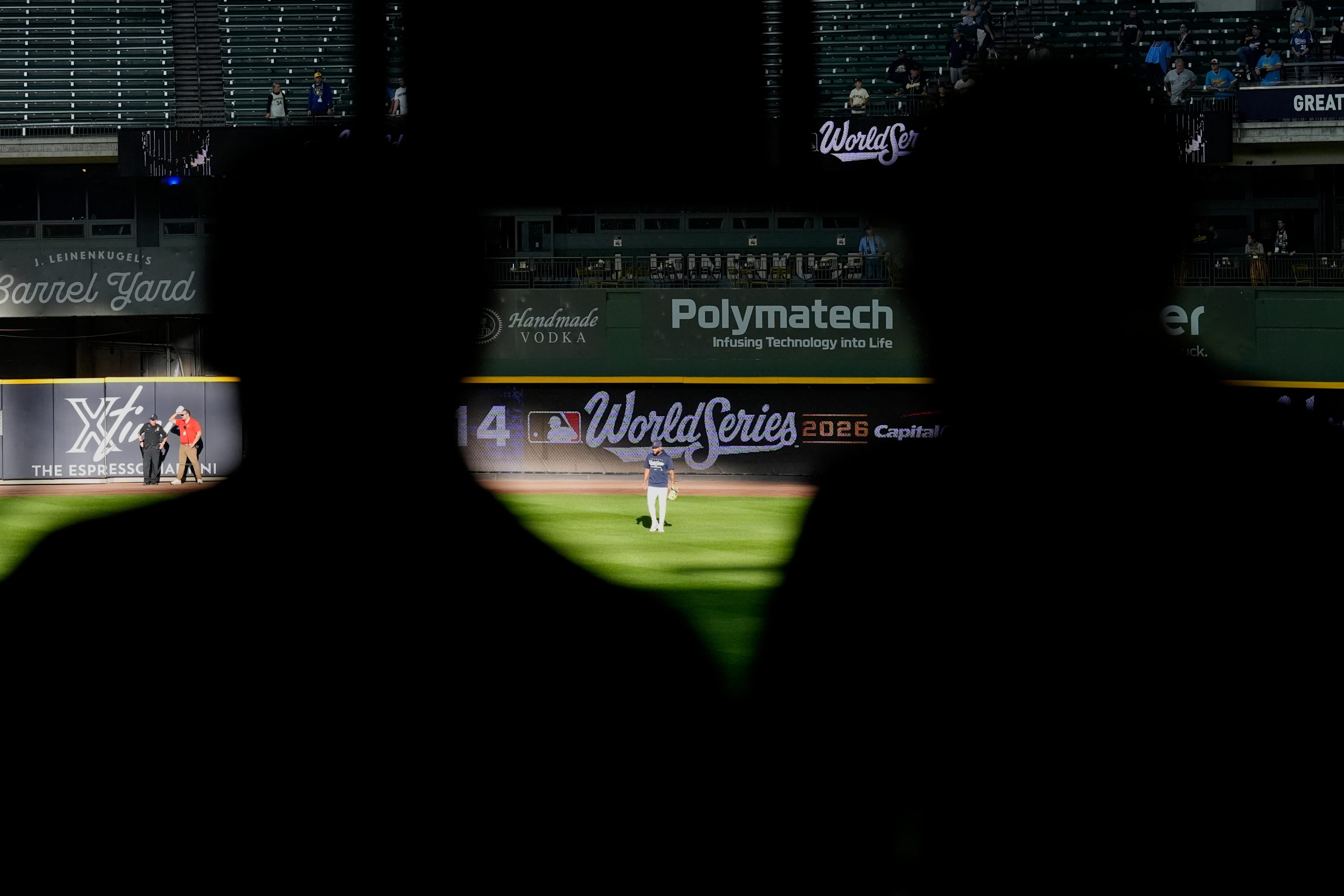
So what does that mean for this year’s Fall Classic, a pairing of the Brewers and Rays? These are not teams with storied histories, nor are they teams with much history with each other. None of their three regular season meetings, which took place in the early days of the season, were nationally televised. They are somewhat familiar to a national audience, as the Brewers have made deep playoff runs in back-to-back seasons and the Rays have been consistently competitive for years (making their second World Series this decade). Neither has won a World Series, making this the first Fall Classic with a guaranteed first-time winner since 1980 — a Phillies-Royals series that, incidentally, is tied as the highest rated all-time.
The Brewers boast a bonafide star in Jacob Misiorowski, and the Rays’ Junior Caminero has charisma to spare. Perhaps most importantly, these are the teams that finished first in their respective leagues, making this World Series a considerably less ‘random’ matchup than the fifth-seeded Rangers against the sixth-seeded Diamondbacks in ’23.
To put it another way, this series does have some things going for it. It would be a surprise if it was as poor a draw as Rangers-Diamondbacks, especially given the Nielsen methodological changes that have been put in place since then.
But will the ratings be down? Almost certainly. This is the Brewers and Rays. Whatever it has going for it, this is the type of series that will have to win over the national audience. In the NBA, it took until literally Game 7 before a substantial number of viewers were willing to give Thunder-Pacers a chance. Given the World Series schedule — which opens with games on the two least-watched nights of the week and Game 3 opposite “Monday Night Football” — it will surely take until at least Game 4 before any viewership ‘pop.’
Last year’s World Series viewership was not just fueled by the Dodgers’ presence, but the quality of play in what is regarded as the greatest Fall Classic of them all. The 18-inning Game 3 was a hook. Ohtani pitching Game 4 was another. And then by Game 5, the viewers were ‘hooked.’ If this year’s matchup of top seeds can in any way meet that level of quality, the audience will eventually follow — even if takes a few games for them to catch on.
If the first three games provide an enticing enough sample, maybe viewership picks up at that point.
However the series fares, it is worth grappling with the broader topic of sports ratings and their meaning. The ratings are a niche within a niche. It is odd that they are so often part of the mainstream conversation. But as long as sports fans like to argue that their team is better than the other team, or their sport is better than the other sport — or more recently, that their political stance is better than the other political stance — ratings at least provide some data for the back-and-forth.
Your preferred team or player is out? A team you dislike won it all? A player did or said something that offended you? Well, then the ratings will suffer. Sometimes that is true, but it is not always meaningful.
Rangers-Diamondbacks set a record-low, and then the World Series hit multi-year highs in back-to-back years. In the NBA, Thunder-Pacers plumbed the depths, and then Knicks-Spurs soared the heights a year later. Sometimes the ratings are low, and sometimes the ratings are high, but rarely is either condition permanent. Some teams draw well and others do not, but the winner will get championship rings all the same.
Over time, lower ratings might signal that a sport is losing altitude, becoming passe, in need of change. OK. But nobody ever died over TV ratings except for Howard Beale. So every league lives to fight another day, and potentially benefit from a better matchup down the road.
The defensive ‘who cares about the TV ratings?’ post is often just a whine, but it does get to something true. The past decade or so has seen a lot of meaning placed on television ratings, or estimated figures from a private company. The idea is that television ratings are not a measure of viewer habits, but of value, and low ratings are an indictment of some flaw. That people are not just tuning out, but actively spurning the event.
But there is not a built-in ‘World Series audience’ that turns the TV off when they see a Brewers uniform. There is a passive audience that needs a reason to tune in. And the fewer easy hooks a series offers, the more difficult it will be to make that passive audience choose baseball over reruns, YouTube, or other sports.
Perhaps it was easier to hook that audience in past years, when there were fewer other options, and a less fragmented audience, and the World Series was more of a cultural institution than it is today. But television viewing has long been less of an affirmative endorsement of the product than a passive acceptance that nothing else better was on, even in the days when the viewership was much higher.
If Brewers-Rays does not do well, it does not make either team’s accomplishments less important, their fans less deserving, the memories less enduring. It just means that people have other things to do, are watching less television, and if you want them to sit down for three hours watching a baseball game, you had better give them compelling reasons to do so. That is easier in some years than others.
Prediction:
The 2023 World Series is the least-watched ever, with its five-game average audience of 9.11 million below even the 2020 “bubble” between the Dodgers and Rays (9.82M). But the series predated both the current Nielsen “Big Data + Panel” era and even the expansion of out-of-home viewing to 100 percent of markets. As a result, it is safe to say that Rangers-Diamondbacks would have likely crossed the ten million mark under present-day methodology.
With this year’s series having a few more attractive factors in its favor, it seems likely that this year’s Fall Classic should pace ahead of Rangers-Diamondbacks. In the current era of measurement, that probably means a viewership average in the low-mid ten million range.
Prediction: Brewers 4, Rays 2, average audience of 10.04 million.
Game 1 (Fri., Oct 23): 10.02 million
Game 2 (Sat., Oct 24): 9.31 million
Game 3 (Mon., Oct 26): 9.02 million
Game 4 (Tue., Oct 27): 10.96 million
Game 5 (Wed., Oct 28): 11.01 million
Game 6 (Fri., Oct 30): 12.93 million