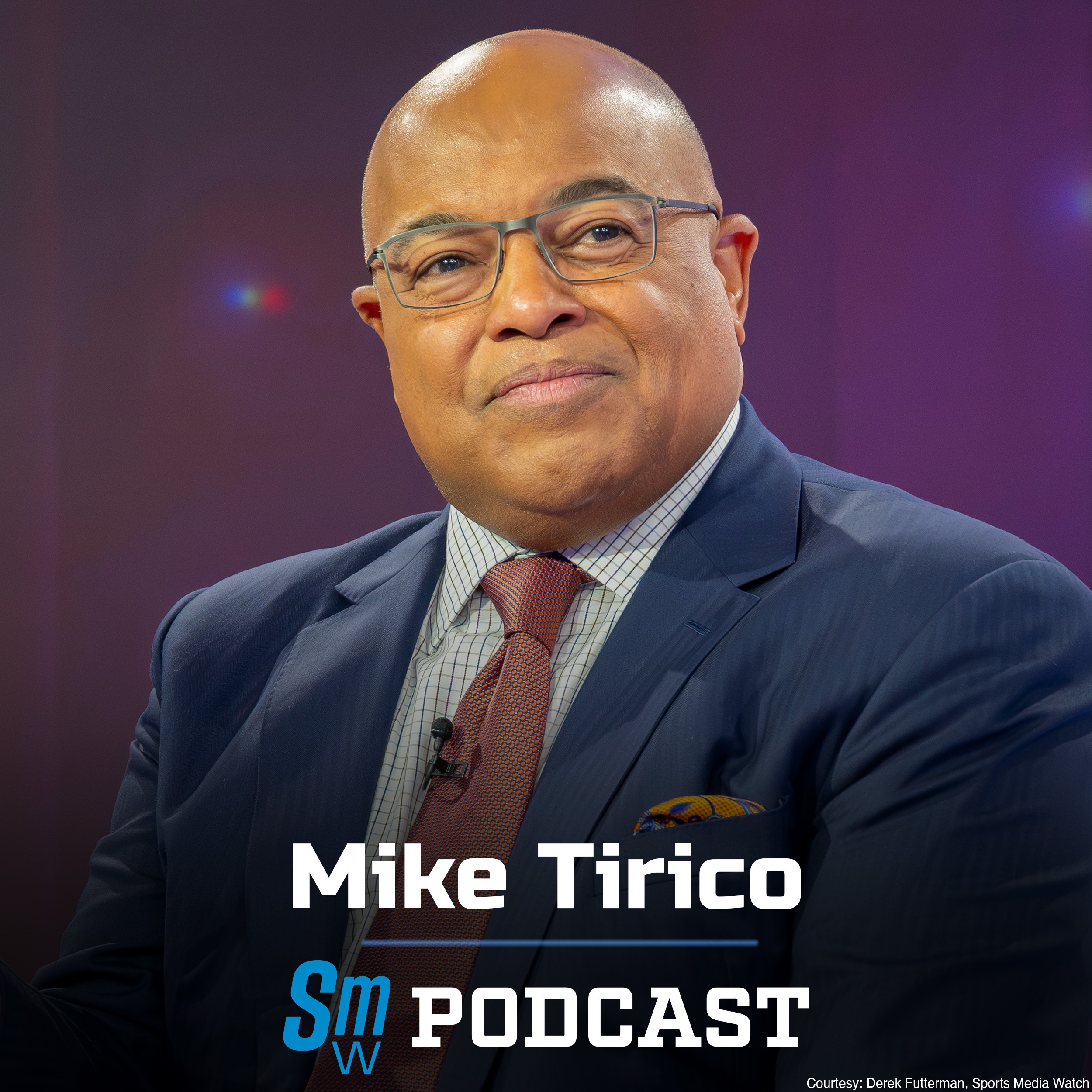
Tim Brando joined a special edition of the Sports Media Watch Podcast to reflect on the life and legacy of legendary college basketball analyst Billy Packer. Brando recounts his experience calling the first game following an incident where Packer referred to Allen Iverson as “a tough little monkey,” which also happened to be Brando’s first ever game working with Packer. He also discusses Packer’s influence on college basketball as a television product, and what it was like calling games with Packer.
On Allen Iverson incident and calling his first game with Packer
Brando was in Champaign to call an Illinois game with Packer. The prior evening, Packer and the rest of the broadcast crew were in Washington D.C. for a Georgetown game. Brando recalls getting to the game early the next morning to meet the crew for the first time, when game official Ed Hightower approached to ask him if he knew what had happened with Packer the previous night.
“I said ‘No.’”
Hightower, as Brando explains, portrays the Allen Iverson incident to him.
“I’m thinking to myself, ‘Oh my God! Here I am, I’m 42 years old. I’m about to work with the number one crew CBS has. This is a big moment for me, and they’re going through all kinds of stuff. I can’t even imagine what it must be like…
The one thing that did happen in that sequence, that I think really helped Billy, and he told me this later on in life … John Thompson, The Big Guy, Georgetown’s own, who coached Allen Iverson, was asked the question about Packer’s use of that term in his postgame presser, and he jumped to Billy’s defense. He said, ‘Look I know him. I played when he played. I know people that played against Billy. Don’t even go there.’ He was defiant of those that were going to take shots at Billy for using that term.”
Later on, Packer and the rest of the crew arrived in Champaign.
“When he got there, I wasn’t going to bring it up. We’re getting ready for a game, to talk about this matchup. And Deek (producer Bob Dekas) and Fish (director Bob Fishman) who were the best at their craft, all they did the entire game was give Billy the business…they’re busting his chops, he’s busting their chops. They’re taking some shots of me saying, ‘Just handle this guy, he’s a live wire, he can say anything at any time.’
They’re making light of it, behind the scenes, just to loosen me up because I was uptight.”
Brando recalls what Packer then said to him about the incident ten years later.
“He said, ‘Listen. You live your life, and you’re professional, and you do a good job, a great job, you’re gonna make mistakes, people are gonna take shots. The thing you gotta understand is to bet on yourself, and to know that those people that have been in your midst, that know how you operate, they will have your back. You will get checkmarks.”
On influence on college basketball broadcasting
Packer was known to be active behind-the-scenes in trying to raise the profile of college basketball on a national scale. “He’s the greatest contributor to the modern-day college game being as popular as it is on television,” according to Brando. Packer was synonymous with ACC basketball throughout his career in broadcasting and helped work to get an ACC game of the week syndicated on over 150 local network affiliates nationwide. Brando states, “He may be the only broadcast analyst that was also a broadcast businessman for the sport.”
Packer, as Brando explains, would even go so far as to help facilitate made-for-TV matchups reaching out to the likes of Lefty Driesell, John Wooden, and Digger Phelps in an effort to put together appealing interconference games. “He wasn’t just a broadcaster in front of the camera, he was a dealmaker behind the camera that the suits in our business would yield power to because they knew he had contacts they didn’t have,” concluding that, “without [Billy] the sport itself might not have morphed into the popular sport it became.”
On calling games with Packer
“Billy was all about ball, and the more you talked ball – the game itself – with him, the more you had credibility in his mind.”
Brando likened calling a game with Packer to that of a pilot flying on cruise control. “You don’t have to worry about the guy next to you. You’re just doing what you do instinctively. And that guy’s gonna pick up on everything you say, and if he likes it, he’s going to take it to another level. That is what is was like to work with Billy.”
Listen to the full episode of the Sports Media Watch Podcast here.