Sports Media Watch presents thoughts on recent events in the industry, starting with the Netflix event strategy and whether other companies will follow suit.
The old line “events, my dear boy, events” could well be the Netflix motto when it comes to live sports. The streamer has in short order established a distinctive niche in sports television, eschewing the season-long packages that have long been the main focus of major rights negotiations. Its NFL package is for a total of six games, maximum, over three years.
While there is some precedent for networks acquiring a mere sliver of a league’s inventory — NBC’s Major League Baseball deal in the late 1990s was for the playoffs and All-Star Game only — Netflix has taken things to a new level.
Yes, streamers have a recent history of acquiring rights to a single game here or there, but that was more along the lines of the experimental. The exclusive NFL games on Yahoo, Verizon and later Amazon were the necessary stepping stones to the current era of streaming-exclusive packages like Thursday Night Football or the NBA on Amazon Prime and Peacock. These Netflix deals may one day lead to something more, but the company has made it clear that for the time being, they are the result of a specific strategy — events over full seasons. These are not the means to an end; they are an end onto themselves.
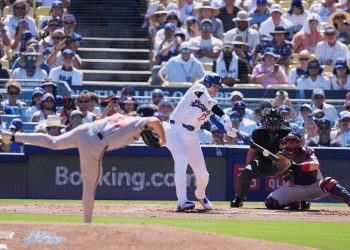
So what does that mean for the industry? To begin with, leagues can now seriously think about selling rights to individual marquee events. Major League Baseball is in talks to potentially sell the Home Run Derby to Netflix, taking an event that has been bundled into ESPN’s package and selling it as a standalone property. Who is to say MLB could not do the same for the actual All-Star Game when the FOX package is up in 2028? Or Opening Day, which is available as soon as next season? Or that the NHL could not offer up rights to its annual Winter Classic (or the Four Nations Face-Off, if and when that returns to the schedule).
All of the NBA’s rights are locked up until 2036, but Netflix was at one point interested in acquiring the NBA Cup, according to reporting by John Ourand last year. If the NBA’s rights were on the market now, perhaps that would have been a more realistic possibility.
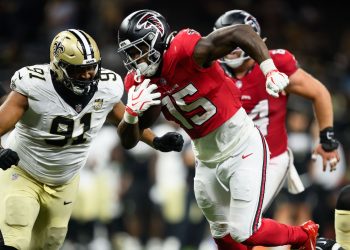
For the NFL, which will gain four extra windows of inventory as part of its deal to sell NFL Network to ESPN, any game of the season qualifies as an event. But when the league’s rights are up again, it would seem like leaving money on the table to not at least consider selling rights to Thanksgiving games separately. The Thanksgiving afternoon windows are two of the most-watched programs in all of television every year, and FOX and CBS have them by dint of tradition. Surely, Netflix — and pretty much every other media company in existence — would have some interest.
There is real risk in devaluing the season-long packages by removing the one-off marquee events. Take out the Indy 500 and see how many takers there would be for an IndyCar package. For top-heavy properties like IndyCar, it makes sense to include the biggest properties as part of a larger package. But what exactly would FOX or CBS without the NFL Thanksgiving games? Rebuff the most powerful and essential property in all of television and lose out on six months of programming per year?
As a general rule, any broadcaster seeking a season-long package is doing so for a reason. Whether that is to avoid churn, to sustain advertising revenue or to maintain carriage fees, it is hard to imagine them — in most cases — choosing to exit a six-month commitment over the loss of a single day, weekend or holiday.
It is worth noting that Netflix cannot acquire everything. The streamer remains selective, even as it embraces live sports. To restate a question asked in this column last week, would Netflix go after rights to The Preakness Stakes? Or is its strategy only focused on the higher-tier events like The Kentucky Derby? Per Ourand, Netflix made a “serious bid” for USGA events, including the U.S. Open. But would it bid for the British Open when those rights are up in three years?
In order for the event strategy to really make a broad difference in the industry, it will have to be taken up by other platforms. There are no other media companies taking such an atomized approach to live sports, but take note of what ESPN has done in the past two years. The biggest of all sports broadcasters is scaling back its regular season NBA inventory in its new rights deal. It is seemingly likely to give up Sunday Night Baseball. It has been all-but-confirmed to lose Formula 1. It has lost UFC. It has shed dozens of college football and basketball games via sublicense, including nearly half of the expanded College Football Playoff.
This is hours and hours of live game inventory that ESPN has let go without much fuss. Friday nights (NBA), Saturday nights (UFC), Sunday mornings (F1) and Sunday nights (MLB) will all need to be programmed with other properties.
Now take a look at what ESPN has kept, what it has added, and what it has expressed interest in acquiring. ESPN kept the NBA Finals, calling it a “must have.” It added seven WWE “premium live events,” including WrestleMania. Its president Jimmy Pitaro continues to stress his interest in local MLB rights, which of course would not be ESPN productions.
ESPN is still fueled by a tonnage of live sports — its ability to weather the loss of inventory is to no small extent a luxury afforded by just how much inventory it owns — but it seems clear at least from the perspective of this writer that the company’s strategy has shifted, even if slightly, toward an emphasis on big events and licensed content. Having a weekly “game of the week” does not amount to as much as it used to, and that is an approach that carries benefits and risks to the leagues.
On the positive side, the more companies interested in a little piece here and there, the more opportunity to create new revenue opportunities that did not previously exist. The NFL has made hundreds of millions in extra media rights revenue just by selling a handful of individual games since its 2021 rights deal went into effect. The danger is spreading the rights so thin that they start to lose their value, a risk that the NFL will not face, but one that is real for the other properties. The NBA, for example, could not have carved out a “fourth package” for TNT Sports last year — if it were ever so inclined — without risking NBC pulling out of negotiations. And it is worth noting that MLB could split ESPN’s current $550 million/year package four ways and still come away making less per year.
And then there is another risk, one that tends to get overlooked in any discussion of sports rights. At some point, and perhaps the industry has already blown past it, spreading the product so thin will make it more difficult for people to actually watch the games — which one would think is still the nominal goal.
Plus: Return of USA Sports, Kaepernick doc, U.S. Open
The return of USA Sports, which is the banner under which Versant sports programming will operate, is an interesting wrinkle. USA Sports was a real division for quite some time, owning rights to the NBA, NHL, Masters, U.S. Open tennis and much more. When USA got folded into the new NBCUniversal in 2004, that tradition began to be dismantled. By the time Comcast acquired NBCU in 2009, bringing its own 24-hour sports network into the fold, there was no need for USA to carry sports at all.
Now, after a resurgence following the shuttering of NBCSN, USA Sports is again going to be an independent entity — having to rebuild itself in a much less forgiving environment than before the 2004 merger. Perhaps USA would not exist at all in 2025 if not for becoming part of NBCU and Comcast in the 2000s. But it is certainly on shakier ground today than before those transactions were made.
The news that ESPN will not proceed with a planned docuseries about Colin Kaepernick was fairly predictable. The official word is that creative differences doomed the project, and there is no reason to believe that is false, or that ESPN was even particularly involved in those differences (the story goes that Kaepernick and director Spike Lee could not fully agree on the content).
But the decision was certainly convenient for ESPN, which realistically could not have carried a Lee-produced Kaepernick documentary in 2025 without generating an onslaught of negative reaction, perhaps even from high places.
In an interview with Bryan Curtis of The Ringer last week, ESPN president Jimmy Pitaro reiterated a point he made several times in his first year as president in 2018 — that ESPN does not do “pure politics.” But he added that ESPN, as “the place of record,” will “need to be present” at the intersection of sports and politics. Pitaro: “When something happens in the sports world that also happens to intersect with what’s happening politically, we need to be there.”
Being there means something a bit different in 2025 than it meant in 2018, or certainly in 2020 — when the Kaepernick documentary was greenlit. It is hard to imagine that decision being made now.
The tournaments leading up to this year’s U.S. Open tennis tournament have used some creative scheduling, with Cincinnati’s Monday finals following a pair of Thursday singles finals in Canada earlier this month. Yet the U.S. Open itself will continue to conclude on a football weekend, with the women’s final facing college games and the men’s final going up against the behemoth that is the NFL.
Truth be told, weeknight finals are a tough sell. A Carlos Alcaraz-Jannik Sinner final at 3 PM ET on a Monday? The match was a flop — Alcaraz won an abbreviated, 5-0 contest in 20 minutes over an ill Sinner — but that pairing nonetheless deserved a better timeslot.
With that said, if tennis is going to experiment with weeknight finals, a Tuesday women’s final and Wednesday men’s final at the U.S. Open would at least have some benefits for television.