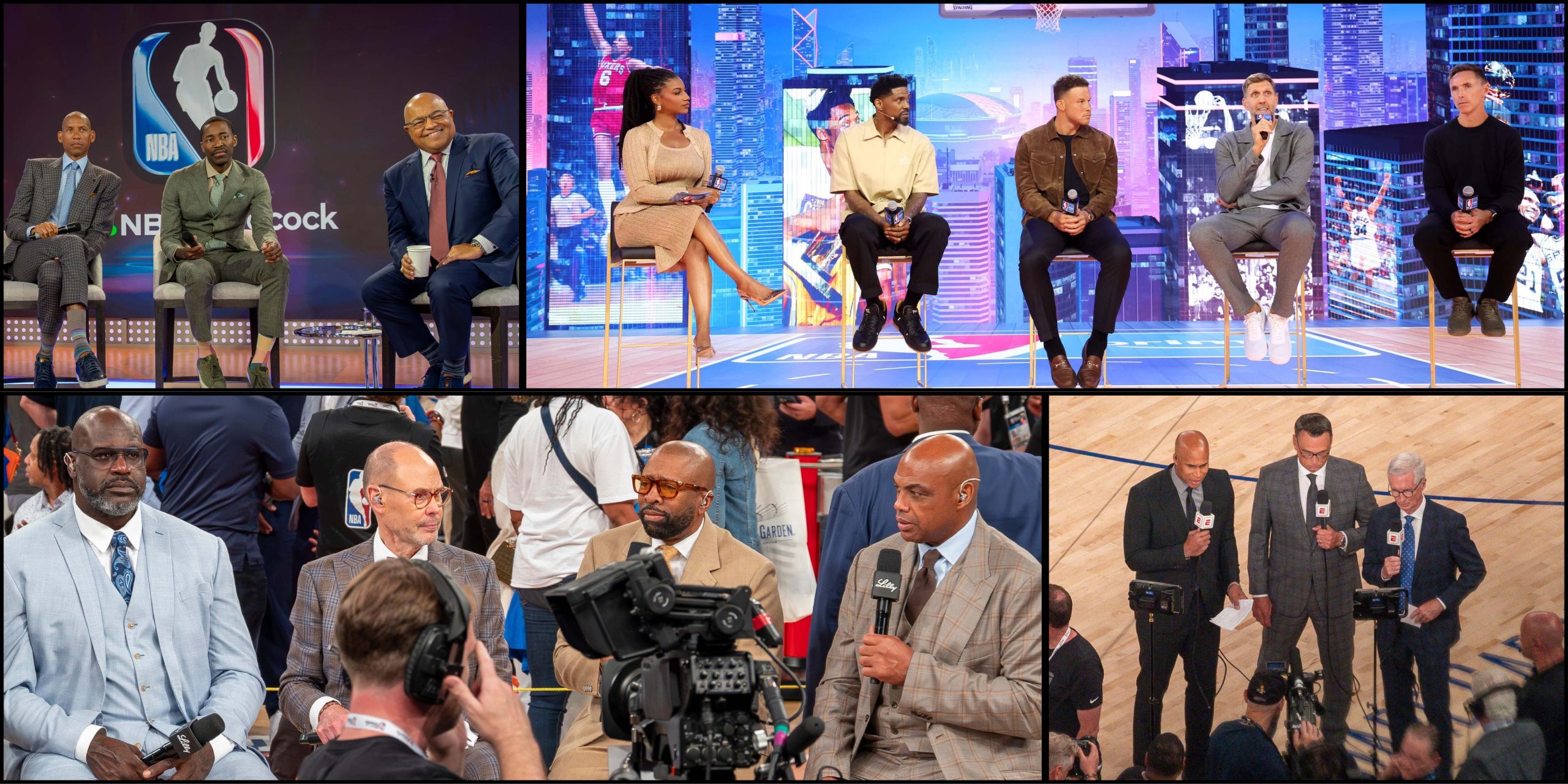
This week’s NBA Draft brought to a close the first season of the new NBA media rights deal, and it was everything the league’s partners could have hoped for. With all the standard caveats regarding Nielsen’s various methodological changes — and some changes specific to the new NBA rights deal, including a reduction in games on NBA TV — the NBA had no shortage of viewership highs this season, and each of its partners’ tentpole properties had a positive story to tell, from the NBA Finals on ABC to the NBA conference finals and All-Star Game on NBC, to the NBA Play-in Tournament on Prime Video.
It was by any measure a dream start to the new deal, but did the networks hold up their end of the bargain? Below are grades for the 2025-26 season on the NBA’s media rights partners.
ESPN/ABC: Does the “A” partner get an “A” for effort?
Let us begin with the incumbent, ESPN/ABC. The last season of the old rights deal may have been the low point for the NBA on ESPN. Without rehashing what has been said many times on this site, the retool triggered by the Rachel Nichols-Maria Taylor saga left ESPN with a studio show heavily influenced by its “embrace debate” morning show culture and an unstable lead broadcast booth with a revolving door of analysts. The “NBA Countdown” studio show in particular may have been the worst major sports programming ever offered by ESPN.
So there was nowhere to go but up. One hesitates to give ESPN too much credit for fixing obvious problems, but the fact is that the network is not obligated to care what the league or viewers think about anything. They paid the check; they get to do what they want. Even if grudgingly, ESPN seemed to acknowledge at least some of the issues with its presentation.
The total absence of Stephen A. Smith this season was addition by subtraction. So too was the minimized role of Kendrick Perkins, the result of “NBA Countdown” operating on a reduced schedule. Simply reducing their presence would have been improvement enough. But ESPN pulled the trigger on an idea that had once seemed ‘pie in the sky’ by bringing in the TNT Sports-produced “Inside the NBA” as its main studio show.
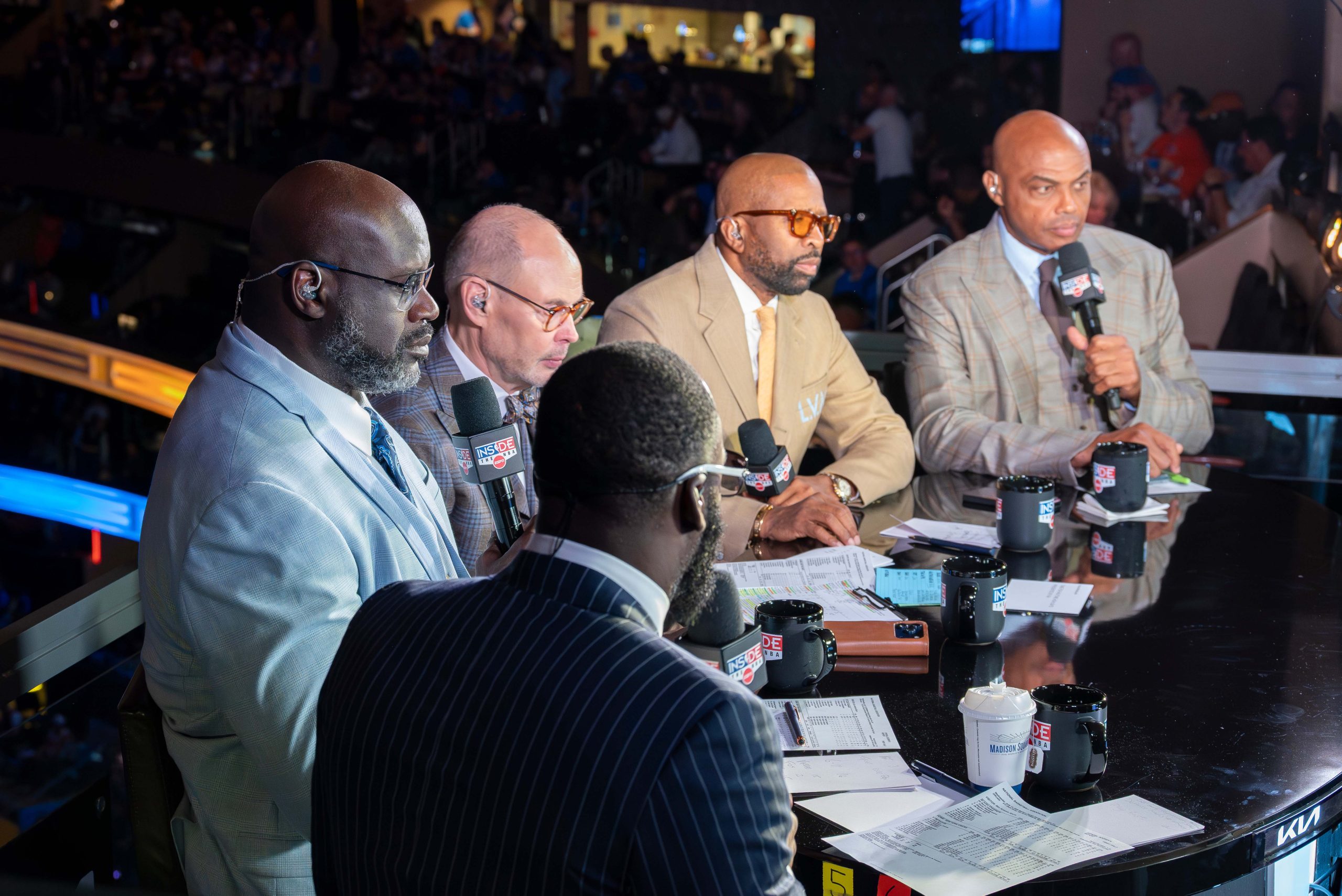
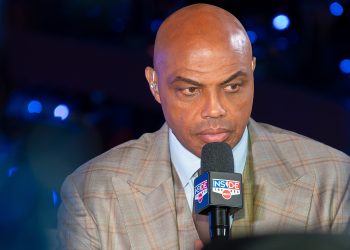
“Inside the NBA” is far from perfect. Charles Barkley and Shaquille O’Neal are increasingly grumpy during the season, and their criticisms of the modern game and its players increasingly outdated. Barkley’s gratuitous putdowns of basketball, almost always in the service of praising hockey, would not fly on the broadcasts of any other league. One can only imagine the genuine outrage if any NHL analyst ever said ‘thank God for basketball’ during a game, or if John Smoltz flat out said that baseball was not among his favorite sports. (Realistically, Smoltz may actually prefer golf to baseball — but surely he would never dare to say it on the air.)
Airing sporadically during the regular season and even into the playoffs, “Inside” was not able to get into its usual rhythm. The bits seemed forced, the interactions rote, and one got the sense that the show was continuing out of obligation to its staff more than any actual desire to be there. To be sure, “Inside” at its worst is still better than “Countdown,” but it was in the rare position this season of being compared unfavorably to another NBA studio show — Amazon’s “NBA Nightcap,” which will be discussed later.
Then came the NBA Finals. While “Inside the NBA” has aired on-site from the NBA Finals before — a preview show prior to Game 1 in 2002 and postgame shows after Games 3, 4 and 5 in 2009 — it had never before been the primary pre-and-postgame show for the NBA title series. The opportunity seemed to rejuvenate the cast, such that the shows in San Antonio and New York felt more like the “Inside” of old than the ones in TNT’s Atlanta studios.
There is a certain energy that the “Inside” crew can bring to an on-site postgame show that is still unmatched by the competition. For a show that lacked energy during the regular season, the postgame show after the Knicks’ historic Game 4 comeback met the delirious moment, blending improv, insight and instinct — Johnson smartly suggesting that the show hold off on highlights so viewers could soak in the atmosphere — in a chaotic environment more akin to the floor of a political convention than a basketball game.
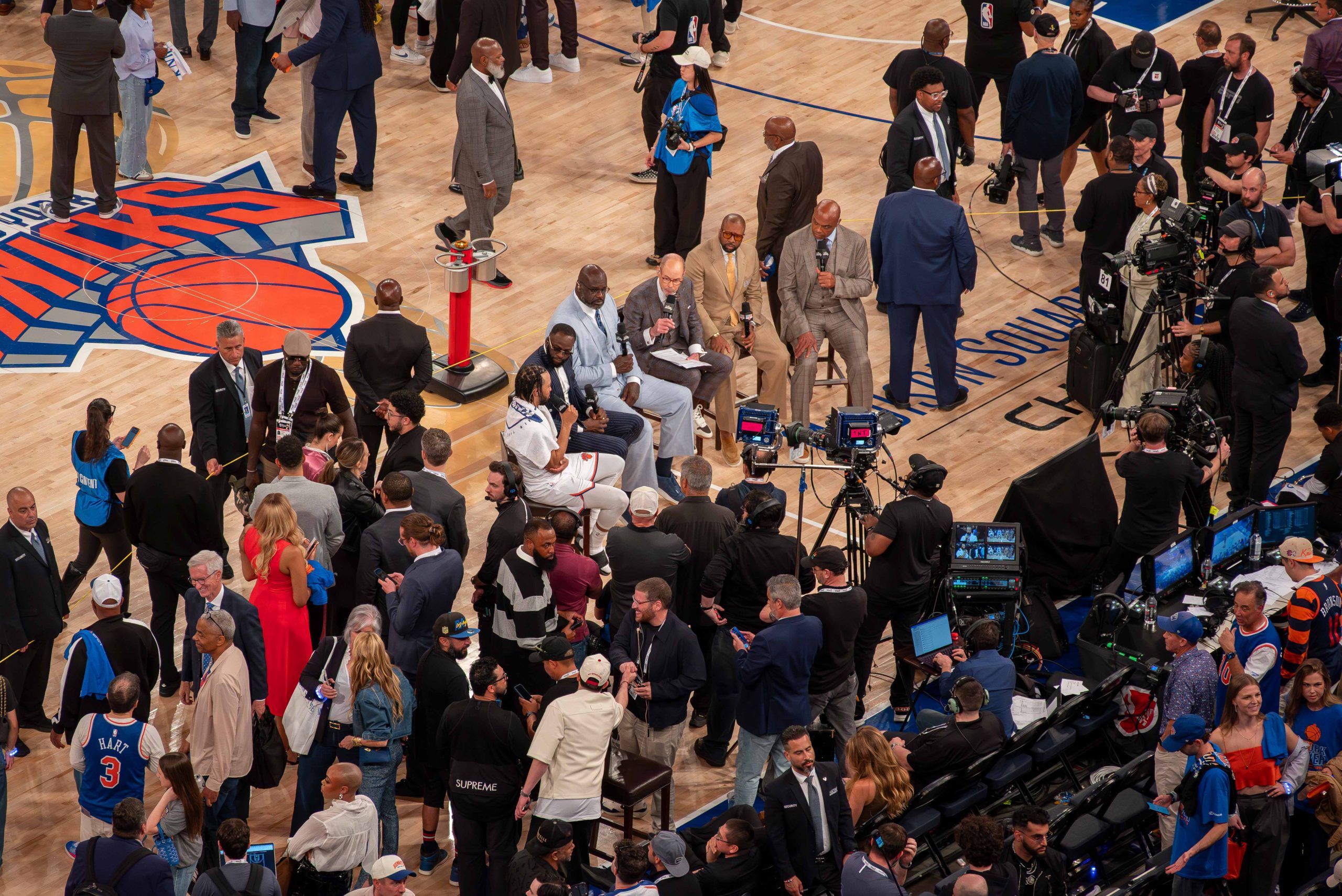
As much as he seemingly tries to hold the modern game at an arm’s length, Barkley still has an evident passion for and knowledge of the NBA that he does not come close to bringing on college basketball, where his contributions consist of milquetoast platitudes. That fire — on display in that Game 4 postgame — is why despite his frequent jibes and professed disinterest, Barkley is still considered television’s leading authority on the NBA. (The opposite of love, as they say, is not hate but indifference. Barkley is clearly not indifferent to the NBA.)
For most of the season, one could have been forgiven for wondering what the benefit was of having “Inside the NBA” on ESPN, beyond simply not having to watch “NBA Countdown.” The Finals made it clear. This was an authoritative studio show that made the games seem bigger and added credibility by its presence. The new studio shows offer better basketball analysis and more of the ‘good hang’ vibe that “Inside” lost about 15 years ago. But as noted as far back as week one of the season, “Inside” is still the show you want to watch when something big — positive or negative — is happening in the league (and there is nothing bigger than the Finals). It is still the authority.
ESPN could not outsource all of its problems. The improvements in the studio show still left a game broadcast that the company needlessly botched three years ago, when it laid off Jeff Van Gundy and Mark Jackson. The replacement plan was to pair Doc Rivers and Doris Burke, but that fell apart upon Rivers’ return to coaching. After Rivers’ replacement J.J. Redick also left for the coaching ranks, last year’s Finals pairing of Burke and Richard Jefferson simply did not mesh well together. Replacing Burke with Tim Legler solved much of that problem.
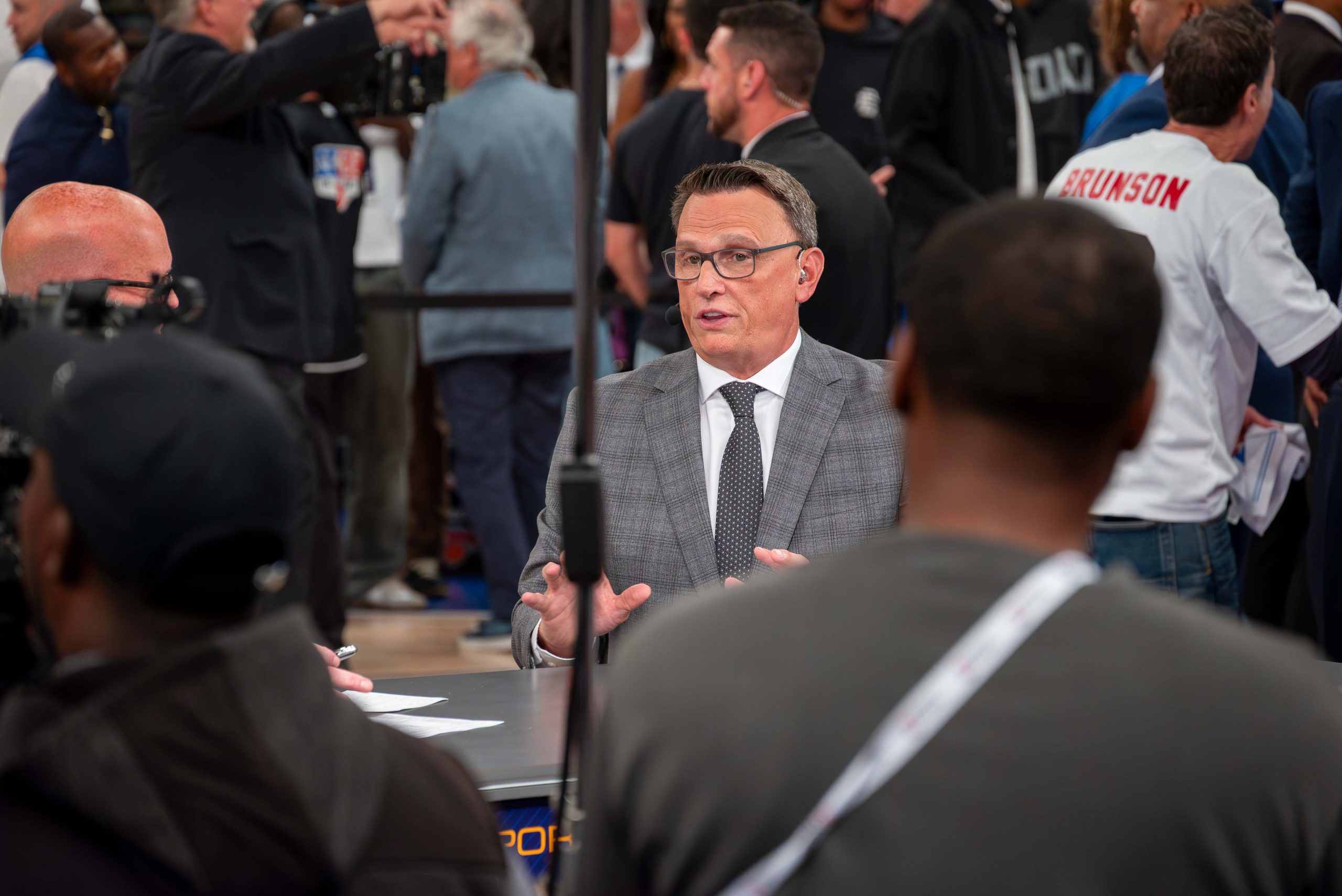
Burke knows basketball as well as anyone and could specialize on Xs and Os, but for some reason in recent years has peppered her analysis with takes seemingly informed by social media. The low point of that effort came during last year’s Western Conference Finals, when she referred to Shai Gilgeous-Alexander as ‘the free throw merchant’ on the air. Beyond being awkward, it also created a murky delineation of roles with Jefferson, whose quippy, conversational approach could cover the same ground. It was never quite clear whose turn it was to be serious or whose turn it was to be opinionated, leaving play-by-play voice Mike Breen in the position of having to prod the conversation along.
With Legler, that issue is gone. Legler stays in his wheelhouse breaking down plays, leaving Jefferson to occupy the informal lane. (Jefferson, for what it’s worth, needs to self-regulate more. He ended his season with an uncomfortable jab at Jay Williams during Tuesday’s NBA Draft telecast.)
This season was the best version of Breen since the days of Van Gundy and Jackson. Some of that is owed to the Knicks’ historic win; Breen did an admirable job staying reasonably down the middle, but it was fairly obvious that he was a little more invested this year than in previous seasons. Even so, it did not hurt to have two analysts with clearly-defined roles.
As for the production itself, ESPN rectified some recent wrongs on the NBA Finals presentation, at least partially at the behest of the NBA. Commissioner Adam Silver said before the Finals that the league had requested ESPN produce opens for each game of the series, as had been commonplace until 2022. The resulting 80-second opens took five months of daily VFX work to create — notable, given the social media speculation that the company relied on AI — and were an obvious improvement over the past few years, when ESPN would go directly from “NBA Countdown” to the start of the game telecast with zero pomp or circumstance. It is frankly inexplicable that ESPN (and in fairness, the NBA itself) spent years treating the Finals as if it was just any other game, lacking the special touches that are commonplace on championship sports broadcasts.
One area that still needs obvious and immediate improvement is the theme song. The return of the NBA on NBC brought back the NBA’s “Heavy Action” in Roundball Rock. Prime Video unveiled a new theme this year, created in part by Common, that blends genres without losing the intensity that is a prerequisite for a good sports theme. ESPN’s theme of the past four years still lacks any intensity at all, or even a playoff-specific version. The upcoming Summer League needs to be the last time that theme is ever heard on a sports production. (Judging by the use of ESPN’s new custom font on some Finals graphics, the no-frills score bug is likely in line for an update.)
ESPN could stand to get some new blood on its NBA roster, as it was again reliant not only on college basketball analyst Jay Bilas — who is typically excellent, but lacks his usual sharpness on the NBA — but also required more double-duty than should be necessary from its radio team of Mark Kestecher and P.J. Carlesimo. An extra play-by-play voice and a couple of extra analysts would be a good improvement for next season.
If one were grading ESPN for its work last season, even a “D-” might have seemed too generous. There is still a long way to go, but this season showed clear improvement, and more importantly a clear desire to improve. An “A” for effort is a cliche, but a C seems somewhat harsh. Let’s split the difference with a B-.
Did NBC live up to its old standard in its return?
The return of the “NBA on NBC” was as much as anything the biggest factor in the NBA’s invigoration this season. Comcast’s NBA deal is one of the most league-friendly in recent memory, providing the rights fee of a lead broadcaster for a rights package that does not even always include a conference final. Usually, that kind of fee would require sacrificing exposure, and while there were dozens of Peacock-exclusive games this season, NBC’s deal brought with it a broadcast network tonnage unmatched in this industry outside of the NFL. More money and more exposure is a rare combination.
Rarer still is a “B” broadcast partner establishing itself so quickly as the league’s network of record. NBC may not get an NBA Finals until 2037 at the earliest — and its NBA run this coming season will end in the second round — but make no mistake that the network already feels more like the ‘home of the NBA’ than ABC, thanks to the consistency of its presence and quality of its production.
The nostalgic touches were welcomed, at least most of them. “Roundball Rock” is back where it belongs, though it would be a major improvement if NBC used the TV version of the theme music that was commonly heard in the 1990s, rather than the unabridged version with the flourish at the beginning. The AI-generated voice of Jim Fagan was hit or miss. Sometimes it truly sounded like the real thing. But all too often, particularly in the introduction, it sounded choppy, robotic and needlessly wordy (Fagan’s real-life voiceovers were quick and to the point). The recordings of the actual Fagan from the previous “NBA on NBC” in the 1990s should be used instead whenever possible. (What might it look and sound like with those changes? Compare and contrast below.)
The best callback to the old 1990s was the consistent use of scripted pregame teases from the beginning of the season in October through the playoffs in May. The teases were not always a home run — there is only so much one can say about a Cavaliers-Bucks game in February — but in the right circumstance, they were the kind of tone-setter sorely missing from modern sports television coverage.
Nostalgia only goes so far, and no amount of 1990s echoes could cover for a subpar broadcast. On that front, NBC delivered the kind of high-quality production that for years has been its standard on NFL games. The network’s ‘big game’ approach and attention to detail — particularly after Victor Wembanyama was ejected in a second round game against Minnesota — elevated games from Opening Night through Game 7 of the Western Conference Finals. Mike Tirico’s return to NBA coverage was welcome, and he had solid chemistry with Reggie Miller and Jamal Crawford. Miller is not for everyone, and he stepped all over Tirico’s call at the end of the aforementioned Game 7, the kind of mistake a broadcasting veteran of 20 years should not be making. Nevertheless, his enthusiasm paired well with Crawford’s easy cool, in a booth that held its own with the competition.
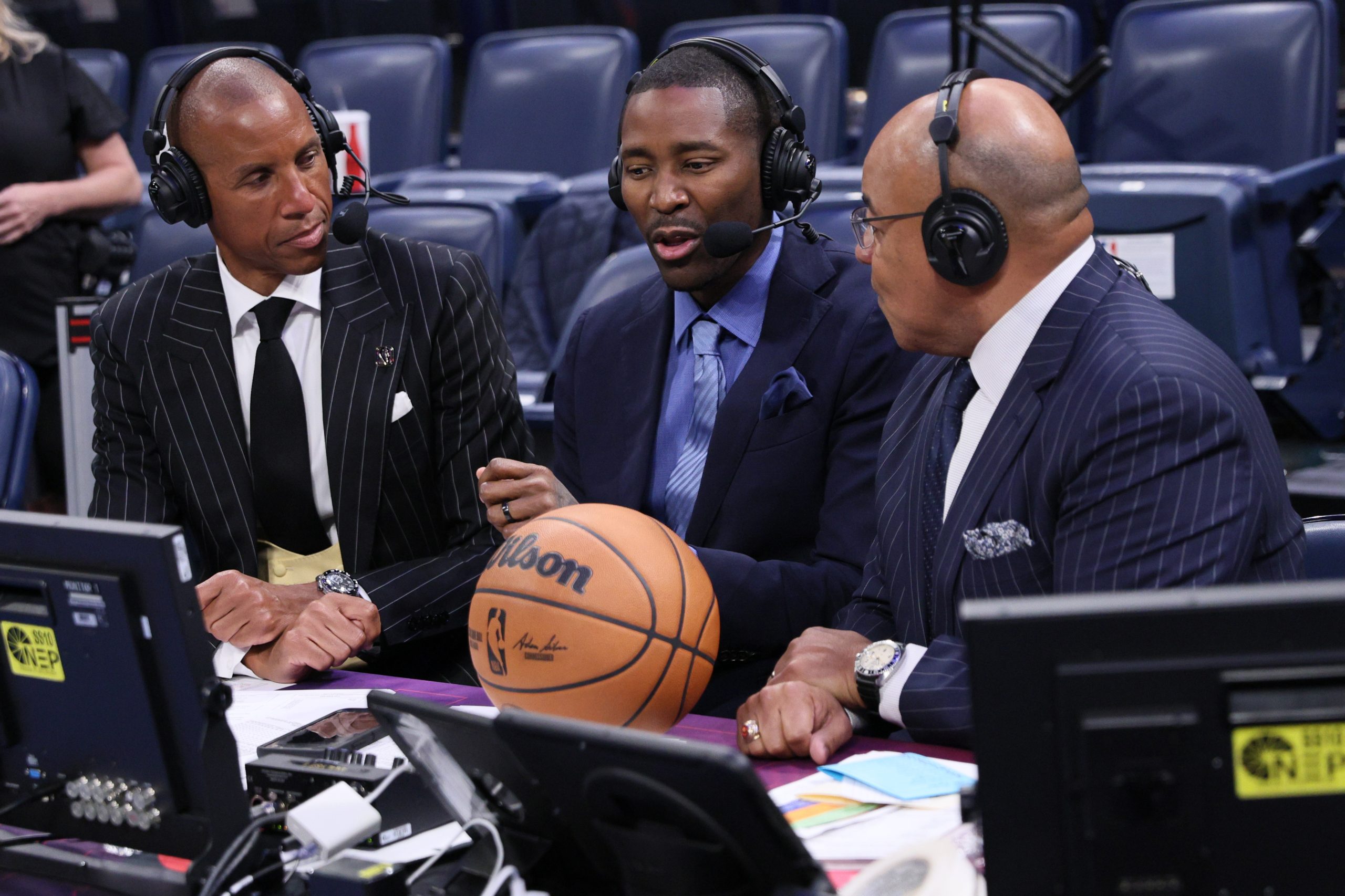
Beyond the lead team, NBC’s Robbie Hummel showed that he has promise as the rare analyst who can do both college and pros equally well. The trio of Noah Eagle, Hummel and Grant Hill, which did not work many games together until the playoffs, may call an NCAA national championship one day. (At the very least, a trio of Ian Eagle, Hummel and Hill seems fairly likely as soon as Bill Raftery decides to call it a career.) Michael Grady was strong for both NBC and Amazon, making one wonder what ESPN was thinking letting him go.
In the studio, Maria Taylor did career-best work on “NBA Showtime” this season, establishing an easy and comfortable rapport with Tracy McGrady, Vince Carter and Carmelo Anthony — a marked improvement over her forgettable stint as host of ESPN’s “NBA Countdown” and even her work on NBC’s stagnant (and now-retooling) “Football Night in America.” While “NBA Showtime” is not going to win too many awards, it is a solid show with good chemistry.
NBC delivered on just about every metric this season, save perhaps for the Lenny Kravitz open for Sunday night games. An “A+” should be reserved for perfect work, and an “A” for work that requires no improvement, so an “A-“ seems appropriate here.
Prime Video: How did the NBA’s new student fare?
As for the newcomer, Prime Video entered the season without the burden of expectation. ESPN/ABC needed to rebound from last year’s disaster, NBC needed to live up to the standards of the 1990s. Even TNT, which lost NBA rights after last season, had expectations this season thanks to the deal to license “Inside the NBA” to ESPN.
Prime, on the other hand, had the freedom to create something entirely new. The network stayed with the tried and true on game telecasts, reproducing the best of TNT with Ian Eagle and Kevin Harlan on play-by-play and an analyst roster that included Stan Van Gundy, Candace Parker, Jim Jackson and even Brent Barry, who had been off of television for several years. The names are familiar enough that there was little learning curve or adjustment period for viewers.
In the studio, though, Prime made a unique mark with its “NBA Nightcap.” First, its massive studio was an attraction in and of itself, particularly the LED court on which ex-players gave demonstrations. More importantly, the streamer assembled a contemporary cast that could offer relevant insights into the modern game, and a generally relaxed air that characterized TNT’s “Inside” in its early days.
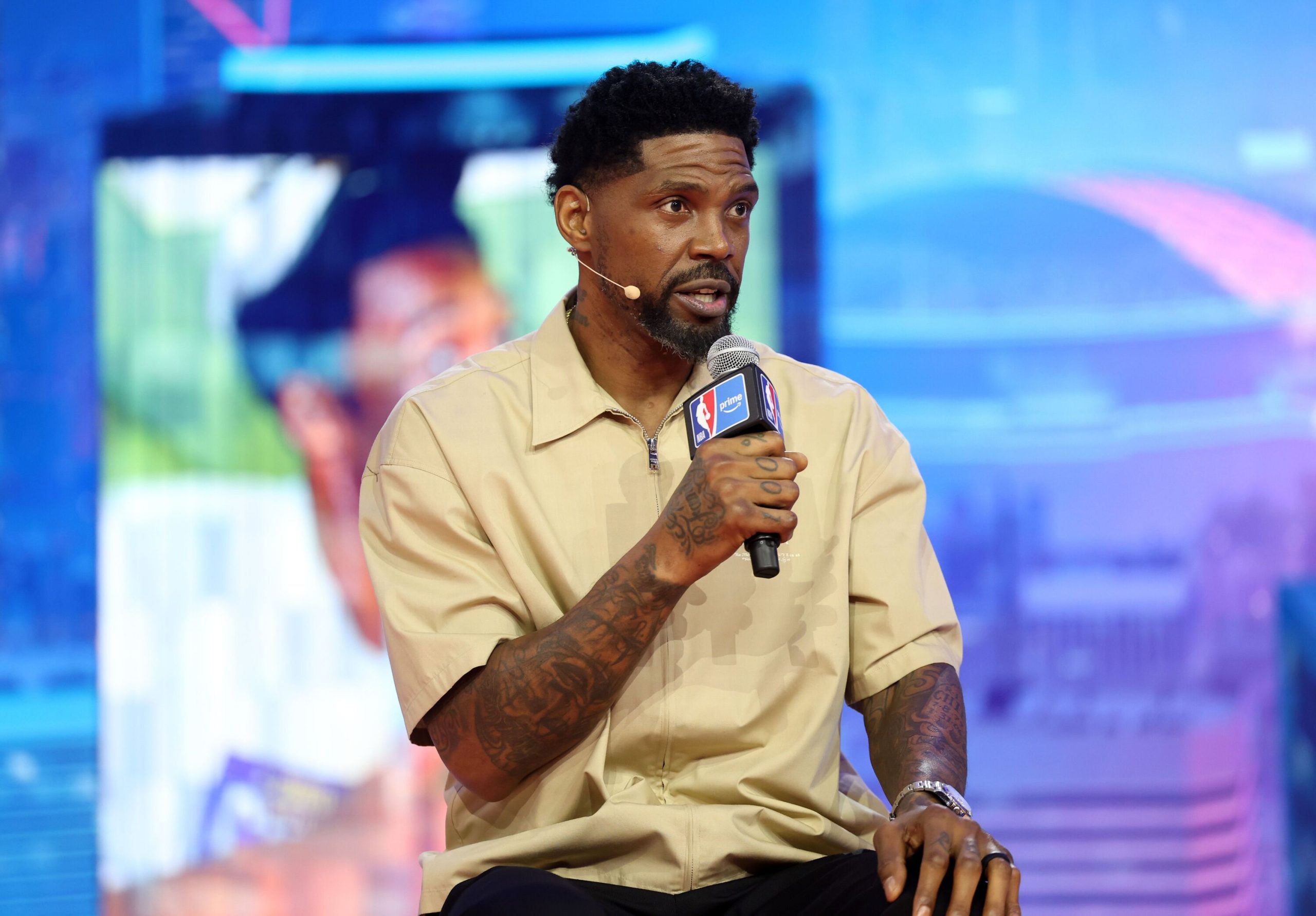
Given the criticisms faced by both ESPN and TNT’s studio shows for being overly negative and disconnected from the game, one might expect Prime’s studio to overcorrect and carry itself with the fawning obsequiousness of a “Star Trek” aftershow. But the postgame panel of Blake Griffin, Steve Nash, Dirk Nowitzki and especially Udonis Haslem did not shy away from critique. On the streamer’s penultimate show of the season, the panel chided the Timberwolves’ Anthony Edwards for congratulating the Spurs with eight minutes left in the fourth quarter. Haslem in particular carries himself like an elder statesman, even though he is not the oldest on the panel, and throughout the season was unafraid to call out teams and players. (NBC’s Tracy McGrady played a similar role on “NBA Showtime.”) ‘Telling it like it is’ can easily transform into reflexive cantankerousness, but Haslem has not reached that point yet.
Rather than getting caught up in defending or critiquing the modern game, the Prime studio sidestepped that debate and broke down the game as it is, not as one might wish it was. Through in-depth on-court demonstrations informed by the perspectives of those who recently played, they provided greater insight than is typical into strategies and decision-making, rather than just critiquing the results.
As previously noted, they do not carry the authority of a Charles Barkley or “Inside the NBA” as a whole, and it is hard to imagine that their studio could have met the moment as well as TNT’s following Game 4 of the NBA Finals. But could they have offered viewers a little bit more about the Spurs’ Game 4 failure than Barkley, who did little more than complain about shot selection? Perhaps.
The biggest issue with Prime this season were the technical difficulties, particularly that which marred the end of its Heat-Hornets play-in tournament game. While one expects Amazon of all companies to eventually work out the kinks, those kinds of errors prevent an “A” grade. The most important task, after all, is to make sure viewers can actually see the game. The grade here is a solid B.