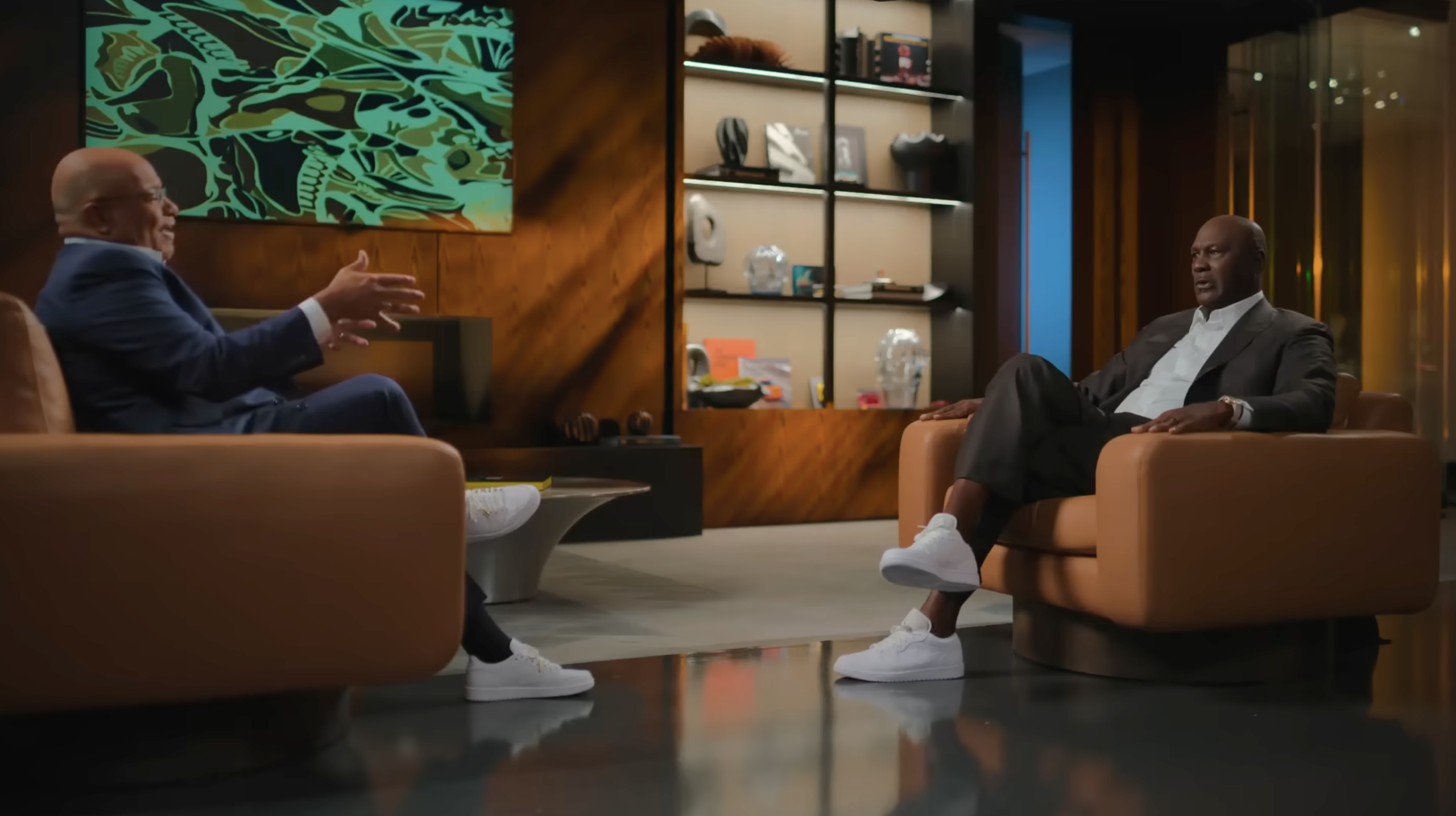
No name commands the attention of sports media like Michael Jordan. More than two decades since his final retirement, his extraordinary legacy still defines how the league is presented and discussed.
During the 1990s, NBC’s coverage of Jordan’s dominant run — with its dramatic teases, compelling commentary, and intentional storytelling — helped elevate the Hall of Famer to near-mythic status.
When NBC announced in May 2025 that Jordan would be a “special contributor” to the company’s NBA coverage, the industry was abuzz with anticipation — and speculation. Though the six-time champion and global icon is famously private, this new television experiment was expected to draw out of Jordan the kind of charisma that captivated fans who watched the award-winning documentary series “The Last Dance” in 2020.
To mark NBC’s highly anticipated return to the NBA, the network brought back many of the elements that made its 1990s coverage distinctive. Bob Costas returned. So did “Roundball Rock” and the pregame teases. Adding Jordan seemed like the perfect finishing touch.
It was far from perfect. In fact, it wasn’t very good at all.
In an interview last October with Front Office Sports, Costas said Jordan’s “mere presence is a reason to stop and then put down the remote.” True as his comments may be, NBC and Jordan seemed to forget that “mere presence” is not enough to create good television.
In some ways, the network should be applauded for acquiring Jordan. Megastars of his stature rarely give television a serious look. What seems clear now is that NBC never really had a plan for how to use Jordan once it acquired him.
During his October 2025 appearance on the “Sports Media Watch Podcast,” NBC Sports President Rick Cordella was asked how the network would feature its new hire.
“There are things he thinks about the game that he wants to get off his chest,” Cordella said. “You’ll see him talk about high-level topics about the game of basketball and the NBA in 2025. You’ll certainly see him opening night. Beyond that, I think I’ll just say tune in.”
The world did tune in. What it witnessed was one of the great missed opportunities in the history of sports television. Jordan’s special contributions consisted of a single conversation with lead play-by-play announcer Mike Tirico, recorded before the season and divided into multiple installments under the banner “MJ: Insights to Excellence.” There’s nothing inherently wrong with Jordan offering thoughts on the uniqueness of Madison Square Garden or explaining the importance of having a love for the game. But the segments that aired had little to no connection to the games viewers were watching or the major storylines that were playing out around the league. Fans were forced to visit Jordan’s insulated world, detached from the moments that were unfolding in real time.
By January, Tirico acknowledged that the pre-taped format was probably not what the public had in mind.
“Was it what everyone wanted? Probably not,” he said on “SI Media with Jimmy Traina.” “Was it better than not hearing from Michael Jordan? You’re damn right it was. And if we get another shot at it, will I be more than excited to be a part of it? You betcha. In our world right now, all you want to do is make the final answer before you know everything. I love that Michael trusted us enough to sit and do something that he hasn’t done in a long, long, long time.”
According to Wednesday’s Front Office Sports report, there will not be another shot. Jordan is not expected to return next season.
NBC was gifted with a compelling seven-game West Finals series between the defending champion Oklahoma City Thunder and the San Antonio Spurs, featuring rising superstar Victor Wembanyama. Imagine how much viewers would’ve benefitted from hearing Jordan describe the pressure facing Wembanyama or his counterpart Shai Gilgeous-Alexander. Imagine Jordan’s raw reaction to Wembanyama’s 41-point, 24-rebound effort in Game 1 of the series. Imagine Jordan breaking down tape of SGA, or even interviewing him, giving the Thunder guard an opportunity to explain his approach to the game and his journey to becoming a league MVP in consecutive seasons, a feat Jordan himself accomplished in 1991 and 1992.
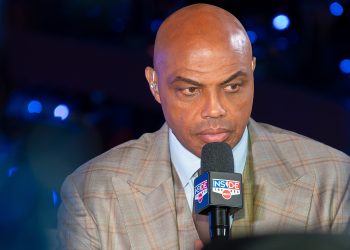
Instead, basketball fans watched arguably the game’s greatest player claim to “pay it forward” during TV segments that mostly looked back. No one expected Jordan to share unvarnished opinions a la Charles Barkley. It would’ve been unwise to expect Jordan to spew out hot takes or create clever catchphrases. But viewers deserved far better than the finished product.
If Jordan were unwilling or unable to make more regular appearances and respond to current NBA events, it would’ve made sense for NBC to simply cut bait rather than have him merely reminisce about the glory days or address evergreen topics.
NBC had one of the most recognizable figures in sports history, an authentic connection to its NBA heritage, and a rare opportunity to create television people would have watched simply because Jordan was talking.
Instead, the game’s most transcendent luminary produced a bunch of unmemorable segments that left viewers wanting so much more.
Plus: Goodbye to the BottomLine
Front Office Sports reported this week that ESPN is removing its “BottomLine” ticker from college football regular season broadcasts.
This is not totally new. For bigger broadcasts, like the College Football Playoff and other major championship events, ESPN has done away with the ticker. This recent decision is another step toward ensuring the game is treated as the main thing.
“We’re always looking for ways to better serve sports fans. By removing the BottomLine during live action, we’re creating a cleaner presentation that keeps the focus where it belongs — on the field,” an ESPN spokesperson told FOS.
Fan reaction has been mixed. Some argue that the ticker kept viewers abreast of action going on elsewhere. Others claim that the ticker is no longer necessary, since many watch games with one eye on the TV and the other on their phones.
For years, networks have crammed all kinds of information on the screen for audiences to take in. There’s the scorebug — which seems to be getting bigger no matter the network — plus stats, nuggets about players and coaches, down and distance markers, and additional graphics.
While it will be an adjustment for viewers, a little less clutter on the screen is a plus. In time, everyone will adapt and, hopefully, other networks will follow suit.