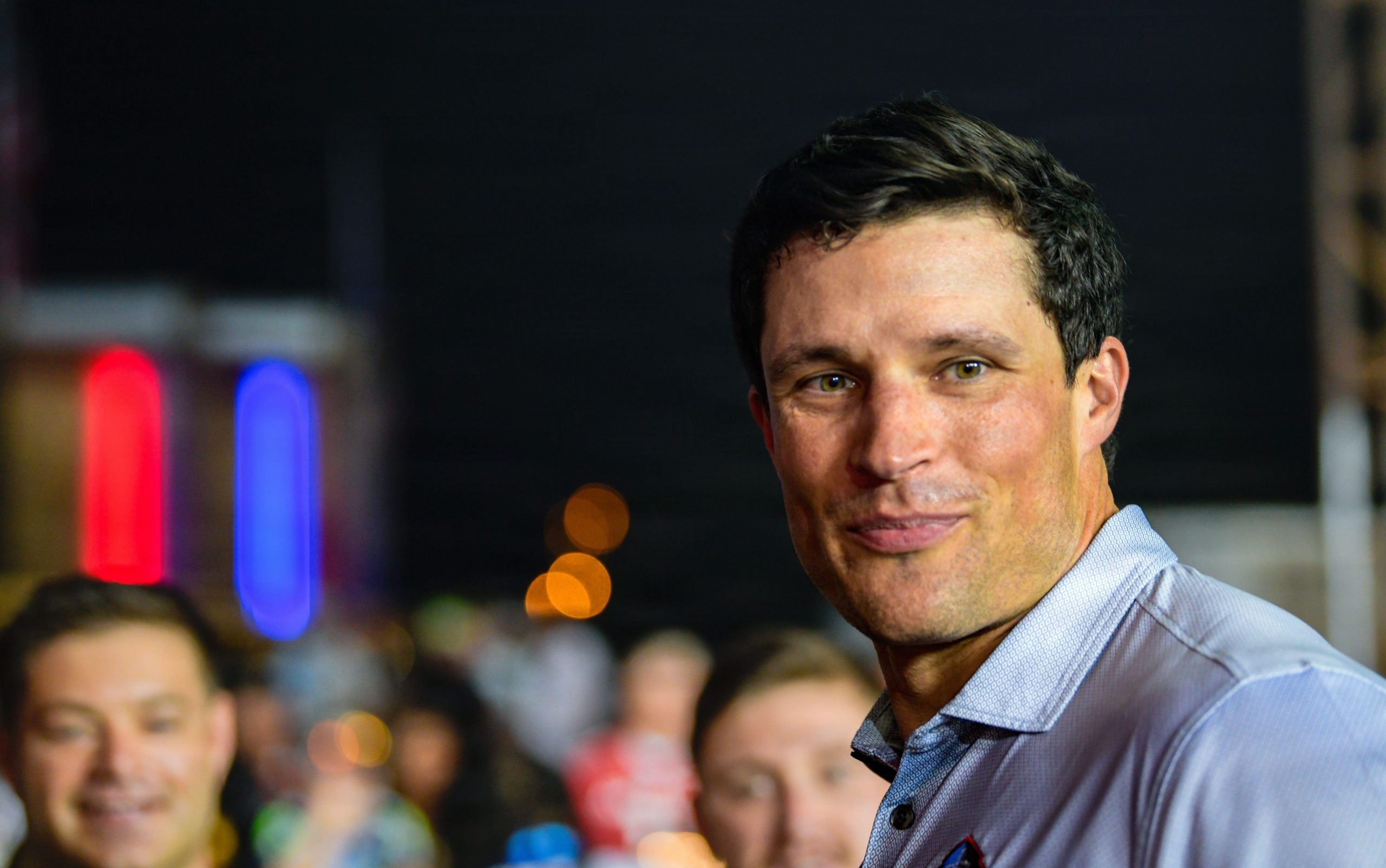
After all the heat it drew for its MLB Opening Night broadcast earlier this year, the greatest compliment Netflix can be given for its presentation of Thursday’s 49ers-Rams International Series game from Australia is that it looked, felt, and sounded like any other NFL broadcast. The centerpiece of the broadcast, Hall of Famer and new lead analyst Luke Kuechly, was concise and assertive, providing digestible nuggets throughout a largely unmemorable game.
No one familiar with Kuechly’s on-field performance with the Carolina Panthers has ever questioned his IQ or his passion for the game. But intelligence and passion alone don’t make football players great commentators. Kuechly’s primary responsibility was to prove he could make the game accessible to viewers without bogging them down in unnecessary detail. In this area, he succeeded.
Kuechly repeatedly did the little things. He explained how San Francisco neutralized Los Angeles’ pass rush by having RB Christian McCaffrey chip block. He broke down how 49ers head coach Kyle Shanahan used motion to help QB Brock Purdy read coverage before the snap.
During a Rams drive late in the third quarter, Kuechly explained how defensive players are taught to tackle high near the goal line to prevent ball carriers from falling forward and possibly scoring a TD. A seemingly small observation like that helps viewers look at the game differently — that’s the value of having a knowledgeable and communicative analyst.
There are a few areas where Kuechly can sharpen his approach. He relied far too heavily on the word “physical” when describing players and tackles. Finding different ways to express simple ideas will help him become a stronger communicator. While it is unlikely Kuechly will ever exude John Madden-like charisma in the booth, he could afford to show more of his personality. That should come in time. Having the genial and polished Noah Eagle as his boothmate should certainly help.
Netflix should be more than pleased with the performance of its new lead booth. For a company known for its reliance on bells and whistles, Netflix — and its new lead NFL analyst — kept the main thing the main thing.
Plus: SportsCenter on 9/11
“It is a day and a tragedy unlike any other moment in American history.” With those words, longtime ESPN anchor Bob Ley opened “SportsCenter” on September 11, 2001.
According to Trey Wingo, who anchored with Ley that fateful day, there was debate as to whether the broadcast should’ve even happened.
“I was of the distinct opinion that we should just cede our time to ABC News, just let them take over the channel,” Wingo told The Athletic in 2020. “We had a bunch of meetings and Bob was pretty adamant the other way. We were supposed to just do a 30-minute show, and I think we stayed on the air for two and a half hours.”
That lengthy and somber “SportsCenter” showcased ESPN’s ability to deliver high-quality journalism in the most difficult of circumstances — measured anchors reporting the news, informing viewers of cancellations across the sports world, and gathering reactions from commissioners, coaches, and players.
Because of Ley’s dogged persistence, along with that of others at the company, sports fans were given a unique perspective on the attacks. ESPN’s coverage served as a reminder that the tragedy had reached into the world of sports, too — that no corner of American culture had been left untouched.
Sports is often described as a necessary diversion — an amusing distraction from the ills of life. But on September 11, not even sports could offer the escape it had so often provided. That special “SportsCenter” became a necessary part of ESPN’s history, a moment when the network demonstrated that sports journalism could serve a greater purpose.