As it gains a foothold in local sports broadcasting, DAZN has designs on being a national player as well.
The London-based streamer — which this offseason has acquired at least partial rights to approximately one-third of NBA teams — will “absolutely” look at national rights deals, its CEO/growth markets Pete Oliver told Sports Media Watch on Monday. Oliver described DAZN as “very focused on regional at the moment,” with aspirations to acquire enough local rights to constitute a “national product,” but added that “national rights are going to be of interest as well.”
“We’ll have to look closely at the structure of the tenders, and clearly the incumbents get a period of time in which they can negotiate as well,” Oliver said, “but for us, it actually makes more sense to build from the ground up with the regional rights, and we would be quite happy actually just growing the regional rights portfolio and having that as our thing as what we do.”
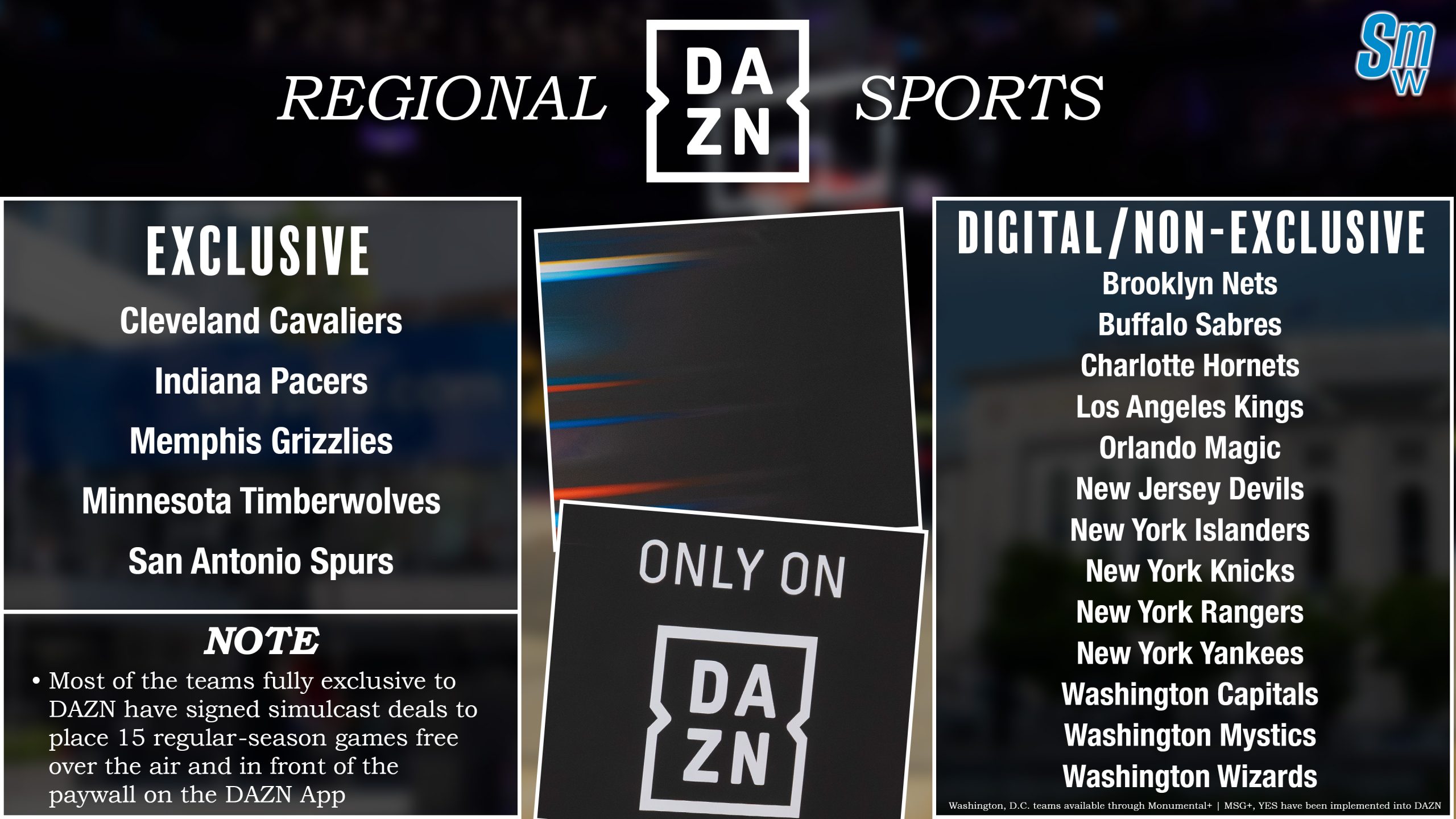
In addition to its local NBA rights slate, DAZN has streaming rights to four NHL teams and the MLB New York Yankees as part of an agreement with MSG Networks and YES Network, is the new streaming home of Los Angeles Kings hockey, and offers subscriptions to Monumental+, which streams Washington Capitals, Mystics and Wizards games.
“[I]f you have enough regional coverage, you have a national feel to you, and we’ll see where national rights go,” Oliver said. “We’re not going to be irrational, we’re not going to buy rights for billions of dollars or to lose money, but we want to be super relevant here in the U.S.”
DAZN has already confirmed interest in a potential centralized streaming hub for NBA teams, something that could reportedly be in place before next season. Oliver described DAZN as the ideal platform to host the league’s streaming platform, owing to the amount of NBA rights it has acquired, and is optimistic the company will prove its worth through technology, advertising and other elements.
“There are things beyond financials that are important,” Oliver said. “Distributing games free to air, as we’re doing; providing data back to the teams and the leagues — and these are all things we’re willing to do. Maybe other people are not willing to do that, but we’re willing to do that, so I think for us, we’re showing our track record, and we hope to have advocates from the teams and the fans that if there is that bigger solution, that DAZN will be a very credible player there.”
Oliver, who was on site to visit teams throughout the summer as DAZN made its pitch for regional rights, described regional rights as a “great opportunity” due to the “must-have” nature of the content, volume of games, and an audience that in some regions “has been really underserved.”
Most NBA teams who signed with DAZN are placing some games in front of the paywall, both for free on the company app and also via over-the-air simulcasts. For example, the Minnesota Timberwolves organization is continuing its partnership with KARE 11 to simulcast select over-the-air games with the same production as broadcasts exclusively on DAZN.
“We actually found that teams are quite thoughtful about, ‘I don’t want to just take the biggest check. I want to make some money, but I also want a good solution for my fans,’ and that’s why we settled on making a very affordable streaming product, but also putting — for most teams — around 15 games on free-to-air cable TV or free-to-air TV as well.”
DAZN has a team of 2,000 engineers who built the sports app and has hired people to work on the regional sports project specifically. The company has a desire to grow its portfolio, and it is in “active talks to try and bring more teams on,” with Oliver mentioning that DAZN will “see what happens for the next baseball season and then go from there.” For now though, the primary share of the regional sports business relates to the NBA, which opens its regular season in just a few weeks.