In May 2015, Ernie Johnson won his third Sports Emmy in the category “Outstanding Sports Personality – Studio Host.” It was a bit of an upset, as many in sports media had assumed — and hoped — the honor would go to ESPN’s Stuart Scott, who had passed away four months prior. Thanks to Johnson’s selfless act, it did.
With his wife at his side, Johnson stepped to the podium, thanked ESPN for a profile it had done on his family, then called Scott’s daughters Taylor and Sydni to the stage to receive the award he had just won.
“As for this, there’s only one place it belongs and that’s on the mantle at Stuart Scott’s house, so if the girls could come up, please,” Johnson said.
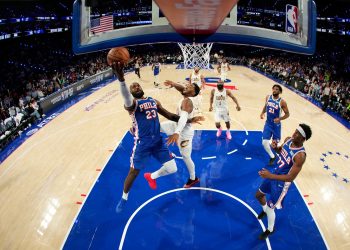
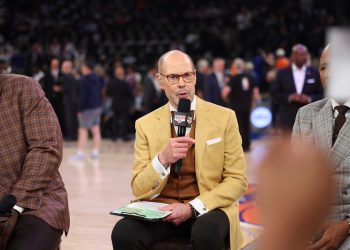
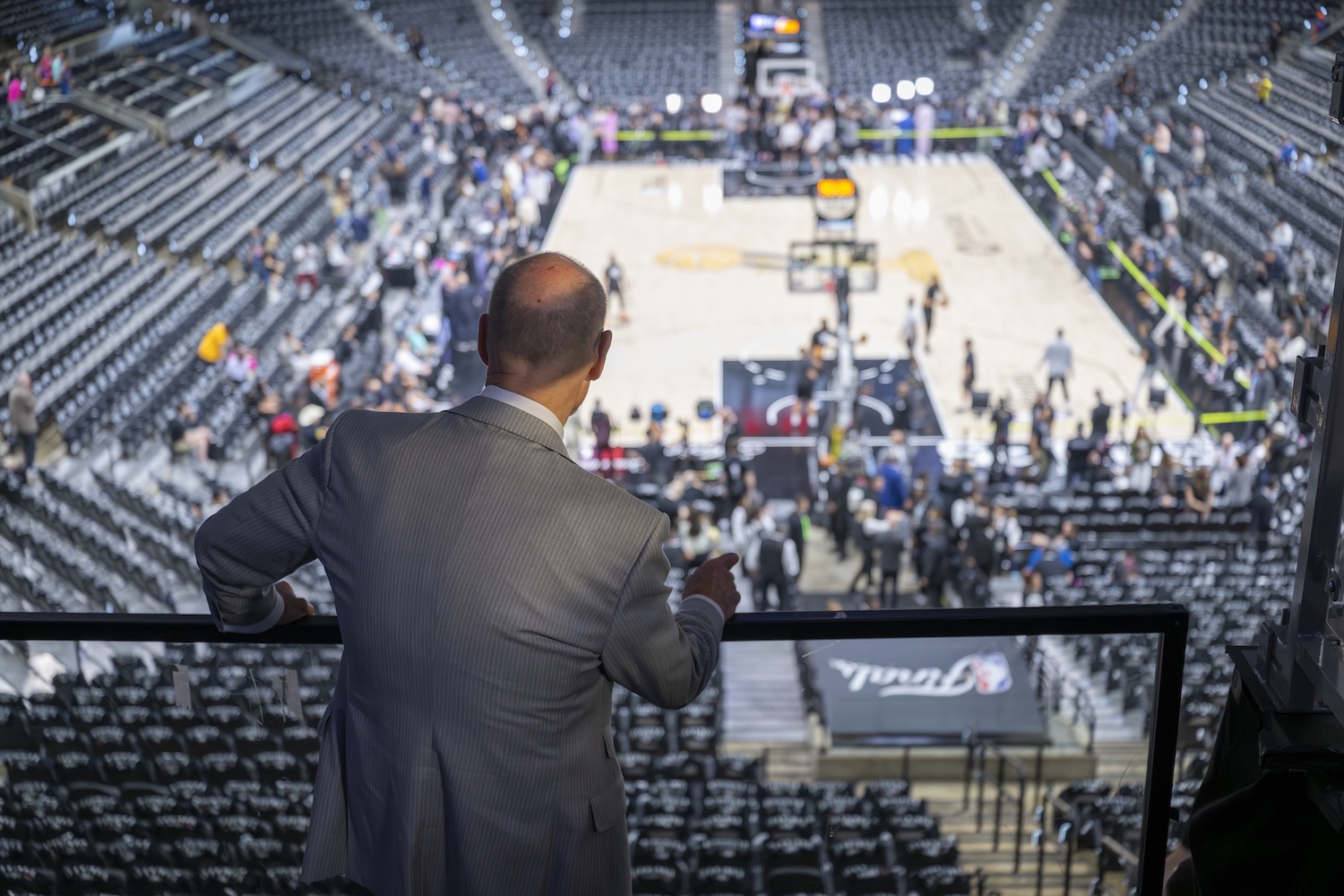
In many ways, that touching moment explains Ernie Johnson, the man and the broadcaster. With grace, gratitude, and decency, Johnson has helmed “Inside the NBA,” the most impactful sports studio show of the last 30 years, if not all-time. That run is soon to come to an end, as Johnson announced Wednesday that this season will mark his final year on the show, an extraordinary run for the Hall-of-Fame broadcaster.
One doesn’t last in this business or win as many awards as Johnson without consistency and a passion for preparation. From the early days when he was the show’s only on-air personality, Johnson has always possessed a smooth and easy style. But as the show evolved — first with the addition of Kenny Smith in the late 1990s, followed by the hiring of Charles Barkley in 2000, then the presence of Shaquille O’Neal in 2011 — so did Johnson.
As the show gained widespread popularity, Johnson emerged as the its unquestioned leader and conscience. His others-first ethos not only defines “Inside the NBA,” but an entire network division. Nearly every other host who’s worked at TNT Sports, from Matt Winer to Adam Lefkoe to Liam McHugh, has been influenced by Johnson’s on-air approach and his off-air character.
“The way Ernie treats everyone behind the scenes — that allows you to be the leader behind the desk,” Lefkoe told the “Sports Media Watch Podcast” last year. “Everyone’s working hard because Ernie is out there an hour early and he’s asking you about your family. He’s who he is all the time.”
That distinctive quality separates him from nearly every other studio host. At times, he is the humble pass-first point guard, firing verbal assists to his opinionated colleagues. Other times, he is the show’s beacon, a North Star breaking through the commotion to lead the crew to a safe and sensible place.
A broken-hearted sports community watched Inside the NBA in late January 2020, as Lakers legend and Hall-of-Famer Shaquille O’Neal broke down while discussing his former teammate Kobe Bryant, who had died in a helicopter crash just days before. It was raw, real, and emotional. As the man once known as the most dominant player in the NBA struggled to find the words to describe his anguish, Johnson was on O’Neal’s left guiding his colleague through and offering a comforting pat on the back. What other show could be trusted to bring basketball fans together in such a unique way during such unspeakable tragedy? What other host would be trusted to demonstrate the diplomacy needed to steer conversation while making room for Jerry West, Dwyane Wade, Reggie Miller, Rick Fox, and others to grieve the sudden loss of one of basketball’s all-time players?
Johnson’s style reveals an understanding that the show’s appeal extends beyond basketball analysis. Viewers wanted to spend time with people who seemed to enjoy one another’s company. That emphasis on entertainment demands a host who is flexible, one who can allow a conversation to wander while never losing sight of where the show needs to go.
During moments of levity, Johnson can let a joke breathe. In moments of tension, typically involving O’Neal and Barkley, he’ll allow an argument to build or bring everyone back with a few carefully chosen words.
Johnson can absorb a punch line as readily as he can deliver one. There is an obvious affection among the four men — as evidenced by Barkley’s emotional response to Johnson’s announcement. It is Johnson’s lack of ego that helps sustain that warmth.
These traits make replacing him an impossibility. A successor like Lefkoe or Malika Andrews can occupy his chair, take the show in and out of breaks, introduce highlights, and direct questions to the analysts. Establishing the same trust will take considerably more than a polished audition or an impressive resume.
It is likely Johnson’s departure marks more than a shift, but the dissolution of the show. As the legendary host said in his statement, “it’s time.”
Barkley, Smith, and O’Neal give Inside much of its volume. But Johnson supplies something different, something deeper. He is the show’s soul and its center. Whether the moment calls for laughter, restraint, or compassion, Johnson understands what the people beside him need.
For more than three decades, viewers have benefited from that understanding, too.
Plus: Why Schriffen and the White Sox needed to part ways
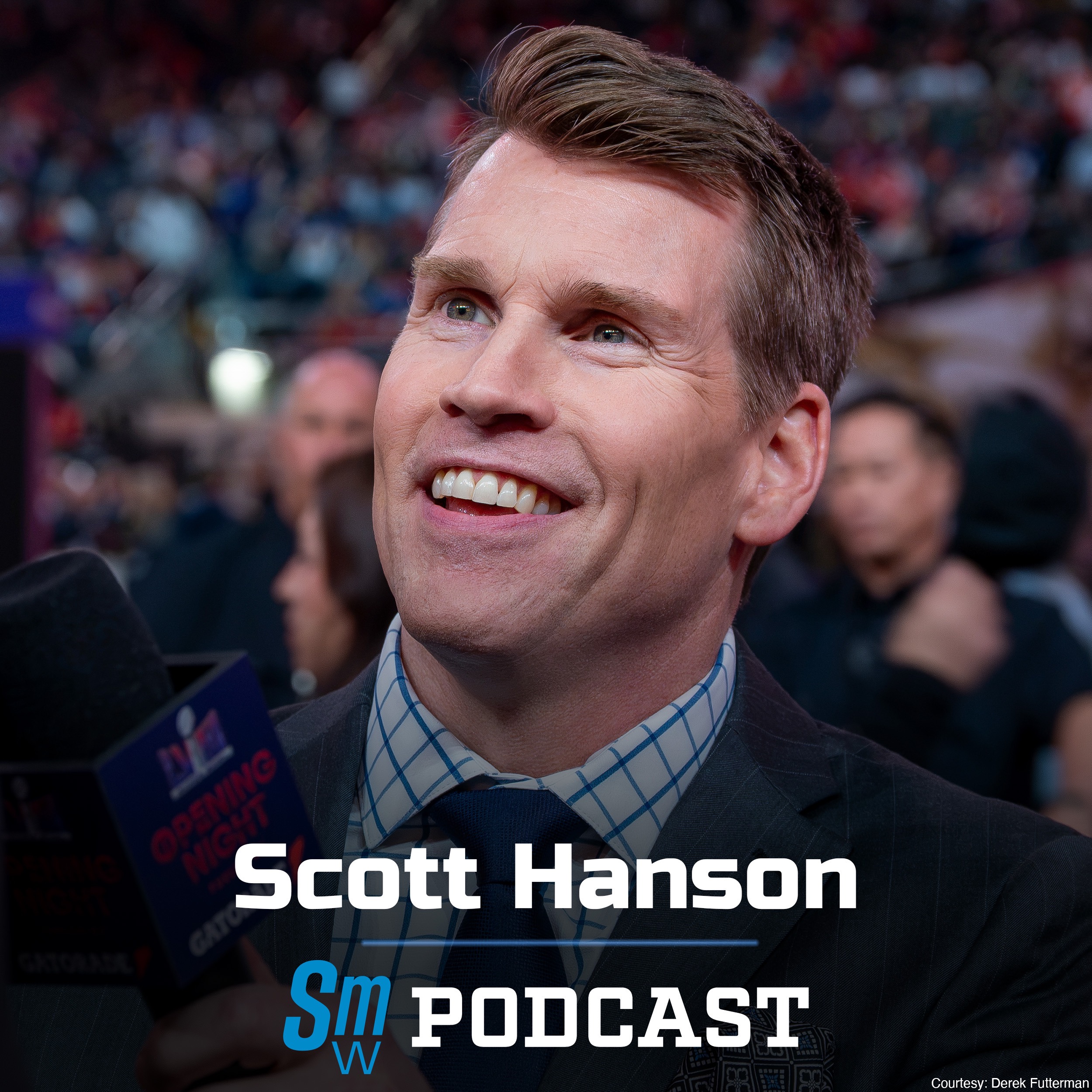
John Schriffen will not return as Chicago White Sox play-by-play announcer. In a statement provided to Sports Media Watch earlier this week, chief revenue and marketing officer president Brooks Boyer said, “As his contract comes to an end, we believe this is the appropriate time to evaluate the direction of our broadcasts and determine what is best for the organization and our fans moving forward.”
The move ends a tumultuous tenure. Schriffen faced an uphill climb replacing beloved voice Jason Benetti, who left to call games for the division rival Detroit Tigers.
It simply wasn’t a good fit. Schriffen never developed great chemistry with longtime analyst Steve Stone. And while he brought energy to calls, he failed to exude charisma or take well to criticism.
By May 2024, months into his tenure, Schriffen’s uneven play-by-play and on-air mistakes had drawn criticism from Chicago media. During a White Sox-Yankees TV broadcast, analyst Gordon Beckham flubbed an ad read. Schriffen used the moment to fire back at local media critics, saying, “If any of those radio losers clip it and try to make fun of you, nobody cares about them, anyway.” From that moment on, it seemed the handwriting was likely on the wall.
Schriffen’s flaws were magnified by the team’s years of futility, including a 41-121 mark in 2024, which set the modern MLB record for most losses in a single season.
Schriffen will continue calling games for ESPN, where his style more naturally fits. At 42 years old, he has ample time to carve out a successful career in broadcasting. But the end of his turbulent tenure is a reminder that not only it is hard to replace a well-received broadcaster, it takes a special announcer to win over both national and local audiences.