Commemorating 20 years of Sports Media Watch requires more time than the current breakneck pace of the industry provides. But it would be a source of regret to let yet another Monday pass without any musings, particularly when that Monday happens to line up with the 20-year anniversary of the site.
So briefly, a few thoughts.
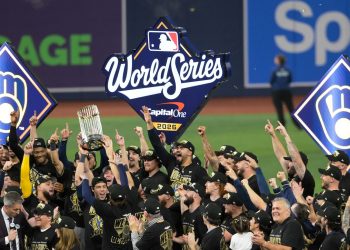
When this site was launched in 2006, the World Series had just averaged its smallest audience on record — a ‘mere’ 15.81 million viewers for the Cardinals’ five-game win over the Tigers. The NBA season was just underway, with the players’ various perceived deficiencies seen as fueling the league’s inexorable decline. College sports was in a state of transition in the first year of a new BCS format and a new standalone national championship. The NFL was about to expand into a new television window, creating a “Thursday Night Football” package on the league’s little-distributed cable channel.
It is a cliché to say that the more things change, the more they stay the same, especially given that 20 years really is not that long of a time period. Perhaps it is more accurate to say that trends do not change easily. They recur over time, sometimes in mildly different ways, sometimes in exactly the same form. The expansionary zeal that led the NFL to create “Thursday Night Football” has been one of the main undercurrents of the Roger Goodell era (which also began in 2006), with the league finding as many new windows and venues as possible. The ever-changing nature of the college football postseason dates back long before 2006, and the four-team playoff that was supposed to finally resolve all the controversy turned into 12, and soon 24.
The NBA has battled the narrative of decline in decade after decade — yes, even the Jordan-fueled 1990s, during the brief period when he retired — with each new generation seen as the reason why the game was dead and buried. (The only difference now is that some of the unflattering nostalgic comparisons are to years when the league was seen as declining. The ‘thugs’ and ‘bums’ of 20 years ago are now the standard today’s players fail to meet.) And the narrative of baseball ‘dying’ of course is a century-old, as any baseball fan will tell you.
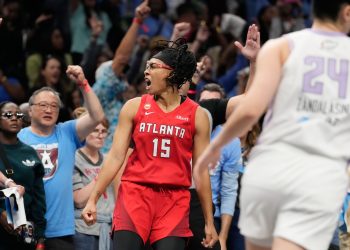
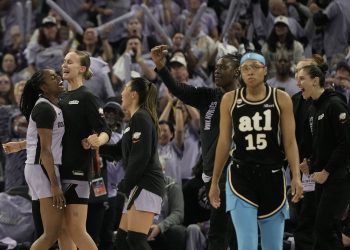
What has changed? In 2006, it would not have been an unfair dig to suggest that the WNBA was not long for this world. It did really seem like the league was dying when its original teams began to fold (the Charlotte Sting were on their last legs in November 2006). In 2026, the league is in the midst of a boom period that has lifted viewership to levels that seemed unlikely in 2006. The deciding Game 5 of the 2006 WNBA Finals had fewer than 500,000 viewers; a Finals Game 6 in 2026 had three times that audience, despite airing at 12:30 PM ET on a Thursday afternoon. The women’s college game has grown even more; up to now, the most-watched college basketball game this decade was the 2024 women’s national championship between Caitlin Clark’s Iowa squad and South Carolina.
UFC went from the fringes to the White House lawn. NASCAR boomed, then fizzled. F1 boomed, and then left Nielsen-rated television.
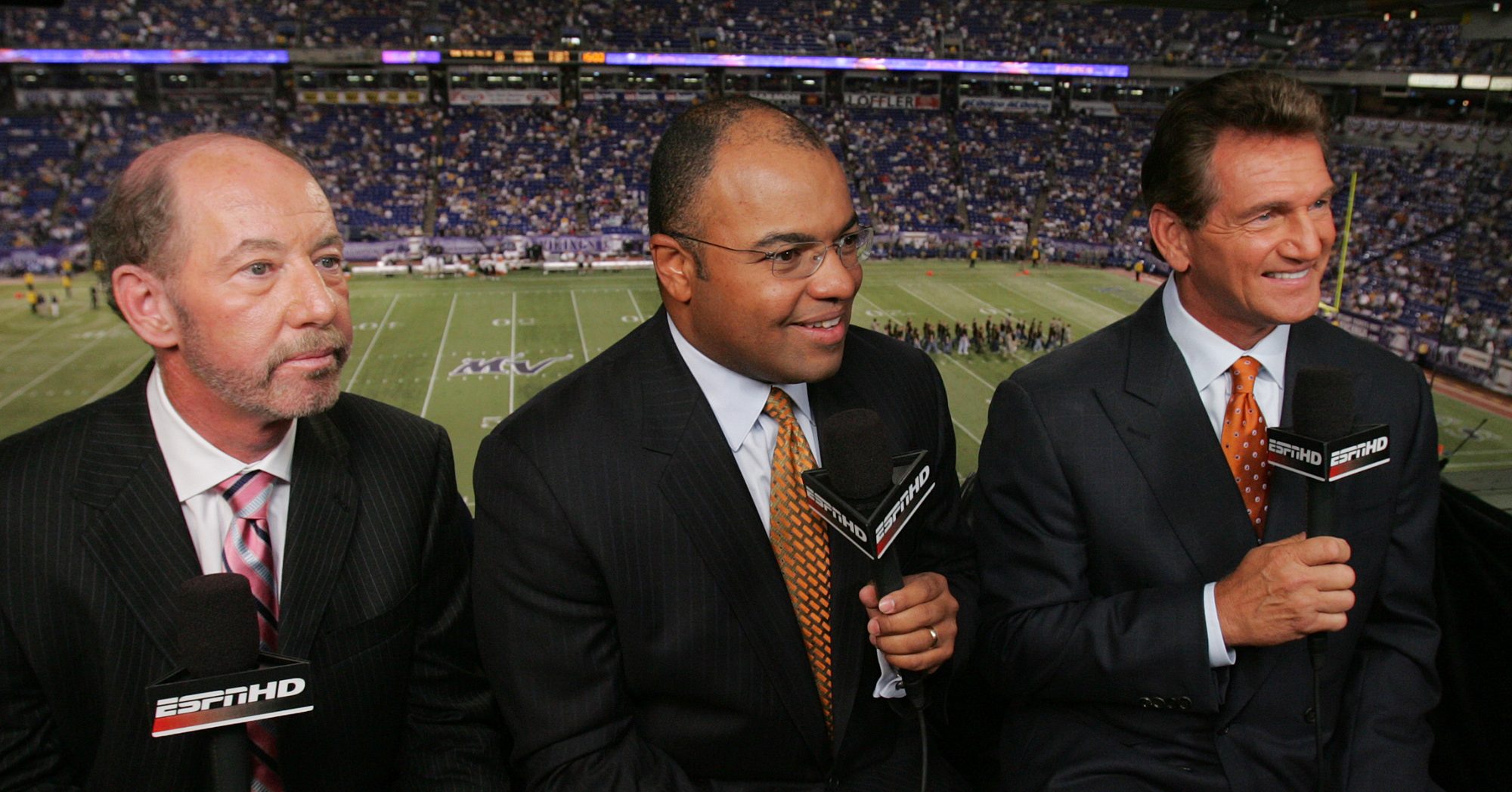
More broadly, it goes without saying that the very nature of sports media has changed. By November 2006, the biggest cable networks had not yet reached 100 million homes, but they were getting there. And cable was acquiring marquee rights packages that had previously been the domain of broadcast. Mere weeks earlier, Turner Sports had acquired a significant portion of the MLB Postseason, including the entire Division Series and a full League Championship Series. ESPN was in its first season carrying “Monday Night Football” — with Tony Kornheiser joining Mike Tirico and Joe Theismann in the booth — and a couple of years away from acquiring the Bowl Championship Series. The NBA had started it all a few years earlier with its cable-heavy rights deal.
The ascendance of cable was made clear earlier that summer, when Disney shut down the venerable ABC Sports brand that was once the gold standard in sports television, rebranding all sports content on the network under the banner “ESPN on ABC.”
Today, cable is clinging to whatever it has left. The Turner Sports networks have been sold, spun off, sold again, and are now under the same umbrella as CBS Sports. The CBS-Turner partnership was once a show of cable’s strength, as it was Turner that bailed out CBS in 2010 when it could no longer afford NCAA men’s basketball tournament rights. Now, whatever remains on the TNT Sports networks will be at the discretion of CBS Sports president David Berson (and the various carriage deals that likely mandate certain programming on TNT, TBS and truTV).
This coming season, college football’s national championship returns to broadcast television for the first time since 2010. “Monday Night Football” is simulcast on ABC in most weeks of the season. And the NBA, which started the trend toward cable, has returned to broadcast television in the most significant way in its history. One of the common threads on this site in its earliest years was to lament ESPN/ABC coverage of the NBA, and those complaints certainly have not changed. But now, after nearly a quarter-century, the NBA is at the very least back on NBC — which is airing games all season long, albeit not the Finals.
But again, not everything has changed. The rush back to broadcast television has been largely welcomed; listen to the way league executives talk about cable, and it is clear that sacrificing reach for revenue was a ‘hold your nose’ scenario. Yet the same reach-revenue calculation is playing out with streaming, which in a few short years has accumulated marquee rights that include playoff games in the NFL, NBA and Major League Baseball — including a full NBA conference final next year — and a primetime NFL package in “Thursday Night Football.”
The only real difference is that the streamers are in most cases fully separate businesses from their linear competitors; in the old days, Disney chose to prioritize ESPN and phase out ABC, and Fox would later reduce its broadcast network inventory to fuel Fox Sports 1. But if Amazon, Google and Netflix have their way, they will be supplanting ESPN and ABC, FOX and FS1. That is still a ways down the road, but the fear has been communicated by Fox to its allies in Washington.
The changes in media extend beyond rights deals. In 2006, “SportsCenter” was one of the highest rungs one could reach in the industry. Dan Patrick and Stuart Scott were still anchoring. Robin Roberts was not far removed from doing the occasional show. Today, “SportsCenter” is still on, but it is not a star-making vehicle. Several familiar anchors have either left ESPN of their own accord or were pushed out via layoffs, including this year Linda Cohn, Karl Ravech and David Lloyd. If there was once a time where there was no life after ESPN, that stopped being the case long ago. Roberts is more famous now for “Good Morning America” than for any work she did for ESPN. Keith Olbermann is of course better known for his turn in cable news than for “SportsCenter” — even after his brief return to the show in the mid-2010s. Patrick’s eponymous radio show has become arguably the defining work of his career.
What has changed is not the existence of life after “SportsCenter,” but of lives — careers — entirely outside of that ecosystem. “SportsCenter” may still be relevant, but it is no longer the goal to reach, or the standard to live up to, for young people entering the industry.
There is some irony in commemorating the 20-year anniversary of a sports blog launch, as the blog vs. mainstream turf war ended long ago with the mainstream simply adopting blog-like characteristics. Going independent is always a risk, but time and time again it is becoming the avenue to success in the industry. The names need no introduction, but nevertheless, Pat McAfee, Stephen A. Smith, Bill Simmons and Pablo Torre come to mind. 20 years ago, working independently meant you were ‘living in your parents’ basement.’ Now, it means you’re living in the penthouse.
Meanwhile, going through the traditional channels of 20 years ago puts you at risk of being laid off, and that is if you get your foot in the door in the first place.
The result has been an increasingly fragmented sports media space and a mainstream — particularly at ESPN — that is increasingly hard to define. The industry in 2006 was dominated by the irascible newspaper columnist railing against ‘overpaid, pampered divas.’ (Pampered divas, but also gang members somehow.) That era was undone by the sardonic blogger speaking truth to power (even if that power was just Chris Berman), only for the embrace debate era to emerge in its stead, marked in recent years by a scream-and-shout ethos of personal attacks, veiled threats and astonishing levels of self-regard. The old sports blogosphere was built to take down Joe Morgan, of all people; it was not built to take on Stephen A. Smith.
Along the way there was an ultimately brief era of sports talk that is perhaps best described as ‘intellectual,’ whether one means it as a compliment or not. Sharing the general ethos of the old-school bloggers, but hardly any of the edge, it was less about speaking truth to power than drawing connections between sports and society in ways that some viewers, and undoubtedly executives, were uncomfortable with.
That era has largely been replaced, at least at ESPN, by what is often described as ‘bro’ content, again whether one means it as a compliment or not. At its worst, such content is defined by feverish overstimulation and more black tank tops than a Neil Breen film. But for the networks, it has provided a safe space for some of the most powerful athletes and executives to get their message out, all with the imprimatur of authenticity enjoyed by platforms just outside of the ‘mainstream.’
All of these various forms of sports media still exist in some way. There are still newspaper columnists, if not all that many. The old-school bloggers are still around, too, if less influential. ‘Embrace debate’ has not ended, even if ESPN’s Mike Foss might furrow his brow at focus group results. The intellectuals may be speaking only to the choir, but some are winning Pulitzers. The bros are of course ascendant, at least for now.
If there is one wing of sports media that has largely died out, it is the TV journalism showcase — the “Outside the Lines” or “Real Sports” that took a moment away from promotion to discuss issues in-depth. Save for the occasional “E:60” and “30 For 30,” there is little time on ESPN or any of the other networks for anything that does not shore up the bottom line. If there is a place for that kind of content now, at least in the multimedia space, it is in independent podcasts like “Pablo Torre Finds Out.”
What does not exist is a clear picture of exactly what ‘sports media’ really means. There is a school of thought that media really should be used in its plural form, as trying to boil an entire industry across multiple platforms, audiences and methods is a ridiculous effort. That is a fair point. So often, complaints about the ‘media’ conflate one school with another. Even Foss referred to McAfee as a journalist recently. But a talk show host is not doing the work of a beat reporter. Nor is a pundit who is performatively screaming about the result of last night’s game. And given that none of the aforementioned wings of sports media even involve any live game action — which is by far the primary product being consumed — it is fair to suggest that the on-air personalities and professionals inside the various production trucks should be part of the conversation.
One might be tempted to throw up one’s hands and simply state, “In conclusion, sports media is a land of contrasts. Thank you.” But it is perhaps important to keep in mind that an industry so all-encompassing is hard to pin down. It was quite a spectacle earlier this year when some political partisans began damning all of sports media because of a few op-eds — including one in a Substack — criticizing aspects of the U.S. hockey team postgame celebration following their gold medal win in the Olympic Games. Sports media encompasses the critics, as well it should. An industry without dissenting voices is one with little of value to offer. But those are also dissenting voices for a reason. The industry also encompasses the people who covered the game, either on television or in columns, who told the stories and conveyed the historical significance that helped make it more meaningful for the audience. It encompasses the people who celebrated the result, and there were many.
There are simply too many lanes and too many people occupying them for sports media to be any ‘one thing.’ That also makes sports media easy to define if you are, let’s say, less than purely honest in your motivations — as you can cherrypick what you do not like and present it as the rule.
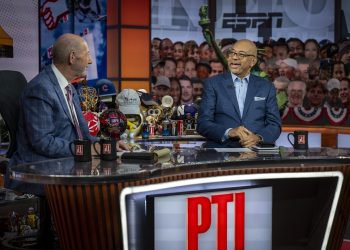
A few weeks ago, ESPN’s “Pardon the Interruption” celebrated its 25th anniversary with Tony Kornheiser and Michael Wilbon still in the chairs they have occupied since October 2001, followed immediately afterward by the TNT-produced “NBA Tip-Off” with Ernie Johnson, Kenny Smith and Charles Barkley in the chairs they have occupied for even longer. On Monday, Wilbon announced that he is now on an indefinite leave of absence over health issues. And Johnson said last week that he will leave the NBA studio at the end of this season, citing in part health issues that included bypass surgery last year.
Change comes slowly, and then all at once. When this site launched, Stuart Scott was arguably the most famous of all the “SportsCenter” anchors, and though few would want to admit it now, took more than his fair share of shots from critics. It was a year later when he fell ill with cancer, which he fought until his passing — at just 49 — in 2015. In 2006, Kobe Bryant was the complicated face of the NBA, his image tainted by his legal trial and perceptions of being an uncoachable bad teammate. He would become an MVP, a champion again, a beloved figure, and ultimately a tragic tale. His 2020 death, in a helicopter crash that also killed his daughter and seven others, is still one of the most abrupt and shocking events in the history of North American sports.
Over the past 20 years, the industry has weathered the passing of any number of well-regarded figures before their time, from John Saunders and Craig Sager to Nick Charles and Dave Strader.
And of course we ourselves are finite. There is a fairly infamous line from the movies that goes, in part, “I get older, they stay the same age.” But the reality, at least in this industry, is the inverse. ‘They get older, we stay the same age.’ Because we still see them on our television screens — Wilbon, Johnson, Dick Vitale, Bill Raftery, even LeBron James — and they are doing the exact same thing they were doing when we were 13, we might not always notice that we ourselves are about 40. (Give or take a few decades.) There is an element of arrested development here. The stability helps hide just how much truly has changed, and how much more change there is to come.
Sports Media Watch is a bit of a dinosaur now, a full-service website largely run by one person. A site like this, in 2026, would be a Substack. SMW is fortunate to feature the contributions of Armand Broady, Derek Futterman and Ben Huddleston, and in the past Drew Lerner, Adam Gostomelsky and more, who have helped maintain the certain ‘house style’ that this site has had for the past 20 years.
If you are a fan of the way things are done here, it really is as simple as SMW being a passion project run by someone who hates clickbait — hates it like Roger Ebert hated “North” — and is uninterested in raising his own blood pressure (much less yours). Make no mistake, this is not entirely altruistic. To borrow from a television character of note, ‘I did this for me.’ Not at the outset, of course. There was no long-term plan 20 years ago, or even a short-term one.
But over time, you tend to find your voice, understand what you like and what you don’t, and what you want to deal with and what you never want to deal with. And blessed with the good fortune of owning a website, why use it to create content that you yourself do not want to read?
If you share my particular sensibilities, I hope you see SMW the same way I do. And you might understand why I pass on stories that are irrelevant but evocative, pointlessly infuriating, or simply not worth the time to read or effort to write. There is probably great financial reward in writing about Stephen A. Smith every day, but that would require writing about Stephen A. Smith every day. How this site has survived this long with that ethos is a testament to good fortune, reader support, and to round-the-clock effort by the small group of people who have helped it keep going.