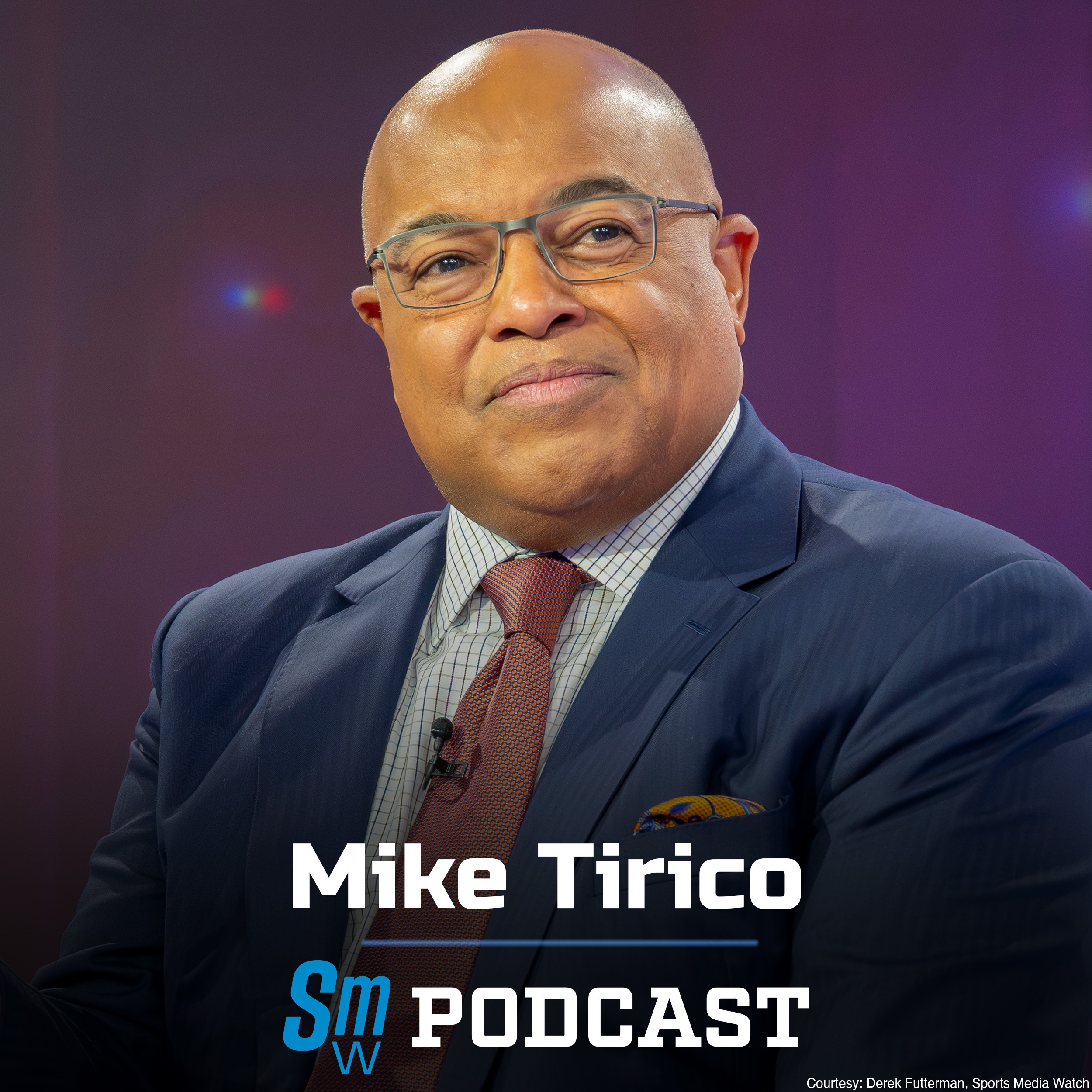
The only way you saw Stephen A. Smith‘s interview on SportsCenter last night is if you were watching it live.
ESPN has not made the interview available on its website, has not referenced the interview in any form, and during an ESPNews montage of the various interviews the network conducted on Thursday night, did not include a single snippet of the heated conversation between Smith and anchor Chris McKendry.
Certainly, ESPN is not obligated to make the interview available. However, one wonders exactly what motivation there is for not including it. After all, ESPN is nothing if not obsessed with the opinions of the pundits who work for the network. This is the same ESPN that routinely teases segments on SportsCenter by saying “Wait till you find out what [fill-in-the-blank] analyst said about [fill in the blank event].”
One would imagine that a heated interview with one of the network’s most prominent analysts would, at the very least, get some slight airtime.
Perhaps the interview was too inflammatory. After all, this is not a country where African American’s complaints about racism are taken too well. Just take a look at this comment on ESPN’s video site — one that is indicative of the overwhelming sentiment of the commenters on the internet.
Then again, ESPN has never shied away from attracting controversy. Perhaps Smith’s interview, instead of being too inflammatory, was simply not close enough to the status quo to be acceptable. Regardless of what one thinks of what Smith said, there is no doubt that he was one of the few dissenting voices across the ESPN family of network’s last night.
While Peter Gammons made interesting distinctions between Bonds and Mark McGwire (going as far as to argue that because McGwire was nice to his teammates, that may help him get into the Hall of Fame), and while Steve Levy made a point to ask one of the lawyers involved in the investigation into Bonds whether he felt “any personal satisfaction” about the indictment, Smith was one of the few personalities who came at the issue from a different angle. Perhaps not toeing the party line is what made the interview radioactive.
Certainly, Smith was not the only one who felt the way he did. On TNT NBA Tip-off Thursday night, Charles Barkley, Kenny Smith and Ernie Johnson had this exchange:
Charles: I gotta tell you something. I’m so mad right now — and I could get in trouble tonight — because I’m so disturbed about the Barry Bonds situation.
Ernie: In what respect?
Charles: First of all, Barry’s a friend of mine. But for them to do this indictment three or four years later, I’m just deeply concerned — where they made this a witch hunt for one particular guy. I’m not here to defend Barry, even though he’s my friend — but for them to make this a witch hunt about one particular guy, it just disturbs me greatly.
Ernie: Are you surprised when a guy is flirting with baseball immortality and one of the greatest records in the history of sport, and you don’t think that — and you see the way Barry Bonds changed over the years, and he got better as he got older?
Charles: First of all, that’s a very valid point. But I’m not here to defend whether he did it or not. But, first of all, if he did it, he’s not the only one. It can’t be a personal witch hunt because they don’t a person’s personality.
Ernie: Well, the indictment says evidence was obtained including positive tests for the presence of anabolic steroids and other performance enhancing substances for Bonds and other athletes.
Charles: Well, get them all.
Ernie: Oh, I agree. Get them all.
Charles: Get them all. Unless they get them all — and let me tell you something, I’ve been watching the news for the last month. And these other guys are coming up with these lame excuses, that they were doctor-approved, or that they didn’t know they were taking it, and people believe them. But I just think, from the beginning, that baseball screwed this thing up. But one thing — our job, on this television show, because people believe what we say, is to be fair and honest. And this has been a witch hunt from the beginning. If they’re gonna get one guy, you’ve got to get them all. But to go after one guy in particular — I think it does a disservice to the world.
Kenny: I agree that you have to be naive to think there’s not going to be a witch hunt when its Barry Bonds, only because any time that there is any type of controversy this magnitude — I don’t care if its sports, I don’t care if it’s crime — they’re going after the top guy. So, they can make examples out of everyone else. So, you knew that from the start, and I knew that from the start. So, Barry Bonds was not going to be exonerated long before they found out if he did or did not — so they can make an example out of him to the lesser players. Because if they do it to the lesser players, people say ‘oh, it was just this player, player X, player Y’. But when you say its Barry Bonds, you say its Al Capone. You say its somebody else, there’s a big difference.