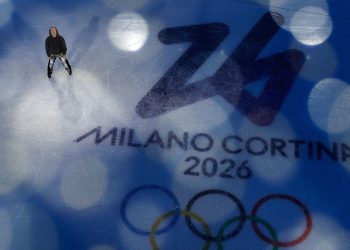
Winter Olympics ratings easily surpassed the Daytona 500 and NBA All-Star Game over the weekend, but the numbers were still subpar.
 Sunday’s primetime Winter Olympics coverage had a 9.1 rating and 16.3 million viewers on NBC, down 25% in ratings and 23% in viewership from 2014 (12.1, 21.3M) and down 31% and 30% respectively from 2010 (13.2, 23.3M). Figures include primetime encores on the West Coast.
NBC’s primetime coverage is now divided between broadcast, cable and streaming. Including concurrent viewership on NBCSN and NBC Sports digital platforms, Sunday’s window had a 10.2 (-16%) and 18.2 million (-14%).
The combined figures are the lowest for the second Sunday of any Olympics since at least 1992. Compared to the 2016 Summer Olympics, which also included primetime cable and streaming coverage, ratings and viewership fell 35% from a 15.8 and 28.1 million.
Despite the lower numbers, Sunday’s coverage easily topped the day’s other major sporting events. It more-than-doubled the NBA All-Star Game on TNT head-to-head (4.3, 7.65M). Final figures for the Daytona 500 were not available, but it trounced that event in the overnights 11.8 to 5.1 (though the Olympics lost the direct daytime head-to-head 5.1 to 4.1).
Primetime coverage posted even lower numbers the previous night. Saturday’s window had 14.5 million viewers on NBC alone (-15%), and a 9.0 rating (-6%) and 16.1 million (-6%) across all platforms. The combined numbers are the lowest for the second Saturday of any Olympics since at least 1992 — and the lowest primetime figures of this year’s Games.
The Winter Olympics is now averaging a combined 12.0 rating and 21.3 million viewers in primetime, down 7% in both measures from 2014 (12.9, 22.9M). The 12.0 is the lowest average at this point of any Olympics since at least 1992, a tick below the previous mark of 12.1 in 2006.
The average audience is the lowest since that 2006 Olympics (20.4M), with the NBC-only average of 19.2 million the lowest since at least 1992.
Salt Lake City was the top market on both Saturday (18.3, +34%) and Sunday (19.6, +14%). Denver ranked second on Saturday (16.8, +13%), followed by Minneapolis-St. Paul and Milwaukee (15.7 in both) and Portland (15.1).
Minneapolis ranked second on Sunday (17.5, -6%), followed by West Palm Beach (17.2), Milwaukee (16.8) and Denver (16.1).
[Wknd. numbers from NBC Sports PR 2.19]