As Tyrese Haliburton lay in agony on the floor at the Paycom Center a year ago, immediately taking the air out of the first NBA Finals Game 7 in nine years, it was not hard to wonder when the NBA would find a stroke of luck. It seemed that every year finished with some sort of letdown, usually by way of short, forgettable championship series that failed to resonate with the kind of national audiences once taken for granted in the days of LeBron James’ eight-straight Finals appearances. Pacers-Thunder had failed to resonate more than most, but at least it would go the distance.
Then Haliburton tore his Achilles. While the Pacers somehow gutted out a halftime lead, the rest of the game was a virtual afterthought, and the league ended its season with the bad vibes that seemed to be ever-present since the previous Achilles injury in the Finals — Kevin Durant’s in 2019.
Much has been made of the NBA’s lows the past few years, more than in any other league. It was not just the NBA whose ratings hit a record-low in the 2020 “bubble,” but also the World Series, and the Masters, and the Kentucky Derby, and on, and on, and on. But it was also true that while every league had its time in the mud since COVID, other leagues at least had their time in the sun every now and again — most notably Major League Baseball, which thanks to Shohei Ohtani’s dynastic Dodgers rebounded from a record-low World Series in 2023 with back-to-back multi-year highs.
The NBA had its moments, particularly a resurgent 2023 postseason replete with upsets, thrillers and dream matchups, but those never seemed to extend to the Finals. Even that 2023 playoffs ended with a dud as the Nuggets defeated an overmatched 8 seed in the Heat. The result was that even a strong postseason could leave a subpar taste, particularly as the Finals often stood in for the overall health of the league — moreso than the thousand-plus games preceding it. The league’s stubborn inability to hit the high notes in June rendered any success from October to May an afterthought.
It also made the league vulnerable to a years-long negative PR campaign from those arguing that its COVID-era social advocacy was a fatal mistake. Every single time another league had a moment in the sun, the NBA was the comparison. The Rose Bowl did well? The NBA was the comparison (even though the Rose Bowl beating NBA Finals games is far from an unusual event). The World Baseball Classic obliterated the record books? The NBA was the comparison. The NCAA men’s basketball tournament sets its usual early round records? The NBA was the comparison. Every single viewership milestone was a referendum on the NBA.
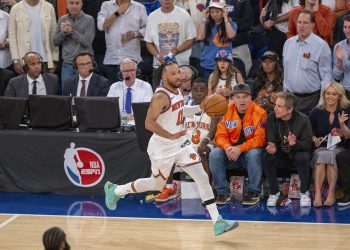
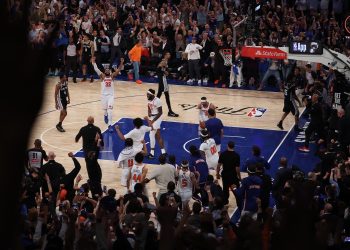
So it might go without saying that a strong NBA Finals, the first strong NBA Finals in nearly a decade, was something the league sorely needed. In just five games, Spurs-Knicks delivered, ranking as the most-watched NBA Finals through four games since 1998 — an outcome that few could have imagined two weeks ago, even with all the Nielsen methodological changes that have contributed to ‘record’ audiences across the industry.
Television ratings are a strange source of vindication. They are, after all, a mere estimate from a private company (Nielsen) whose methods have changed sufficiently in the past half-decade as to strain beyond credulity any comparisons to past eras. But television ratings are seen — at least on social media — as the ultimate proof of status, of value, of the legitimacy not just of your game but the people who play and watch it. Whether Indiana football, the Oklahoma City Thunder, or the Carolina Hurricanes and Vegas Golden Knights, it is not unusual to see fans of unheralded or small market teams tout strong ratings on social media alongside an implied (or explicitly stated) ‘see?’ (Or in the case of OKC fans, ‘unwatchable, huh?’)
It may seem preposterous, but more understandable in an era where the discussion of television ratings is often — to paraphrase Dr. Zoidberg — ‘your ratings are bad and you should feel bad!’ If that is the standard, then the reverse should be true.
This NBA season included the most-watched Opening Night since 2010, the most-watched All-Star Game — aided by an Olympic lead-in — since 2011, the most-watched regular season since 2012-13, the most-watched opening rounds of the playoffs since 1998, the most-watched conference final since 2002, and at least through four games, the most-watched NBA Finals since 1998. Even taking into account the Nielsen methodological changes that skew comparisons to prior years, that is about as a good a run as one can have in a single season.
From start to finish, the season was proof-of-concept for everything that the NBA can be, and while one can quibble with certain aspects of the league’s year-old media rights deal — NBC’s $2.5 billion rights fee looked better with a seven-game conference final this year than it will with zero conference final games next year — it is hard to question that these results were what the league’s rights partners hoped for when they reached their deals.
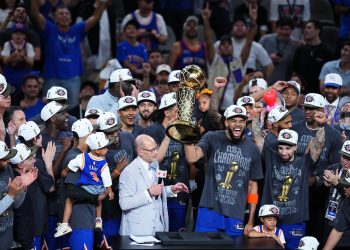
It is unlikely that every year of the 11-year deal will be so impressive. The NBA’s parity — eight different champions in eight years — looks good now, with New York ending a 53-year drought in front of the kind of audience one doubted the league would experience again any time soon. Parity, however, is just another word for randomness. Sometimes it works out, and you get the Cubs in the World Series. More often than not, you’re going to get the Royals, the Nationals, the Diamondbacks. Baseball played the parity game for most of the 2010s, and it coincided with an era of World Series ratings much like the past decade in the NBA. Next year will have a tough act to follow, in many respects.
Using ratings for vindication is thus always a fool’s errand, because one never knows when the stars will align, or when they will be knocked out in the first round of the playoffs.
Yet however ill-advised it is to ‘spike the football,’ one could hardly blame the NBA if it did. No league has had its lows accentuated more. There are entire media organizations, owned and operated by major media conglomerates, devoted to the narrative that the league is in terminal decline. (Fox, whether through the media outlets it has acquired or via its own researchers, has seemed to publicize NBA viewership figures more often than the league’s actual broadcast partners.) In a season where viewership was up double-digits from Opening Night through the end of the NBA Finals, those prophets of doom seized eagerly upon a 2% dip for the opening weekend of the playoffs.
For an NBA whose every dip is seized upon, it is hard not to see this season as a retort. Despite all the noise and bluster spanning the better part of a full decade, when everything came together just right, the NBA was back at the top of the non-football heap. The argument for the NBA’s demise was always made using comparisons to how other leagues performed at their very best. Well, the NBA at its very best is about where it was before COVID, a television draw exceeded only by football and quadrennial international competitions. (This year’s Knicks-Spurs series is poised to finish comfortably enough ahead of MLB’s best-case Dodgers-Yankees 2024 World Series that changes in methodology would not account for the difference.)
“In the past decade,” this author wrote in 2009, “the NBA’s death has been rumored plenty of times, and in some cases rooted for. Michael Jordan’s retirement did not kill the league, the 1999 lockout did not kill the league, Ron Artest fighting fans in the stands did not kill the league, and Tim Donaghy did not kill the league.”
Turns out 2020 did not kill the league either. Then again, that was obvious long before this season, whether looking at the ratings outside of the Finals, or the league’s aforementioned $77 billion media rights deal.
It was always ridiculous to gauge the health of a sports league by looking at the viewership for, at best, seven total games. The question is why that was an acceptable indicator a year ago, when the argument was not just decline, but the outright death of the league. Foolish as it would be to pronounce the NBA healthy on the basis of Knicks-Spurs, it was flat out absurdity to pronounce the NBA dead on the basis of Pacers-Thunder, Bucks-Suns, Nuggets-Heat, or any of the middling Finals this decade.
So when the prophets of doom return to seize upon the next negative data point for the league, and when the cherrypicked comparisons are again flying — perhaps Fox will put out more comparisons to “Bassmasters” — and when there are yet more invocations of 2020 (even as we move closer to 2030), remember that any argument that can be undone in five games was not much of one to begin with.
NBA, ESPN/ABC, made the Finals look and feel like the Finals
Stay tuned for a more detailed accounting of the NBA’s media coverage this past season, but ESPN and the NBA deserve credit for listening to the raft of criticism they both earned for last year’s NBA Finals presentation. Whatever led to the end of YouTube TV’s deal to sponsor the NBA Finals, it was a net good for the league. A championship series is degraded, not elevated, by sponsorship. ‘YouTube TV’ was in some cases more prominent on the court in past years than the actual event it was sponsoring. Here is hoping the NBA never repeats the effort in the future.
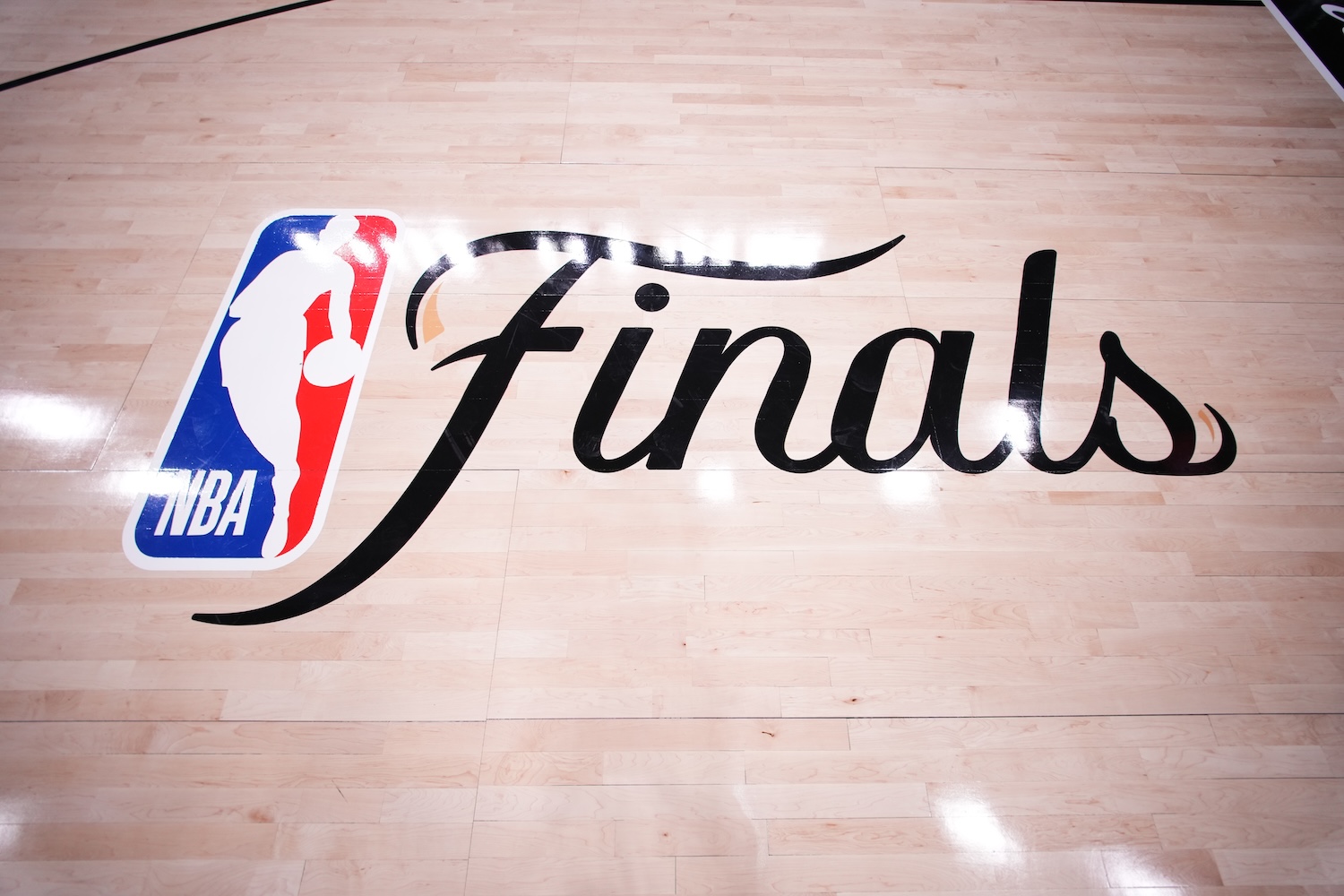
Painting the trophy at mid-court, with the Finals wordmark inside the three-point arc, was such an easy win it is hard to believe it had not been considered until so recently. The original argument for removing the Finals branding from the court was that the decals were slippery, and no player should ever get hurt because of a logo. But once the NBA started putting together its special in-season tournament courts three years ago, it made zero sense that the Finals looked like just any other game.
Those changes helped make this year’s Finals feel like the real thing, and if fans in Oklahoma City and Indianapolis (or in Dallas and Boston, or Miami and Denver) feel like they got the short end of the stick the past few years, they would be right to.
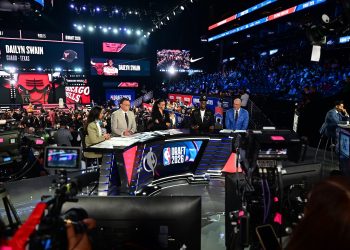
Beyond the league itself, ESPN/ABC made changes that elevated its Finals coverage so far past last year’s nadir. The TNT Sports-produced “Inside the NBA” and its team of Ernie Johnson, Kenny Smith, Charles Barkley and Shaquille O’Neal was not perfect this season, but their presence on the Finals felt earned. Appearing only sporadically throughout the year, the “Inside” team frankly came off as disconnected, even unmotivated, during the season. The Finals opportunity seemed to revitalize them, such that “Inside” felt more like the ‘real thing’ in San Antonio and New York than in Atlanta.
Even had it not, “Inside” would still have been a massive improvement on last year’s “NBA Countdown,” quite possibly the worst studio coverage ESPN has ever devoted to a championship event. It says a lot that ESPN’s Malika Andrews had a better showcase of her talents as a correspondent for “NBA Tip-Off” this season than she did as host of “Countdown” last year, when she had to make room for Stephen A. Smith’s tirades.
But it was not just the studio where the Finals presentation improved. The game crew of Mike Breen, Tim Legler and Richard Jefferson began to gel in the Finals. Last year, Jefferson and Doris Burke seemed to have ill-defined roles. Not the case this year, with Legler breaking down the ‘what’ and Jefferson offering viewers the ‘why.’ Breen, who at times last season seemed to be in the position of having to steer the conversation, could play exclusively to his strengths.
More thoughts to come on the NBA’s television coverage this season.