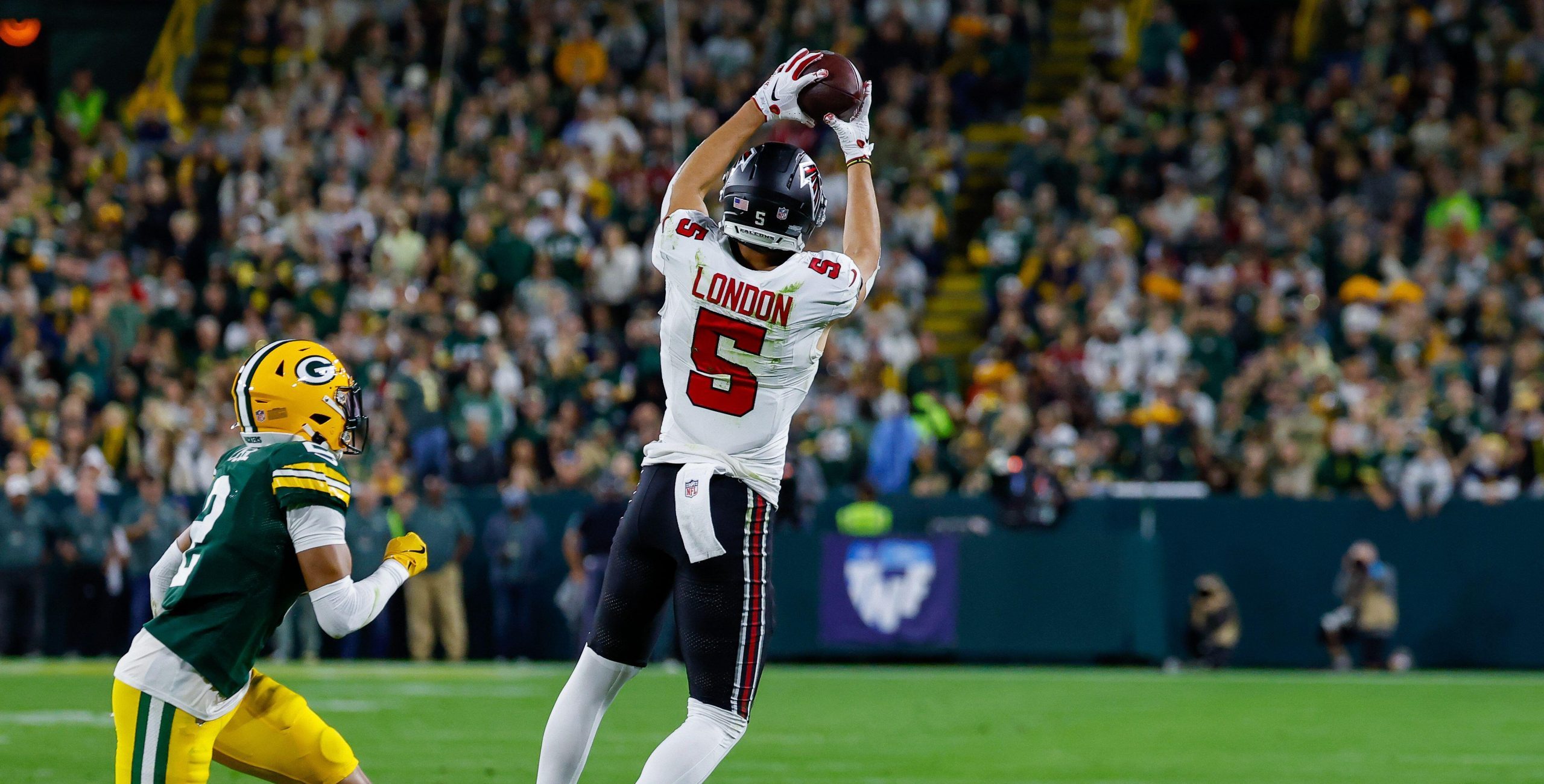
“Thursday Night Football” hit a second-straight viewership high to start the season.
The latest edition of NFL “Thursday Night Football” (Falcons-Packers) averaged 16.82 million viewers on Amazon Prime Video, a figure that includes local over-the-air simulcasts in the home markets — marking the most-watched Week 3 edition of “TNF” since Texans-Patriots on CBS and NFL Network in 2016 (17.55M).
(Note that out-of-home viewing was not included in Nielsen estimates until 2020 or fully accounted for until 2025, that this is only in the second year of a new Nielsen methodology integrating “Big Data” from smart TVs, set-top boxes and first party data with its traditional panel, and that Nielsen has recently tweaked its measurement to better account for co-viewing of games.)
The Falcons’ surprise win, which peaked with 19.05 million in the 9:30 PM ET quarter-hour, increased 2% from Week 3 last year (Dolphins-Bills: 16.45M).
“TNF” is now averaging 17.94 million viewers through two weeks this season, up 5% from the same point last year (17.13M) and the highest average for the first two weeks of the series since 2015 (19.22M). Though up overall, viewership is flat in adults 18-34 at 3.64 million and actually down slightly in 18-49 (from 8.32 to 8.28 million). Viewership in adults 55+ is helping make up the shortfall, up 6% from 6.25 to 6.60 million.
As a result, the median age for Prime this season is slightly higher than the first two weeks last year (from 47.4 to 48.0). The linear NFL networks still skew older, but their median age of 54.7 is actually slightly younger than last year (55.0). (Note that for the first time, NBC’s younger-skewing Peacock streaming audience is being reported in Nielsen figures.)
The two-week average includes revised figures for the previous week’s Lions-Bills season premiere, which Nielsen now estimates averaged 18.95 million — up from the originally-reported 18.60 million. Amazon said Monday that viewership for the game was “re-processed by Nielsen due to an error in Amazon’s lineup.”
Since Nielsen began including clients’ first-party data in its official estimates last year, there have been multiple occasions in which a viewership figure had to be revised due to an error in data collection, including for the Super Bowl in February and YouTube’s International Series game from Brazil in Week 1 of last season.