As the regional sports network model began to freefall, Major League Baseball tasked Billy Chambers to launch an in-house local media operation ahead of the 2023 season.
Chambers, who had been consulting for the league during the preceding year, immediately hired three people to assist with the operation — Doug Johnson, Kendall Burgess and Greg Pennell — who worked together to forecast the turbulence that would come ahead. At the time, Diamond Sports Group was in the midst of Chapter 11 bankruptcy claims, which allowed the RSN owner to selectively reject contracts in an effort to reduce a staggering $9 billion in debt.
MLB was the only professional sports league to file an objection to the company’s eventual reorganization plan, citing concerns that debtors would eventually find themselves in financial distress. Although Diamond Sports Group eventually emerged from 20 months of bankruptcy with a new name (Main Street Sports Group) and significant debt reduction, the league’s foresight proved to be correct.
“I worked with Fox Sports Net for 20 years, I worked at Sinclair when they owned them for nine or 10 months, and if you looked at that bankruptcy plan really closely, you could see that there was going to be an inflection point in the first quarter of 2026,” Chambers told Sports Media Watch. “Even though they were out there saying everything was great, you could tell it was not. So we had planned on 2026 to be ready to take all the Diamond teams.”
Main Street this past spring began preparing to wind down operations and is now no longer broadcasting regional sporting events.
The opening innings
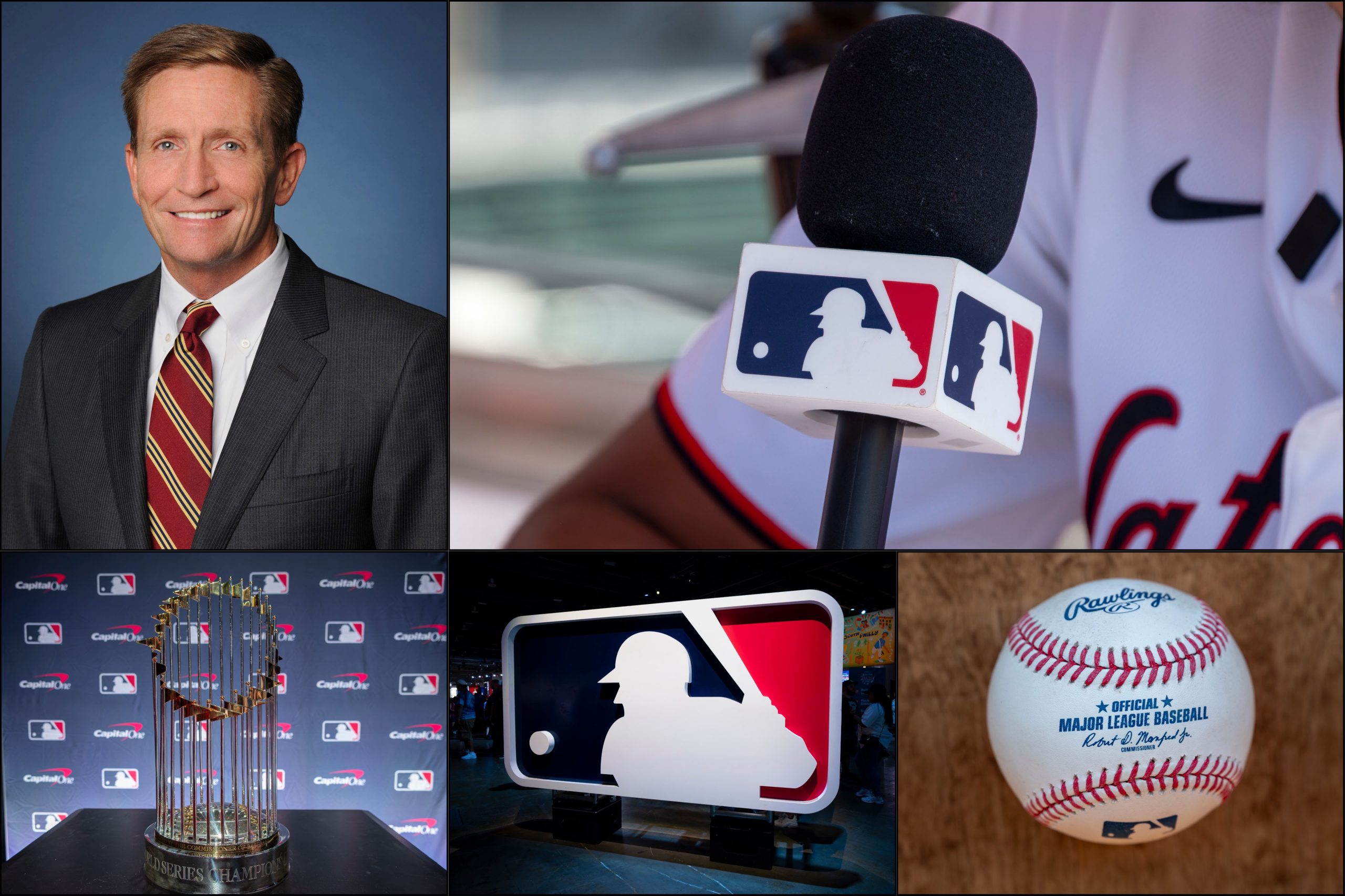
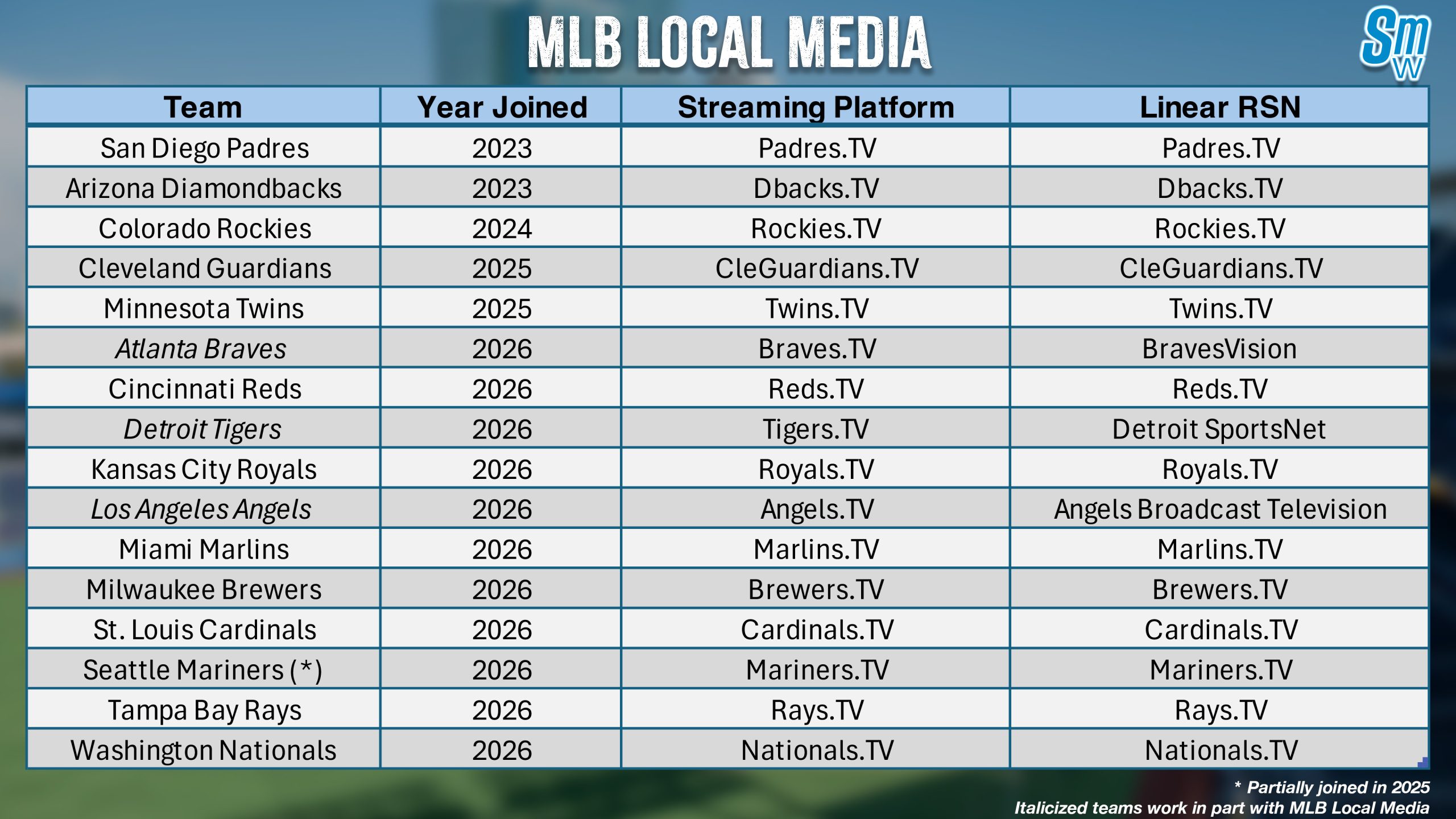
MLB Local Media currently produces and/or distributes games for nearly half of the league, including a majority of the teams that used to be on the FanDuel-branded RSNs owned by Main Street Sports Group. The league has negotiated carriage agreements with cable distributors, created streaming outlets for the teams and provided graphics packages and creative resources through MLB Network.
Before any teams joined, determining which proverbial domino would be the first to drop was the challenge, something Chambers likened to ordering airplanes on a runway. The league considered six teams to be in play at that time, among them the San Diego Padres, Arizona Diamondbacks and Cincinnati Reds, and focused on being ready to televise games if Diamond’s contractual cure period ended without the company making the necessary payment.
“The toughest part was going to be when it happened and where,” Chambers said. “It was kind of like waiting on an earthquake. We didn’t know where it was going to happen, but we had to be ready — and there [were] times where I put Doug, Kendall and Greg on a plane to San Diego, and by the time they landed, Diamond Sports Group had paid the bill, so it was like, ‘Fly on back.'”
The entire venture ultimately began with the San Diego Padres, who left then-Diamond in May 2023 after it failed to pay the team its rights fee six hours before first pitch of that evening’s road game. Having prepared for months, the league was able to facilitate a change from “Bally Sports San Diego” relatively easily and avoided missing any of the action.
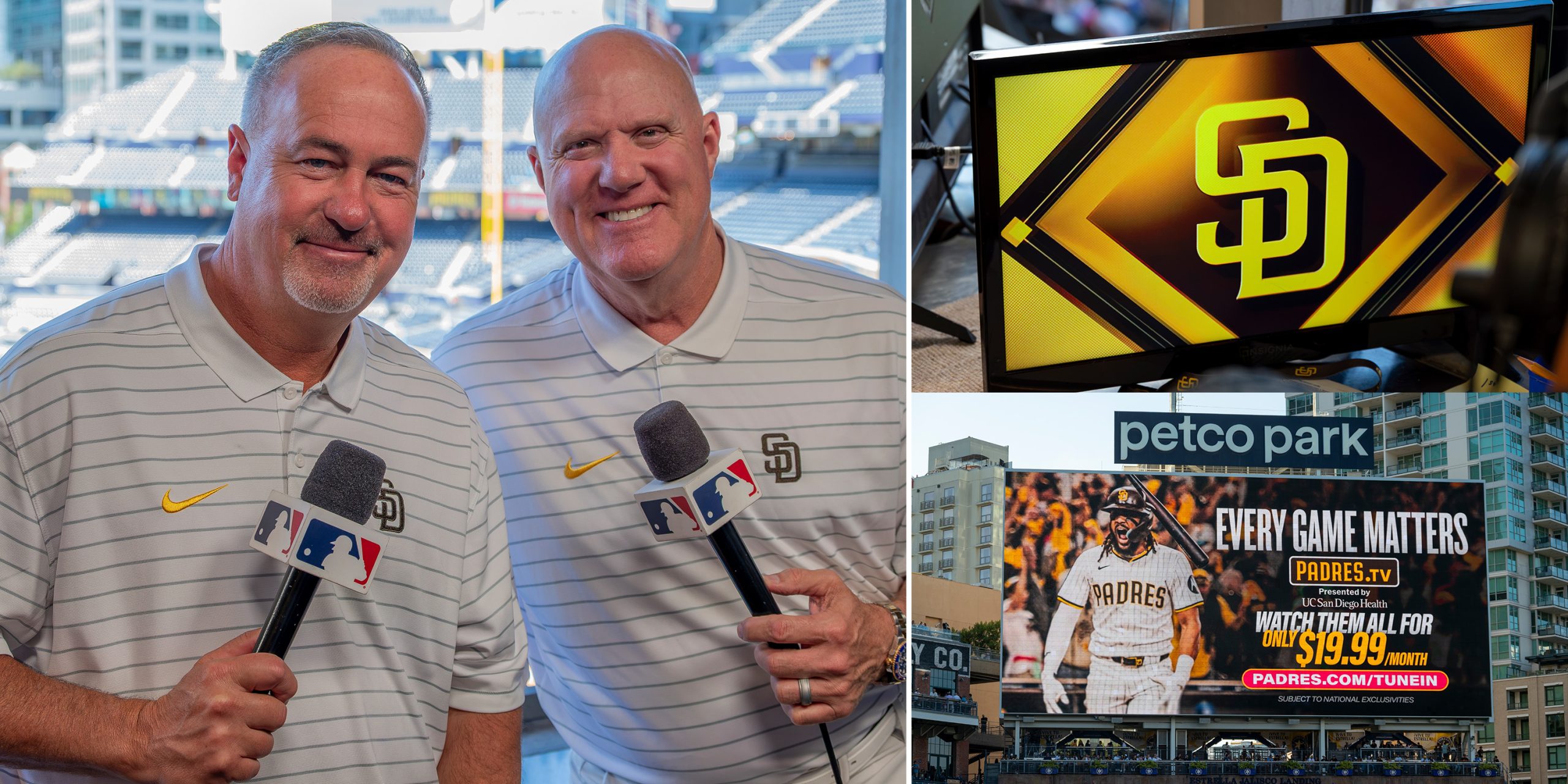
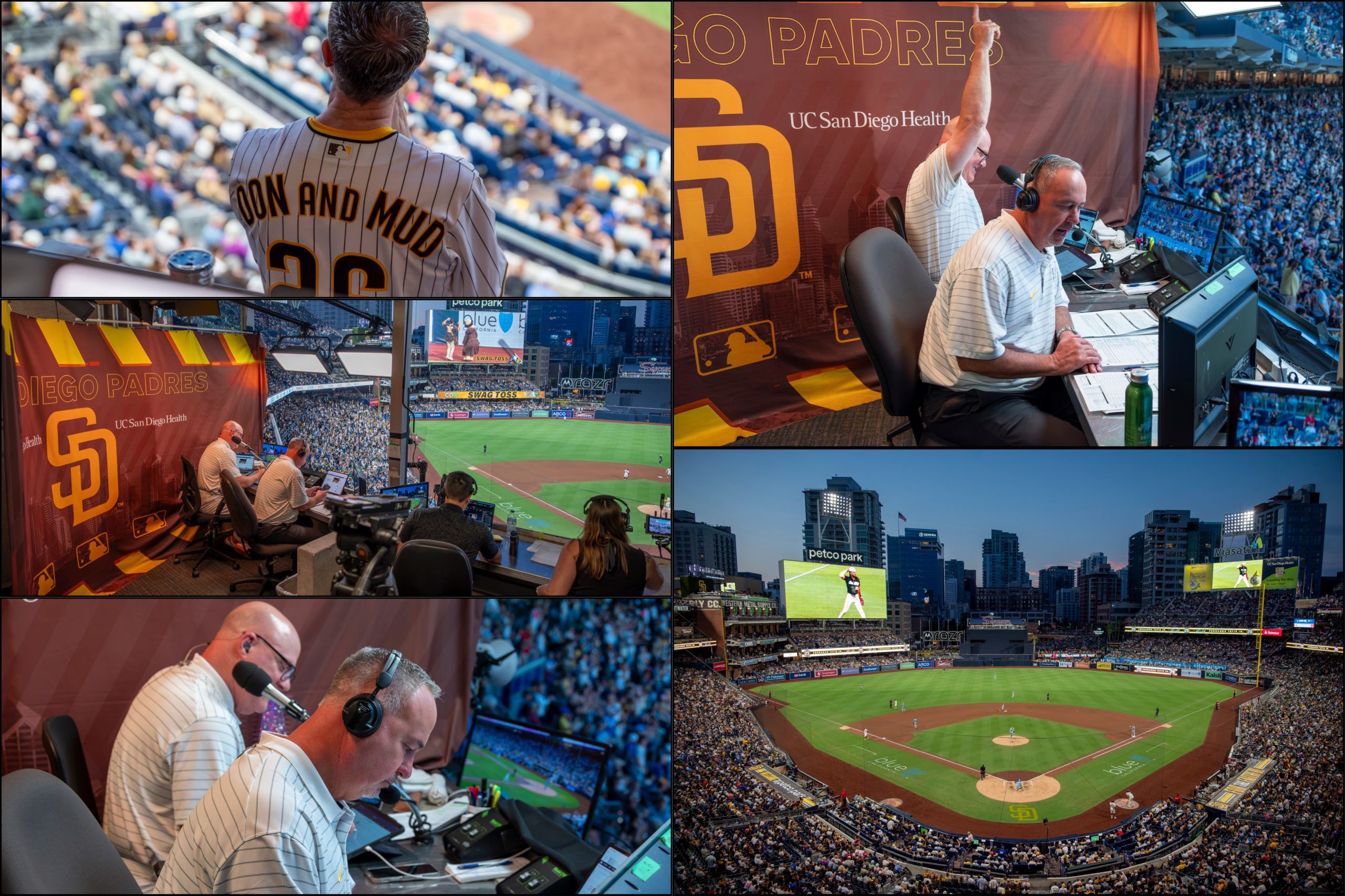
“We were in Miami in the middle of the series, and we had all the mic flags and the backdrop and everything else [that] said ‘Bally,'” Padres play-by-play voice Don Orsillo recalled. “We walked in the next day, and it all said ‘MLB,’ and it was the MLB logo on the mic flag, and the backdrop was MLB and it was Padres. Other than that, it was seamless.”
“We just met new people who were going to be in charge, and great people,” Orsillo’s longtime partner Mark “Mud” Grant added. “We’ve had a great relationship ever since, and they let us do our thing, and we were just calling baseball. It was just doing Padres baseball. The carrier may have been different, but as far as the players, the cameras, the announcers, I just call the game like I’ve been doing it for the past 31 years.”
Chambers said the league was fortunate that the Padres only had four distributors, helping ease the process of securing reach outside of the direct-to-consumer product. MLB Local Media has reduced total costs by using fiber instead of satellite distribution, which is how Diamond had previously operated. Since adding more teams to the mix, which included the Arizona Diamondbacks later in the 2023 season, there have been times where the league has had to work with smaller companies that may not have the necessary technology to facilitate fiber delivery.
“That saves $1 million to $2 million per team, and I think it’s a better signal quality because when you do satellite distribution, that signal gets shrunk before it goes up,” Chambers said. “Then it goes up off the satellite and then un-shrunk, so there’s two points of degradation. So while we’re investing in the broadcasts, we’re also being very smart about how we make money.”
Padres.TV sets the blueprint
Unlike traditional regional sports networks that need to fill programming blocks, MLB Local Media outlets do not have shoulder programming beyond local pregame and postgame coverage. The league is focused on how to best allocate its resources. In San Diego, that has meant providing a national-quality presentation at a regional budget.
Coordinating producer Jason Lewis has a bevy of resources at his disposal to effectively document the game, including archival video libraries, MLB Network studio breakdowns, vignettes and unique camera angles.
“Our show has been enhanced from Day 1 — graphics, cameras — and we’ve hit the ground running with MLB,” Lewis said. “We were the first team to move over, and then it became two or three teams, and then my phone kept ringing this past offseason with all these other teams wondering, ‘Hey, what’s it like?,’ and I assured them it’s fantastic.”
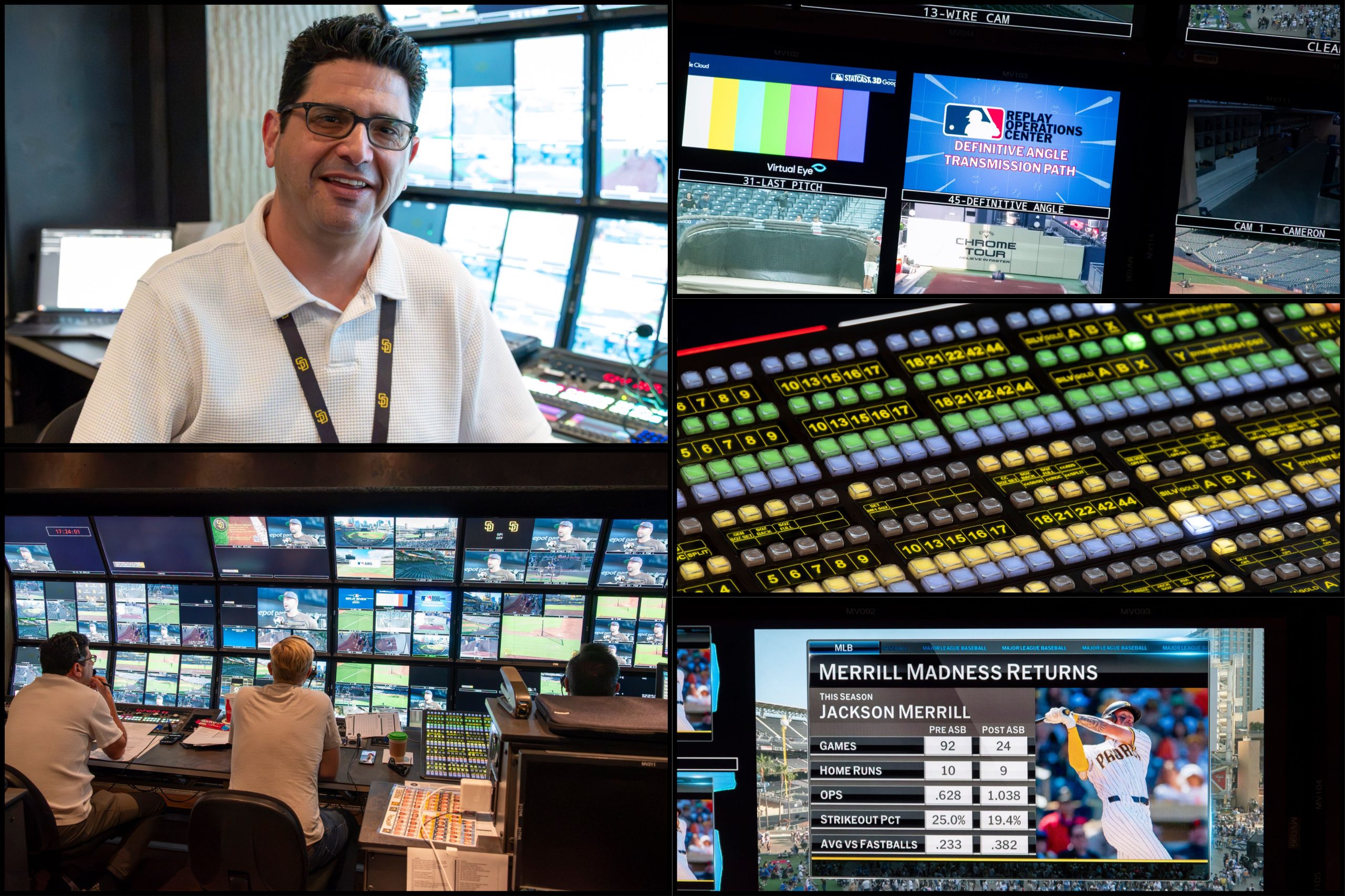
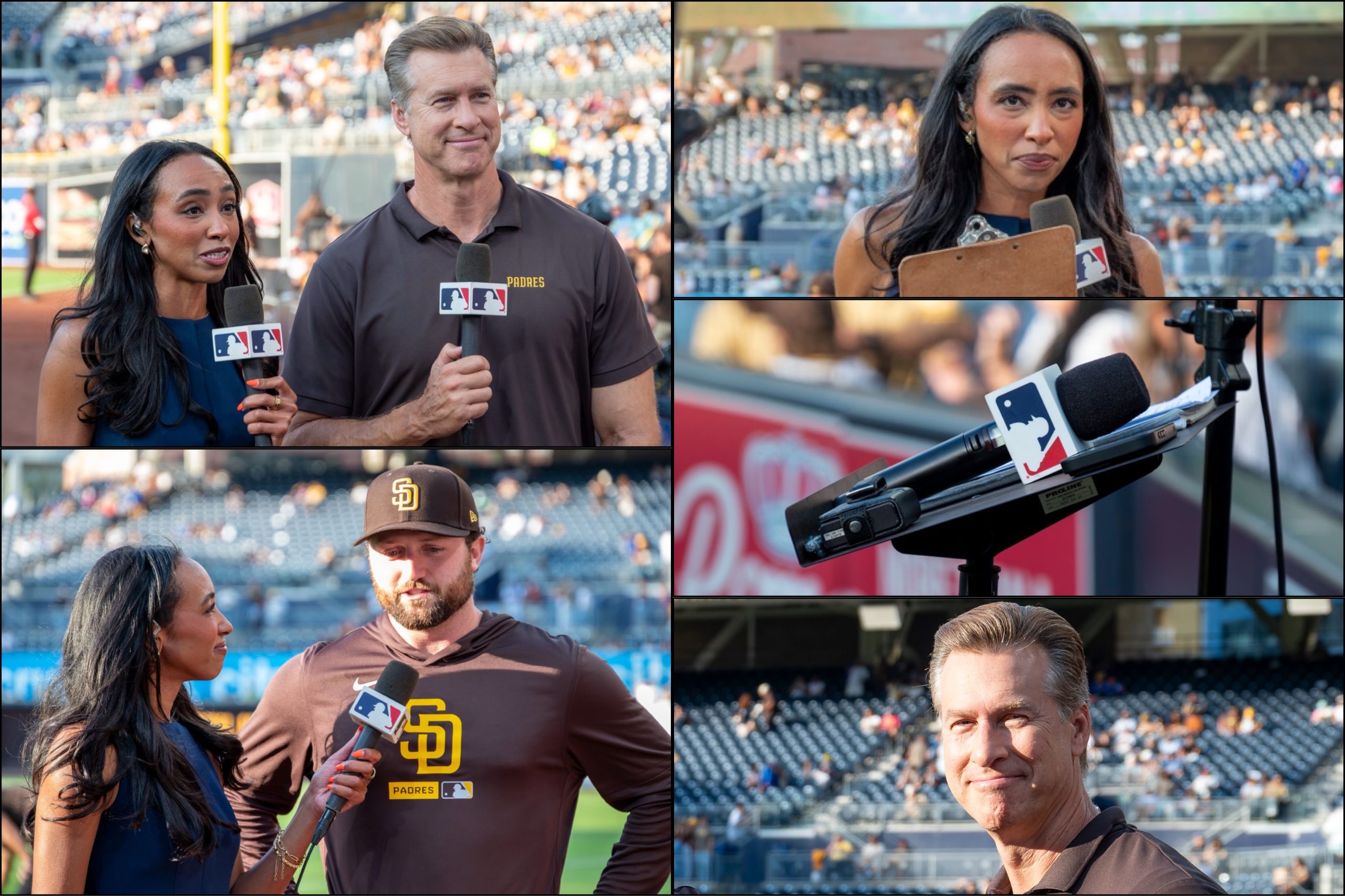
Lewis is situated in the mobile broadcast unit during the game located outside of the ballpark and balancing multiple tasks, such as preparing edit lists, taping the game open and determining points for discussion. Personnel in the truck also have the ability to speak with operators for PitchCast and Statcast 3D systems, technologies that assist Lewis and his team in trying to tell the stories surrounding the game. There is also a 15-minute pregame show on the field featuring host Mariluz Cook and analyst Tim Scanlan.
“We try to get our manager on once a homestand, we try to get players on a headset,” Lewis said. “All the things that you’re seeing on national broadcasts, there’s no reason why we can’t do it here locally, and our team has been open to it more and more. I think now that we have that MLB relationship, that has really strengthened and allowed us to do more of that access, and I think as players are getting used it as well nationally, they’re more open to do it locally.”
It has helped that the Padres had already established a well-regarded local broadcast. Orsillo and Grant have developed a strong rapport over their 11 seasons working together, allowing them to straddle the line between game commentary and lighthearted repartee. “I want to have fun, and it just happened that my partner had the exact same philosophy, and it just clicked,” Orsillo said.
Orsillo, the former voice of the Red Sox, was apprehensive about whether his style would translate to Southern California when he joined the Padres in 2016. Fast forward more than a decade later, and fans at the ballpark are wearing T-shirts with some of his signature calls printed on the front.
“The relationships that we have with this group are really solid,” Orsillo said. “I think the thing that I have enjoyed the most is having the players thank me for my calls, and that means a lot to me. I’m not thinking in those terms, I’m just thinking of making the right call, don’t make mistakes, be consistent.”
On the horizon
While Chambers estimates that there was some “fear of the unknown” this offseason, the league tried to assuage those sentiments and inform teams on formatting, promotion and execution. Having a team of practitioners with previous RSN experience helped ease the process, but it was nonetheless a slew of phone calls and coordination on multiple fronts.
“It’s absolutely gone fantastic,” Chambers said of the expanded portfolio this season. “Myself and Doug Johnson, we have a philosophy. ‘You know what? Things can go wrong during the broadcast, but we don’t want to go off the air, and we never miss a pitch.’ That’s my thing is, ‘Don’t ever miss a pitch.'”
Starting next season, ESPN will be the in-market streaming home for teams whose games are produced and distributed by MLB Local Media, part of a larger deal that provided the company with rights to the MLB.TV out-of-market game package for the first time this season. ESPN has been adding content to its platform through a variety of bundles and rights deals over the last few years, building a platform that can serve as a centralized hub for sports fans.
“I don’t really do anything different in my world on that,” Chambers said of ESPN acquiring in-market streaming rights for MLB Local Media teams. “That’s kind of separate because they just take my feed, so I won’t be doing anything different for the streaming side … Whether it was ESPN or whoever, we do business as normal.”
Most of the teams receive full production and distribution services from the department, but there are other franchises who have assumed at least partial control of their broadcasts. For example, the Atlanta Braves established BravesVision, a team-owned RSN that is available to stream through the league interface.
The league will have room for more teams to join the fold should it be necessary.
“I think we’ve ramped up really fast right now,” Chambers said. “We’re almost at capacity right now, but we’re kind of in another phase of planning that we’ll be able to be ready to bring on as many teams as we need next year,” Chambers said. “Yeah, I mean, I could see in a few years where we’re doing 23 to 25 teams, and if it’s all 30, so be it. We’ll be ready whenever that time comes.”
As baseball fans prepare for what could end up being a protracted offseason due to the expiration of the collective bargaining agreement, the regional distribution model that has been so central to the game remains in a state of flux. Maintaining the local platform is something Chambers believes is important. “I think there’s always going to be a place for the local broadcast,” Chambers said, “and I think there’s going to be enough broadcasts to warrant a local broadcast.”
While MLB is the obvious priority, MLB Local Media is not limited to baseball, as the MLB App will be the streaming home for Detroit Red Wings games airing on Detroit SportsNet beginning this season. “If the opportunity presented itself, we could,” Chambers said regarding expanding beyond baseball. “I think the NBA is going to — they’re doing a lot of hybrid, over-the-air deals this year, and I think the NHL is going down their own path. So we could, but I think it’s better to spend time on our own product.”
It stands to reason that MLB may not begin its 2027 season on time as the league and MLBPA try and negotiate a new collective bargaining agreement. Earlier this year, MLB owners tied their pitch of instituting a salary cap and floor, something that most players have vehemently opposed thus far, to addressing local television blackouts, adding it would seek to centralize local media revenue for equal distribution among teams.
While baseball fans wait for a resolution in this looming dispute, Chambers remains confident in MLB Local Media and how it has transformed the experience for franchises, players and consumers.
“I already think our league model has proven out to be the way of the future,” Chambers said. “We’ve got 14 teams in, so it’s half the league, but I absolutely can see RSNs going on forward – YES, SNY – it just depends on the economics of their own markets.”
“What we built already and continue to build here through MLB and what’s been done here is kind of the standard, I think, in a lot of places, at least for the MLB teams,” Orsillo added. “We’ve kind of set the bar here a little bit, and I’m thrilled that it’s going in that direction, it continues to grow.”