Fox Corporation discusses FIFA World Cup rights; Versant CEO Mark Lazarus projects “some rationalization of portfolios” in sports; and MLB proposes to delay its salary cap by one year. Plus news on NFL Sunday Ticket, DAZN, ESPN and the Seattle Kraken.
Fox to look at FIFA World Cup rights “in a disciplined manner”
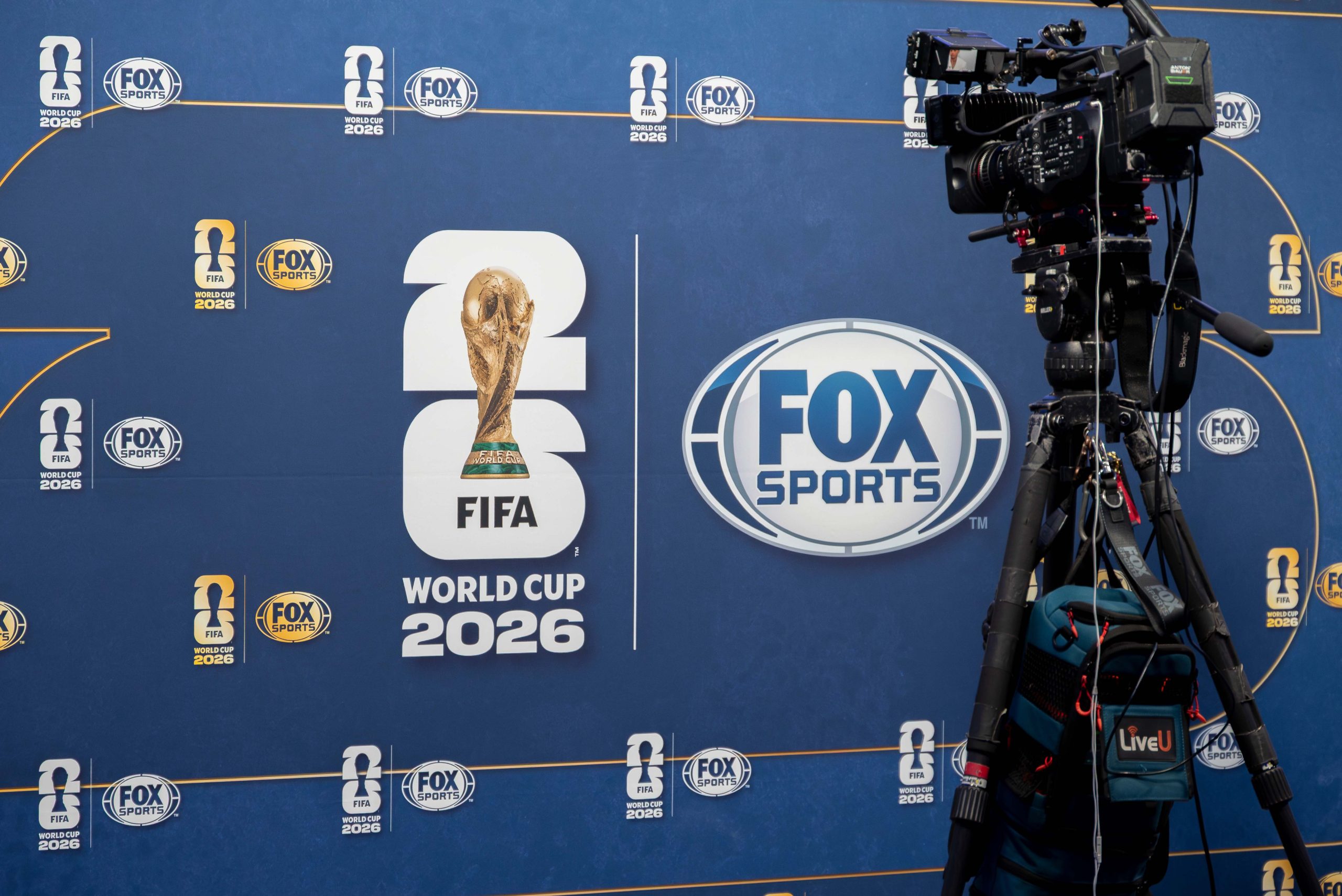
Fox Corporation CEO Lachlan Murdoch said that the media conglomerate will be “disciplined” in pursuing rights to the next two FIFA World Cup tournaments, as it “would with all sports rights.” FIFA has a preference of finding a single partner that can bundle English- and Spanish-language rights to the tournament together, but it is not a requirement. Murdoch did not specify whether Fox would pursue both English and Spanish-language rights. Fox Sports president/EP Brad Zager previously told Richard Deitsch of Sports Business Journal that the company is “[a]bsolutely” interested in broadcasting the 2030 FIFA World Cup.
Fox Corporation has been the exclusive U.S. English-language rightsholder to every FIFA World Cup and Women’s World Cup dating back to 2015. NBCUniversal-owned Telemundo has presented the tournaments in Spanish. On its recent earnings call, Comcast did not reveal whether it would make a bid for World Cup rights, even as it credited this year’s tournament for creating total incremental advertising revenue of $224 million in its fiscal third quarter.
Fox also benefited from the North American-based 2026 World Cup, recording a 47% rise in advertising revenue on the quarter partially attributed to the tournament. The company aired approximately two-thirds of the expanded 104-match slate on broadcast television, up from just over half in 2022.
Fox Corporation reported quarterly revenue of $4.6 billion (+22% YoY) on EBITDA of $1.6 billion (+54% YoY) as it works to close its acquisition of Roku in a deal worth $22 billion. Murdoch, who also noted the company’s upcoming Ohio State-Michigan and Eagles-Cowboys broadcasts in addition its NFL Week 15 tripleheader, claimed that 97% of new subscribers to Fox One do not have a cable subscription. “[I]t’s really the result of being very focused, being very careful in our marketing, understanding that a subscriber from the pay-TV system into Fox One doesn’t do us any favors, and so we’ve been, I think, remarkably focused on achieving that result, and the team’s done a tremendous job,” Murdoch said. “Now having said that, as you move forward, the Fox One subscriber base is going to be somewhat seasonal with sports seasons coming and going.”
Lazarus projects “some rationalization of portfolios” in sports
Speaking on the company’s quarterly earnings call Tuesday, Versant CEO Mark Lazarus projected that there will be “some rationalization of portfolios” in the sports media business, even as the major properties such as the NFL and FIFA World Cup continue to attract high rights fees. Lazarus, who said that Versant will continue to remain disciplined as it looks at sports rights, said that both his own company and its competitors will be interested “in finding the right quantity of sports at the right price that serves our distribution and advertiser needs.”
Earlier in the year, Versant CFO/COO Anand Kini said at Deutsche Bank’s 34th Annual Media, Internet & Telecom Conference that the company would only acquire additional sports rights if it could offset the cost. Speaking on the company’s Bundesliga agreement Tuesday, Kini contextualized the deal as “opportunistic” and a chance to land “marquee content.” Kini: “[I]t’s those kinds of deals where we can fit them within our programming budget, make trade-offs elsewhere, and again, just kind of looking at how we are programming and different types of content – what’s working the best.”
Lazarus, when asked about the possibility of landing out-of-market games based on last week’s NFL Sunday Ticket verdict by the Ninth Circuit, downplayed the possibility of Versant moving in that direction. “Sunday Ticket, out-of-market games, we’re not likely to be investing in the NFL business in terms of the size of our company today,” Lazarus said, “but I think it’s an interesting ruling, and I’m looking forward to seeing how it shakes out.” Lazarus commented on the company’s last earnings call that he sees an “opportunity” for USA Sports to expand its sports portfolio as other companies prioritize renewing their deals with the NFL.
Lazarus and other Versant executives have on numerous occasions spoken about diversifying their revenue streams to reach a 50-50 split between linear television networks and non-pay television sources. While there has been some speculation as to whether or not Versant would look to purchase more cable networks, Lazarus indicated a preference for looking at “vertical sectors” in and out of media. Lazarus: “While buying more scale on cable networks would just continue adding to our scale, I have said previously, I think it would prolong our life, but does not make our life much better.”
MLB proposes starting salary cap and floor system in 2028
In its latest plan presented to the players union, Major League Baseball is now proposing to push back the introduction of a salary cap and floor to the 2028 season rather than next year, granting franchises more time to comply with the limits it would set. The league projected beginning with a salary cap of $258.2 million and salary floor of $180.2 million, creating a net payroll increase of $108 million. As part of the proposal, the league would increase the minimum player salary to $1 million, along with allowing players to reach free agency earlier in their careers.
The current collective bargaining agreement expires December 1, at which point MLB is widely expected to impose a lockout. An MLB lockout four years ago resulted in an abbreviated spring training and the start of the season being delayed by one week, but no games were canceled. The league has not missed any games as a result of a work stoppage since the 1994-95 players’ strike.
Evan Drellich and Andrew Marchand of The Athletic reported earlier this year that missing more than 60 games would cause “most of the league’s national broadcast contracts” to extend an additional year. Rightsholders would pay the league for the 2027 season but would be compensated by the one-year extension, per the report. MLB commissioner Rob Manfred has spoken about using the 2028 media rights deal to increase the league’s national inventory and centralizing its local media rights. The league has also tied the salary cap and floor system to addressing local television blackouts, part of a larger proposal that would centralize local media revenue for equal distribution among the 30 teams.
Under Tuesday’s proposal, MLB would continue to utilize its competitive balance tax and revenue sharing plans for the upcoming 2027 season. MLB would shift to centralizing media revenue and splitting baseball revenue 50-50 with the players beginning in the 2028 season. The MLBPA released a statement Tuesday reiterating its stance that a salary cap would harm player compensation and get rid of guaranteed contracts. “Players stand ready to negotiate in good faith toward a new CBA that will capitalize on our sport’s unprecedented momentum and benefit players, clubs, and fans alike,” the MLBPA wrote.
Plus: NFL Sunday Ticket, DAZN, ESPN, Seattle Kraken
- An appeals court is seeking to ascertain whether the “injunctive class claims” in the NFL Sunday Ticket case are “moot now that the contract between the NFL and DirecTV has expired,” according to Eriq Gardner of Puck. YouTube TV became the home of NFL Sunday Ticket beginning in the 2023 season under a seven-year agreement reportedly worth a total of $14 billion after DirecTV housed the out-of-market service for 29 years. It remains unknown if the plaintiffs would attempt to broaden its class-action lawsuit to cover the ongoing agreement with YouTube TV. As a reminder, a Ninth Circuit panel last week reinstated a district court jury verdict, which was previously overturned by a judge, that found the NFL violated antitrust law with the pricing of NFL Sunday Ticket.
- The global streamer DAZN “secured an exclusive option for global streaming rights” to the FIFA Club World Cup tournament in 2029, according to a report by Matt Hughes of The Guardian. While DAZN reportedly paid $1 billion for the tournament last year, which featured 32 teams for the first time, the exact amount the company will pay this time around remains unknown. Hughes reported that Apple TV held talks with FIFA around a global streaming deal for last year, “but withdrew owing to a disagreement over valuation.”
- CBS Sports VP/editorial Adi Joseph has joined ESPN as VP/news, he said on social media last week. Joseph is moving into the role previously occupied by David Kraft, who retired from ESPN in April after three decades with the network. “I couldn’t be more excited for the new challenge, where I’ll have a much more directly integrated role in television platforms and work with the people who break so much of the sports news that exists,” Joseph wrote on his LinkedIn page. ESPN has also hired Sergio Gonzalez as its VP/digital editorial and will begin at the network later this month, Sports Media Watch has confirmed. Gonzalez formerly worked for The Athletic beginning in 2018 and was named an editorial director three years ago.
- Former NHL F Tyler Johnson and Hall of Fame G Grant Fuhr are joining select Seattle Kraken broadcasts on the Kraken Hockey Network this season, team VP/editorial Geoff Baker shared on Monday. Johnson and Fuhr will work on two games each this month, appearing as panelists with Ian Furness and Alison Lukan. Kraken broadcasts continue to feature play-by-play announcer John Forslund with analyst J.T. Brown and reporter Piper Shaw.