Borrowing a concept from ESPN’s “Pardon the Interruption,” Sports Media Watch for the first time presents its selections for “Turkeys of the Year.” Each of the site’s contributors has a selection and a short write-up, below.
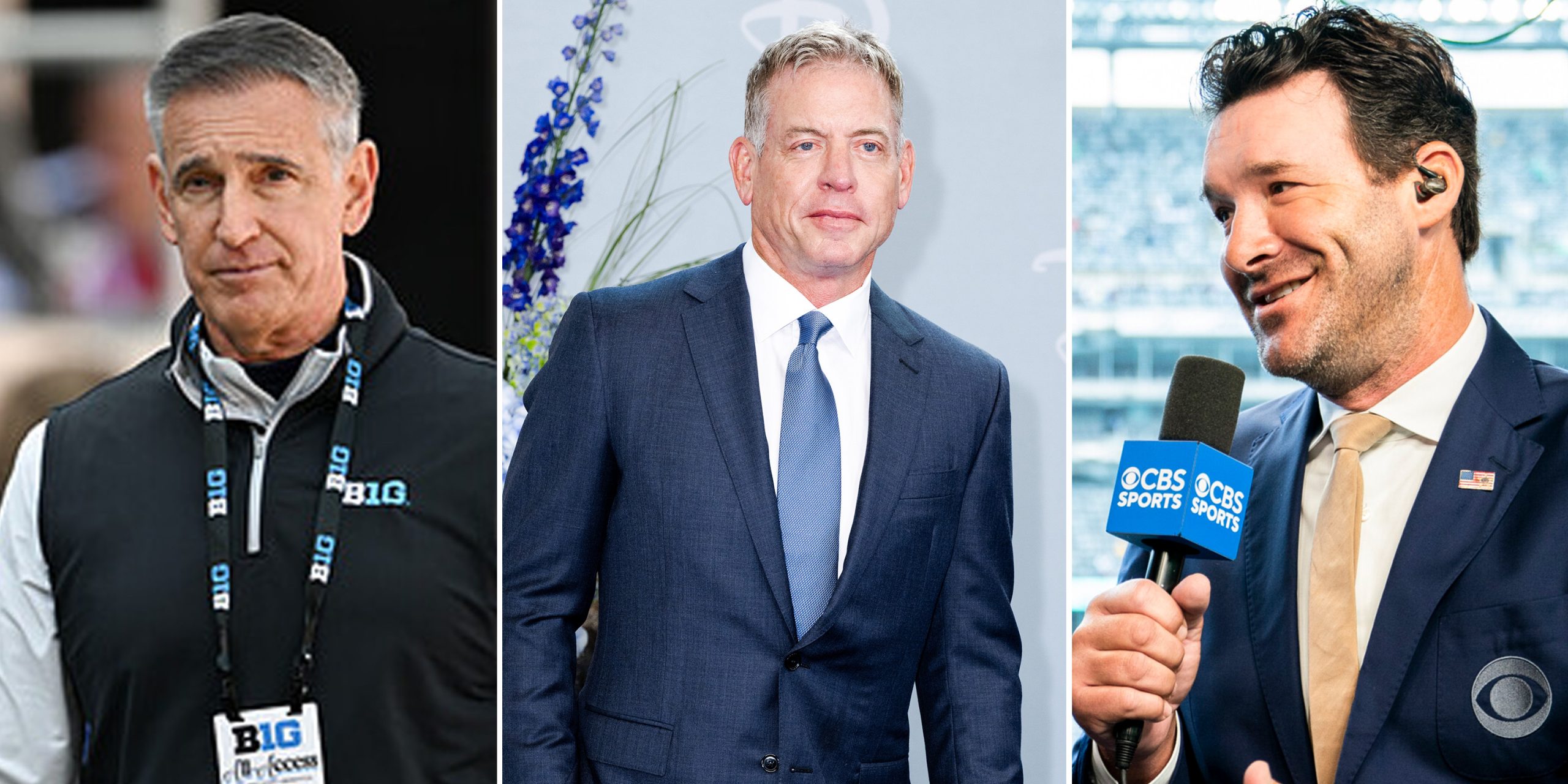
Armand’s pick: Troy Aikman of ESPN
ESPN lead NFL analyst Troy Aikman has reason to be annoyed. With its first Super Bowl approaching, the network secured the future of his longtime broadcast partner Joe Buck while leaving him without a new deal. Aikman makes this list for repeatedly bringing his frustrations into the public arena while attempting to make his boothmate a punch line.
Appearing on Dallas’ 96.7 The Ticket last week, Aikman sarcastically and gratuitously joked, “I know Joe’s always wanted a one-man booth.” Any other season, the joke would likely have deemed a bit of light-hearted ribbing but, given the last two months of contract talk and the well-documented blowup Buck and Aikman had prior to an October broadcast of Bills vs. Rams, Aikman’s quip was bound to become a headline.
This is not to delegitimize Aikman’s complaints. He told Richard Deitsch in September that he expected a new deal before the start of the season. Buck had reportedly signed — without Aikman’s knowledge — a six-year extension worth more than $100 million, while Aikman’s contract was set to expire after the Super Bowl.
Though the broadcast still sounds as strong as ever, the rift behind the scenes has been steadily growing. Front Office Sports reported the pregame argument back in October. Then Aikman, unsolicited, told The Ticket, “I’m looking forward to whatever the rest of this year does hold, with the Super Bowl and all that, and where my next landing spot might be.” Andrew Marchand of The Athletic reported on the partnership’s “unraveling,” including a tense conversation between Aikman and ESPN chairman Jimmy Pitaro. By the time Aikman made his “one-man booth” joke, the question had shifted from whether ESPN would try and keep the booth together to whether Aikman will even make it to February’s Super Bowl.
While sports media looks and listens for discord on the mic, Buck and Aikman continue to give “MNF” its signature sound. Their chemistry, built over the course of a quarter-century, was the strongest argument for keeping the booth together. But Aikman insists on airing all the dirty laundry, causing major distraction during what should be one of the most celebratory periods in ESPN’s 47-year history. With every radio or podcast appearance, Aikman sounds less like ESPN’s lead NFL analyst and more like a disgruntled employee determined to burn every bridge possible on his way out. On Monday nights, he’s the esteemed tell-it-like-it-is commentator. Away from the booth, Aikman is the most expensive pebble in ESPN’s shoe.
Its first Super Bowl should have been a victory lap for a company that has spent decades trying to earn the same standing as the NFL’s other broadcast partners. Instead, its most trusted analyst has turned the season into a bizarre soap opera.
Derek’s pick: Tony Romo, formerly of CBS Sports
Former NFL quarterback Tony Romo has had a tumultuous year that makes him my nominee for this piece. Romo, who had been the lead NFL analyst for CBS Sports over the previous nine seasons, was arrested over the summer on suspicion of operating while intoxicated (OWI). He was subsequently placed on leave from CBS Sports, and division president David Berson cited considerations of the impact on CBS Sports’ “image” and “brand” as the network was planning for the new season.
Romo ultimately pled no contest to the civil offense and called the situation “a recent personal failure” in a statement on social media, explaining that he has alcohol issues that stemmed following back surgeries that ended his playing career. A few weeks into the NFL season, CBS Sports announced that it had agreed to “mutually part ways” with Romo.
Ultimately, Romo had placed CBS Sports in a difficult position even before the arrest with his declining performance in the broadcast booth. The eccentricities that were once lauded, including being able to accurately predict plays on the gridiron, were becoming the frequent subject of complaints. CBS Sports play-by-play announcer Jim Nantz navigated the situation well, but the partnership did not sound as crisp as it did in the years prior. One moment that stands out in particular is Romo quickly stepping in on Nantz’ call of the Kansas City Chiefs’ overtime victory in Super Bowl LVIII.
At the same time, J.J. Watt had been showing potential in the early years of his broadcasting career. Watt, who initially started his tenure as a member of “The NFL Today,” had shifted to the company’s secondary NFL broadcasting team for the 2025 NFL season. With Watt waiting in the wings, it made sense for CBS to name him the temporary lead analyst, and ultimately, appoint him to the position permanently.
Whether Romo receives a second chance in sports media remains to be seen, but it should be one of the more compelling NFL broadcasting storylines heading into next season.
Ben’s pick: Tony Petitti of the Big Ten
In his third year as commissioner of the Big Ten Conference, Tony Petitti developed and led the charge for expanding the still-new 12-team College Football Playoff to 24 teams. It was just February of this year when initial reports described an internal memo being circulated around the Big Ten. By spring meetings in May, the ACC and Big 12 were on board, with the SEC being the lone hold out. Last month, the CFP entered official negotiations with ESPN that resulted in the official expansion to 24 teams in conjunction with a modest increase in rights fees.
The reaction from fans to the expanded playoff has been mostly negative, but from the start of his tenure Petitti has been all about expansion. His pursuit of Washington and Oregon in the final days of the Pac-12 media rights saga in 2023 ultimately sealed his western neighbor’s fate, resulting in a bloated 20-team Big Ten and only a faint memory of the league’s midwestern roots. But it’s evident Petitti is doing something right, as his conference boasts the reigning national champions in football and both men’s and women’s basketball.
It’s unclear if Petitti originated the 24-team idea himself, or if he simply sold the rest of the sport on the idea. But the most significant impact of the expansion is the cancellation of the conference championship games to ease calendar restrictions. Perhaps this is a relief to Petitti; after delivering the most-watched conference title game ever, NBC sold their turn with the title game back to Fox (a game that had been erroneously awarded to NBC without Fox’s permission by former commissioner Kevin Warren). In ending the conference championship games, Petitti gets to avoid any future media rights confusion and also protect top teams from an unexpected loss prior to the playoff.
At the heart of Petitti and all college leadership’s challenges right now is a constant chase for additional revenue for member schools who are themselves facing escalating roster costs. With federal legislation facing an uphill battle in the new Congress, Petitti’s challenges will not get any easier in 2027.
Jon’s pick: Rupert Murdoch et al.
In an era marked by the naked exercise of leverage, one might be tempted to overlook the relatively trivial matter of sports television rights — particularly as the underlying cause is sympathetic. Who could object to the use of every possible lever to ensure that sporting events remain as accessible as possible? The migration of sporting events to streaming services has been a source of infuriation for any number of fans in recent years, presumably all the way up to Wednesday night — when Netflix had the Packers-Rams NFL game and Prime Video carried Duke-UConn in college basketball.
Yet it would be naive at best to assume altruism is motivating Fox Corporation and certain station owners — most notably Sinclair — in advocating that the federal government examine the issue of sports on streaming services. The push would seem to have begun with Rupert Murdoch, now the chairman emeritus of Fox Corporation, conveying his concerns directly to the president at the White House in February. Per the Murdoch-controlled Wall Street Journal, the FCC began soliciting public comment on the issue the very same month, an opportunity Fox availed itself of in March.
In its letter, Fox offered paeans to the importance of sports on broadcast television in sustaining local news and information — notable for a company that still carries most of its MLB Postseason inventory on cable — alongside suggestions that the antitrust exemption in the Sports Broadcasting Act of 1961 may not apply beyond broadcast.
The following month, the DOJ was reported to have begun an investigation into whether the NFL’s deals with streaming companies were anti-competitive or anti-consumer. Little has been said about the investigation in the months since, and the NFL has continued to strike new deals with streamers — including an expanded Netflix contract that included Wednesday’s Thanksgiving Eve game. But whether or not the Fox push successfully alters the sports rights landscape, it is notable for the thought process it symbolizes: “If you can’t beat ’em, enjoin ’em.”
It was Fox nearly 40 years ago that muscled its way into NFL broadcasting by vastly outbidding CBS. Doing so established the company in ways that allowed for its expansion into cable news and 24-hour sports. Few understand the use of major sports rights to establish one’s media business more than Murdoch, which makes it particularly galling that the very moment he was on the wrong side of the trend, he ran straight to the government — in violation of every single tenet he has purported to value on his cable news network and in the pages of his various newspapers.
In a free market, those who fear the streamers should try to outbid them. Frankly, it might not be that hard, as no streamer is yet paying any league even $2.0 billion per year (Amazon’s NBA rights deal is the most expensive at $1.8 billion), a figure that each of the linear platforms is paying to at least one property.