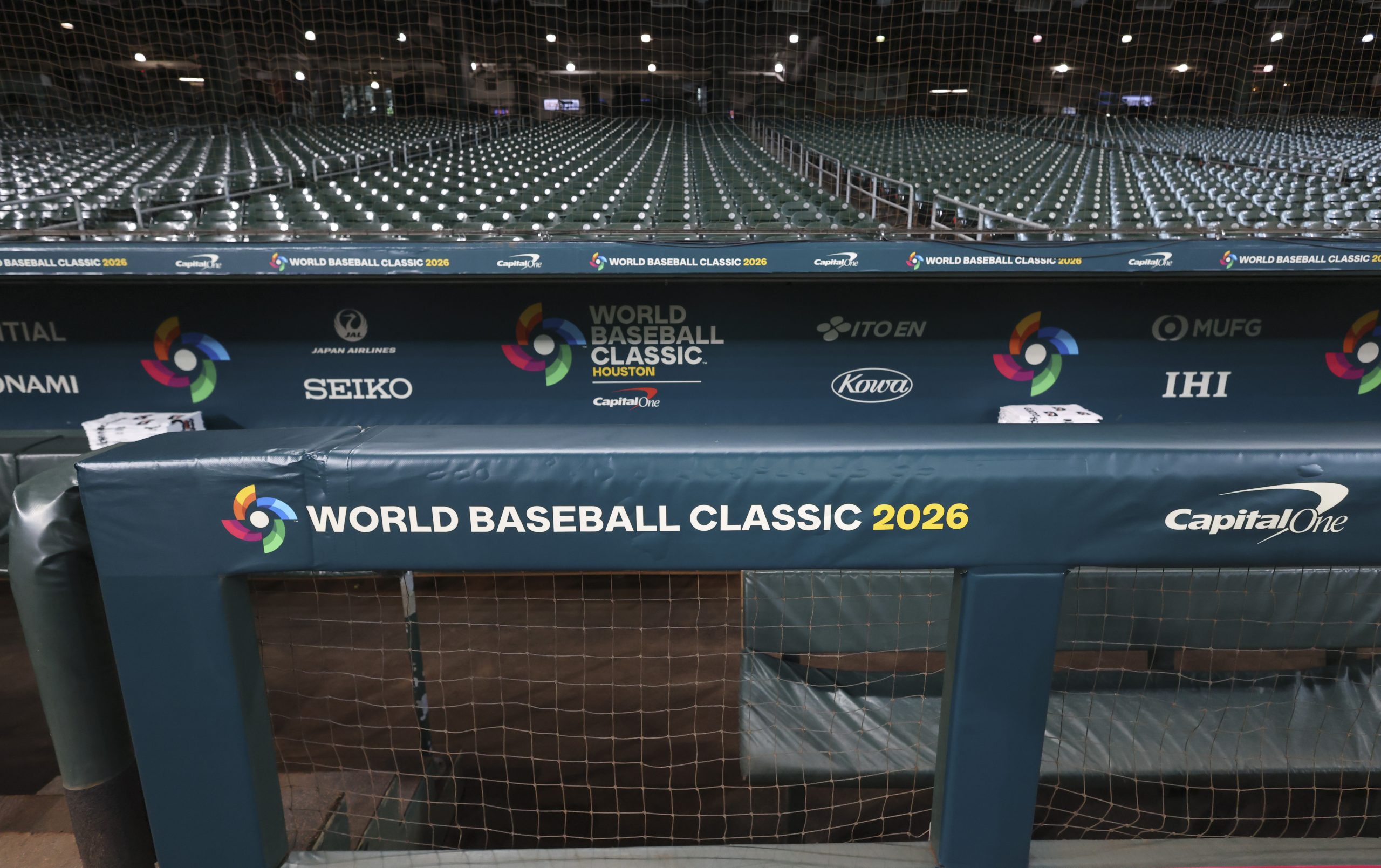
Coming off of a record-setting performance in the United States, negotiations for rights to the next World Baseball Classic will coincide with Major League Baseball’s broader media rights talks.
Rights to broadcast the next World Baseball Classic will be negotiated alongside the broader Major League Baseball rights packages in 2028, Sports Media Watch has learned. WBC rights have historically been sold separately, but MLB will have the opportunity to add the WBC to conversations that are already expected to include its full suite of local, national and global rights.
MLB commissioner Rob Manfred signaled as much on “The Dan Patrick Show” earlier this month: “Our broadcast partners were out in force at the WBC finals and I think this is going to be a piece of our national broadcasting agreements.”
Manfred conditioned that statement on the event shifting to a regular rotation: “Obviously to do that it has to be on a regular schedule.” The WBC has taken place every three or four years since its inception in 2006, and it is not immediately clear whether the next edition will be in 2029 or 2030.
Rights to this past year’s WBC were officially set mere months in advance, with Fox Sports’ deal to acquire U.S. rights announced last October. It is unclear whether the company had any competition for the event, which ended up delivering audiences in the neighborhood of World Series games.
Netflix had previously secured Japanese rights to the event in a deal announced last August.
Both Fox and Netflix are incumbent MLB rights partners and will presumably be at the negotiating table in 2028. There are six total incumbents heading into 2028, with Fox and Netflix joined by NBCUniversal, TNT Sports, Apple and ESPN — the latter of which was the initial English-language broadcast partner for the WBC in 2006 and 2009.
MLB also has a partnership with TelevisaUnivision, which has carried Game 1 of the World Series in each of the past two seasons and this past year shared WBC rights in Mexico with Disney.
The league is also widely expected to at least attempt to bundle its full suite of local rights into a centralized package, presumably drawing streamers to the table who do not currently own rights.