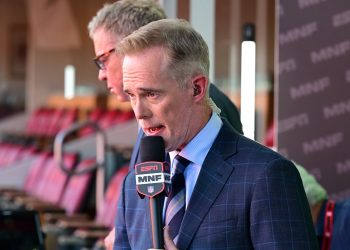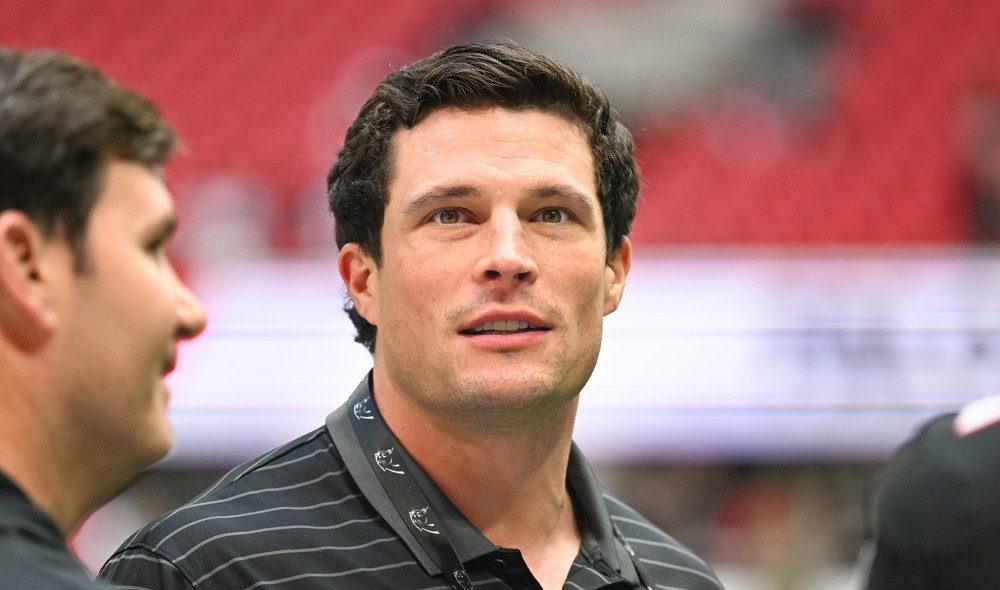
It is a good time to be Luke Kuechly. This week, the former seven-time All-Pro becomes the second-youngest inductee into the Pro Football Hall of Fame. Last week, Andrew Marchand of The Athletic reported that Kuechly would be named lead NFL analyst for Netflix. The company confirmed that news Monday.
Kuechly, 35, has a few years of broadcasting experience. He’s been a radio analyst for the Carolina Panthers since 2022, and he worked a handful of college football games for CBS Sports Network in 2024.
As Netflix expands its NFL footprint, it needed an analyst who could give the streamer a unique identity. Kuechly fits that role. Though he lacks the stature of other top voices like Fox’s Tom Brady and ESPN’s Troy Aikman, Kuechly’s fresh approach and Hall-of-Fame resume make him one of the industry’s most intriguing voices.
Pro football caters to the offense, and the broadcast booth is no different. Television’s biggest NFL analysts have almost always come from the offensive side of the ball. Brady is regarded as the greatest QB of all-time. Aikman is a three-time Super Bowl-winning QB. NBC’s Cris Collinsworth was one of the NFL’s best WRs of the 1980s. While Kirk Herbstreit never played in the NFL, he spent four years playing QB at Ohio State.
Kuechly’s perspective as one of the game’s greatest linebackers should benefit fans. But the transition won’t be without its obstacles.
Kuechly sees and communicates the game at an extremely high level. But, as Brady learned in his first year at Fox, not every snap allows for a detailed clinic on football strategy. Often, the best analysis comes in bite-sized morsels, not large chunks.
In 2024, Kuechly called a contest between Utah State and Wyoming for CBS Sports Network. Kuechly’s preparation was evident. His observations were insightful, but the pace of the game occasionally forced him to rush through his analysis before the next snap. At times, his commentary overlapped with partner John Sadak’s play-by-play.
He will also have to resist the urge to use too much football jargon. Sports media remembers former ESPN analyst Jon Gruden’s colorful “Spider 2 Y Banana.” It was clever and helped make Gruden a TV star, but it doesn’t necessarily serve the audience. Obscure terms may impress viewers, but they won’t enlighten them.
Even common football terminology requires context. While many fans know the B-gap refers to the space between the guard and tackle, analysts should never assume every viewer does. Explaining the concept is more important than simply naming it. During the Utah State-Wyoming game, Kuechly mentioned “down blocking” and “gap scheme.” If he plans on using phrases like those on Netflix, he will have to offer short explanations to ensure the audience knows what he means.
Perhaps the biggest intangible is Kuechly’s chemistry with partner Noah Eagle. Last season, the duo of Ian Eagle and J.J. Watt received widespread praise because their conversations were free-flowing and unrehearsed. Kuechly should not be expected to possess John Madden’s larger-than-life personality, but the best analysts don’t merely diagnose plays—they create conversations with their partners that give viewers a reason to listen for three hours.
Kuechly is a well-liked former player whose sharp mind and astute insights promise to bring a modern approach into the booth. If he can slow his delivery, translate complex concepts into everyday language, and develop strong chemistry with Eagle, he could — like former Panthers teammate Greg Olsen — become the NFL’s next broadcasting breakout.
Plus: Elise Woodward breaks new ground, but football’s glass ceiling remains
Elise Woodward is the new radio play-by-play voice of Washington Huskies football. Woodward, who has served as the team’s sideline reporter for more than 20 years, replaces Tony Castricone, who left to join the Tampa Bay Buccaneers radio booth following the retirement of legendary announcer Gene Deckerhoff.
“This is such an honor and a dream come true,” Woodward said in a social media post last week.
The hiring of Woodward, who is also the voice of the WNBA’s Portland Fire, was enthusiastically endorsed by one of sports television’s most prominent female broadcasters.
“Gender will not define her (Elise’s) impact and legacy,” said longtime ESPN reporter Holly Rowe on social media. “A distinguished and robust resume and her delightful personality, care for the craft and professionalism makes this an incredible hire. EARNED excellence.”
Given her longevity within the industry, Rowe’s endorsement cannot be easily dismissed. The historic nature of Woodward’s hiring — she is believed to be the first female radio play-by-play announcer in the FBS — underscores why her gender is central to the story.
When it comes to female football play-by-play announcers, the opportunities have not come easily or frequently.
In 1987, Gayle Sierens became the first woman to call play-by-play of an NFL game when she worked NBC’s broadcast of Seahawks vs. Chiefs.
In the nearly 40 years since Sierens’ groundbreaking broadcast, very few women have been given the opportunity to handle play-by-play for marquee football assignments. When those opportunities have come at lower levels, the response—particularly toward former ESPN announcer Pam Ward and, to a lesser degree, current ESPN voice Beth Mowins—has too often ranged from unfair criticism to outright cruelty.
Woodward’s hiring is worth celebrating. It reflects the headway women have made in a profession that once seemed impenetrable. At the same time, it underscores how much ground remains to be covered. No woman has called an FBS or NFL playoff game, let alone a national championship or Super Bowl. Until those opportunities are awarded because talent drives the decision, milestones like Woodward’s will remain both breakthroughs to celebrate and reminders of the barriers that still stand.