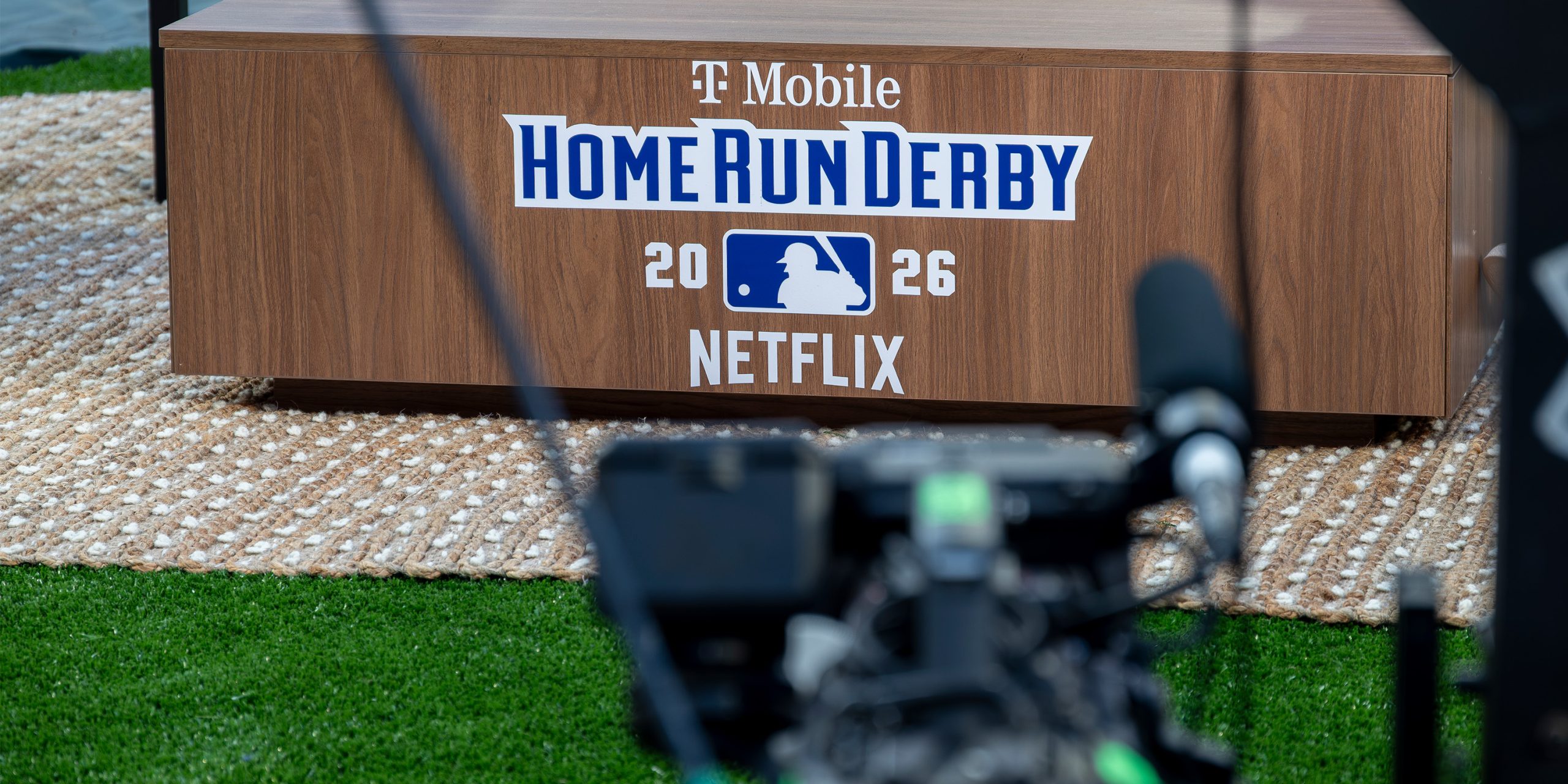
As the crowd at Philadelphia’s Citizens Bank Park cheered the home stars — and booed everyone else — during Monday’s Home Run Derby, Major League Baseball was embarking on a historic venture beyond the diamond. For the first time since the event started airing on live television in 1998, the Derby aired exclusively on Netflix.
The Home Run Derby marked the second MLB broadcast of the season for the platform, which is in the first of a three-year media rights deal that began with Opening Night and concludes next month with a game from Dyersville, Iowa at the “Field of Dreams” movie site.
Netflix has largely focused on “eventizing” live sports content rather than investing in full-season packages. As was the case for MLB Opening Night and its other sports broadcasts, the company has leaned into its broader content universe with a bevy of live integrations, promotional reads and celebrity appearances. That continued into the Derby, albeit to a lesser extent than on Opening Night.
“The Home Run Derby is one of those rare sporting events that doesn’t require extensive knowledge of the game to enjoy,” said Jonathan Mussman, VP/production for nonfiction and live at Netflix. “It’s easy to follow, highly entertaining, and built around some of baseball’s biggest personalities doing something everyone can appreciate — hitting towering home runs.”
Netflix had been criticized for the amount of promotional tie-ins and non-sports entertainment that were part of its MLB Opening Night broadcast in March, such as comedian Bert Kreischer being part of the pregame introductions, frequent promotions about other programming and first pitch occurring 20 minutes late. The company made adjustments to its Home Run Derby presentation, evident with the pregame show not having any promotional reads until the fourth segment.
Netflix, however, did have the stars of one of its new comedy series — Will Ferrell, Fortune Feimster and Jimmy Tatro — deliver commentary during the pregame introductions, a segment that was not well received on social media.
“Opening Night gave us the opportunity to establish a strong production foundation for MLB on Netflix, and every live event since then has helped us refine that approach,” Mussman said. “We came away with a better understanding of how to blend the traditions baseball fans expect with the premium, cinematic presentation that defines our sports broadcasts.”
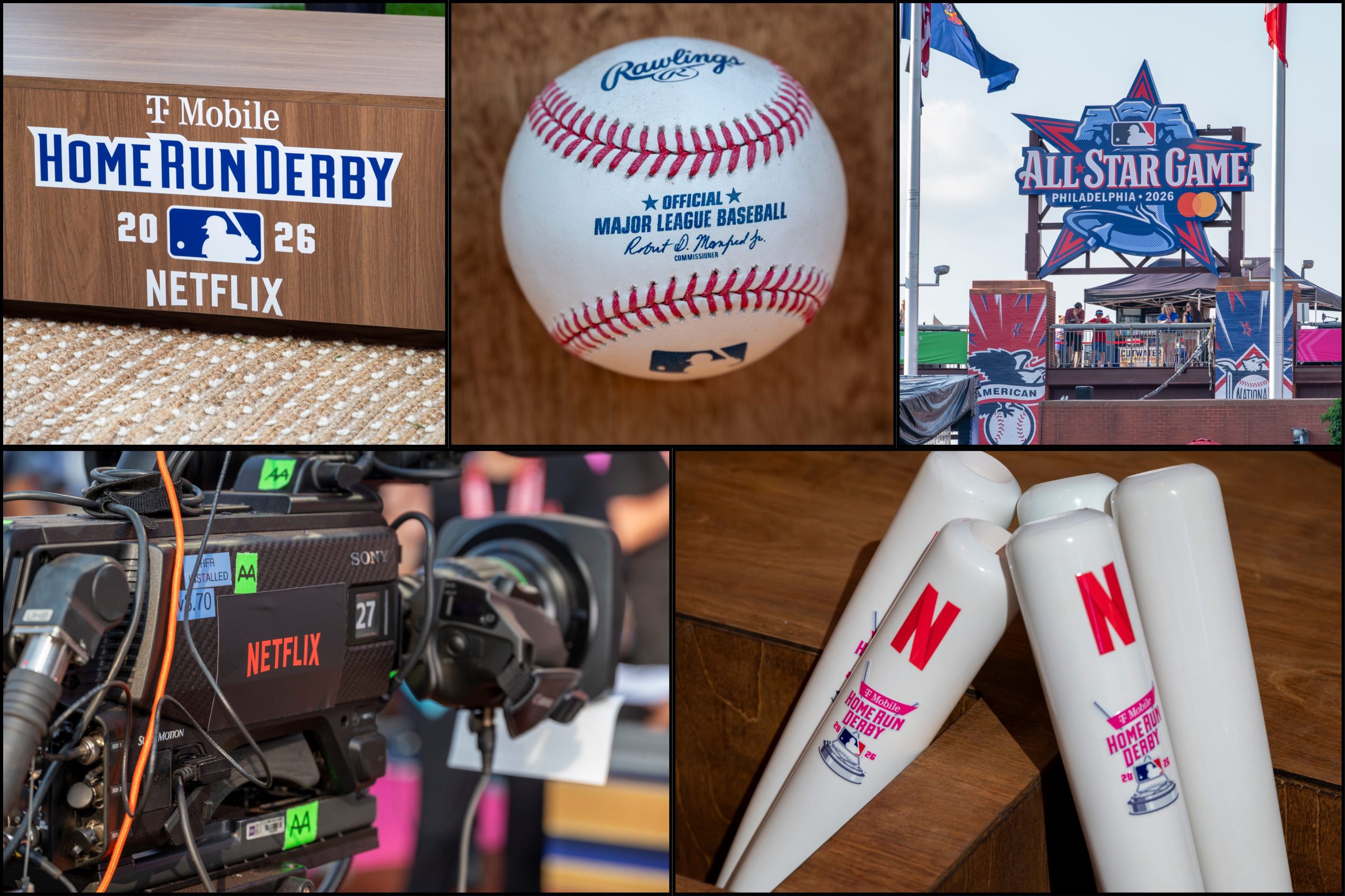
Philadelphia fever
Netflix highlighted the history of Philadelphia with feature pieces about the city narrated by former Phillies third baseman Mike Schmidt and actress Quinta Brunson. The broadcast also showcased Citizens Bank Park, a venue that predominantly benefits hitters with 15% more home runs than league average and has distinctive idiosyncrasies such as Ashburn Alley and a replica of the Liberty Bell that illuminates for Phillies home runs and victories.
“Citizens Bank Park has an incredible atmosphere, and Philadelphia has been waiting decades to host All-Star festivities again, so we want viewers to feel that excitement throughout the show,” Mussman explained, adding that the goal was to “showcase not only the competition, but also the fun energy of the fans and the city.”
Phillies superstars Bryce Harper and Kyle Schwarber participated in the Home Run Derby in front of the home crowd, marking the first time in eight years that multiple players from the host team took part in the event. They faced off against a field that included Yankees 1B Ben Rice, Rays 3B Junior Caminero and Cardinals OF and eventual champion Jordan Walker.
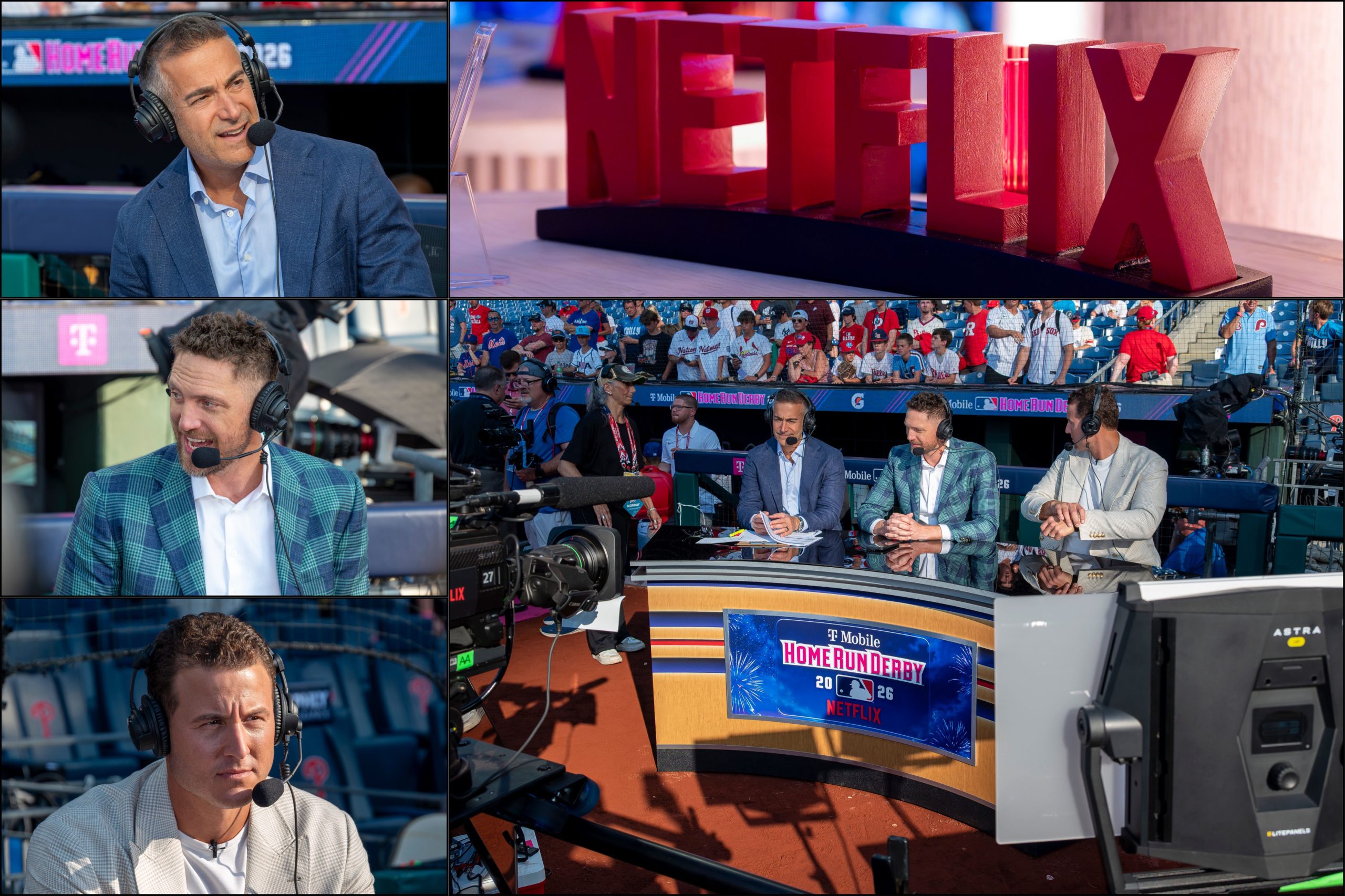
MLB adopted a new format for the event this year, eliminating the timer and moving to a system limiting the number of swings, something that paid dividends in watching the home runs travel over the fence on the Netflix broadcast. Over the last several years, some viewers had complained about being unable to focus on specific home runs since the hitters tried to take as many swings as possible. The competition has faced other alterations over the years, including restrictions on the number of pitches, eliminating head-to-head matchups and earning bonus time based on the distance of home runs.
“The updated format gives viewers more opportunity to appreciate each swing rather than immediately rushing to the next one,” Mussman said. “From a production standpoint, those extra moments provide better coverage and an opportunity to showcase everything happening on the field — from following the flight of the baseball to incorporating tracking technology, replay angles, and additional context around each home run. We’re pretty sure our viewers will appreciate the adjustment.”
From ESPN to Netflix
ESPN, which had held rights for the Home Run Derby dating back to 1993, is no longer airing the competition, a resolution that came after a mutual opt-out last spring of its reported $550 million/year media rights deal.
After several months of uncertainty around the future of baseball on the cable network, the two sides reached an agreement that granted ESPN new rights to local in-market and out-of-market games, plus a 30-game schedule of national windows. The rights ESPN gave up — Opening Night, “Sunday Night Baseball,” the Wild Card Round and the Derby — went to a combination of Netflix and NBC Sports. The new contracts are functionally a stopgap as the league seeks to sell both local and national rights following the 2028 season.
The Home Run Derby moving to Netflix from ESPN added reach of approximately 30 million domestic households. Yet viewership for the event declined 8% from the previous year on ESPN despite the larger distribution. It was the least-watched Derby since 2003, though with a median age of 44.3, it was also the youngest-skewing since 2014.
Netflix placed the contest alongside other content spanning multiple genres, including video editions of podcasts from The Ringer, Spotify and Barstool Sports under partnerships with the companies. Executives at Netflix “are also focused on what other sports events they can add to the streaming service” and may also become available through bundles with other platforms, according to a report by Jessica Toonkel and Ben Fritz of The Wall Street Journal.
The field-level broadcast
As the first and only non-game MLB broadcast in its rights deal this season, Netflix opted not to have commentators situated in a traditional broadcast booth. On the contrary, the broadcasting trio of Matt Vasgersian, Hunter Pence and Anthony Rizzo documented the action located behind a desk just in front of the first-base dugout, and Lauren Shehadi and CC Sabathia interviewed players and personnel in reporter roles.
Vasgersian belted out his familiar “Santa Maria!” call when Walker, on the verge of elimination, hit six consecutive home runs to defeat Schwarber in the final round to win the event. The performance left the fans at Citizens Bank Park stunned as they exited the stadium.
Rather than altering the Home Run Derby presentation in its entirety, the company made enhancements to the presentation, including the creation of a new set down the third-base line. The environment resembled a lounge and featured host Elle Duncan alongside former Home Run Derby participants Barry Bonds and Albert Pujols, bringing back the studio team that was part of MLB Opening Night.
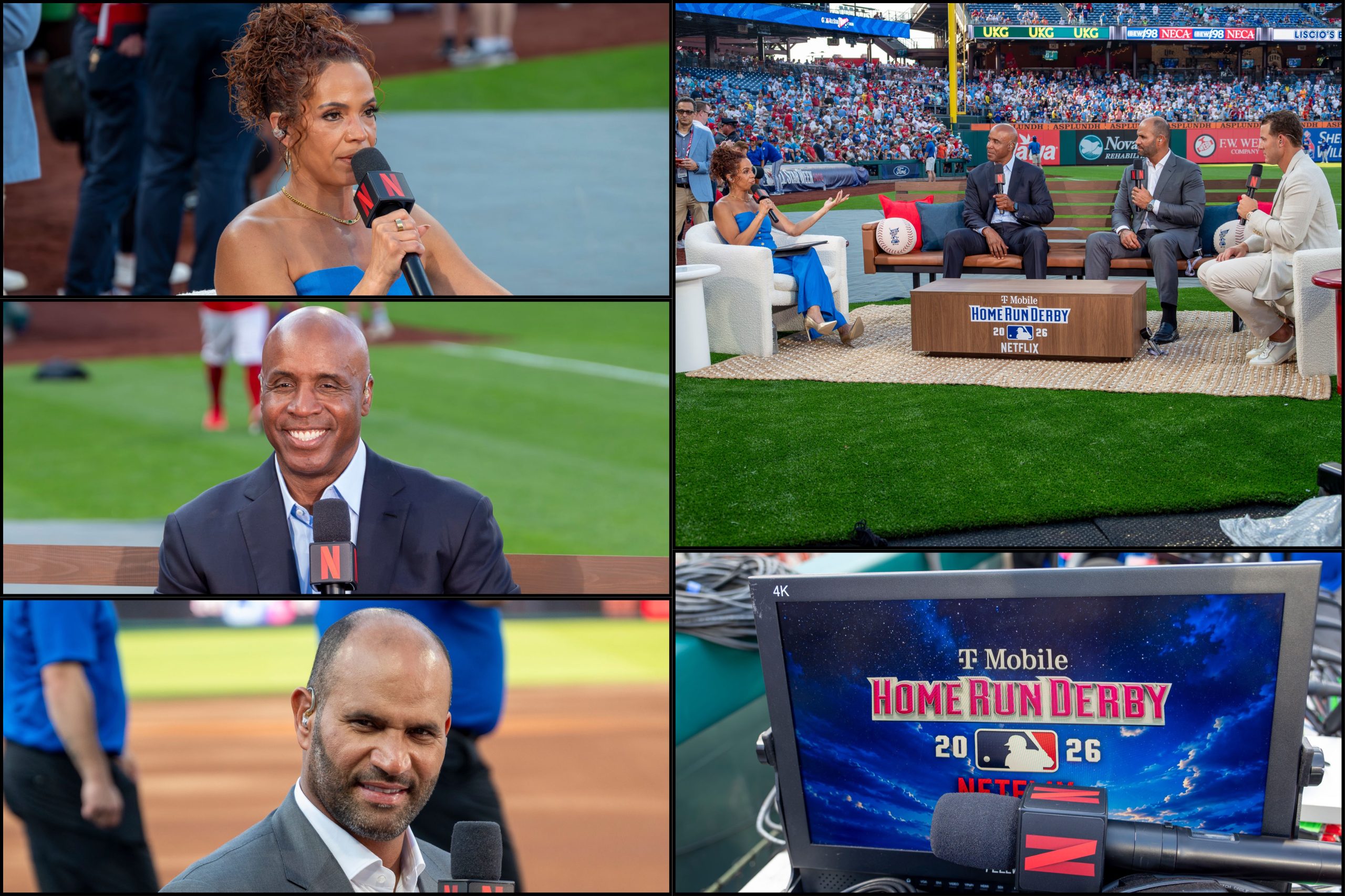
Duncan did not primarily cover baseball while she was at ESPN, but she kept up with the league as a “SportsCenter” anchor and grew up playing the sport. Under her new role with Netflix that she began last December, she is tasked with covering live sporting events ranging from MLB and NFL games to heavyweight bouts and made-for-TV stunts. Her first Netflix live assignment was covering Alex Honnold free solo climbing 1,667 feet to the top of Taipei 101, a spectacle that garnered social buzz and viewership on the platform.
Duncan worked with Bonds, Pujols and Rizzo on Opening Night, and while there is continuity, she is ultimately navigating between different properties and casts of characters.
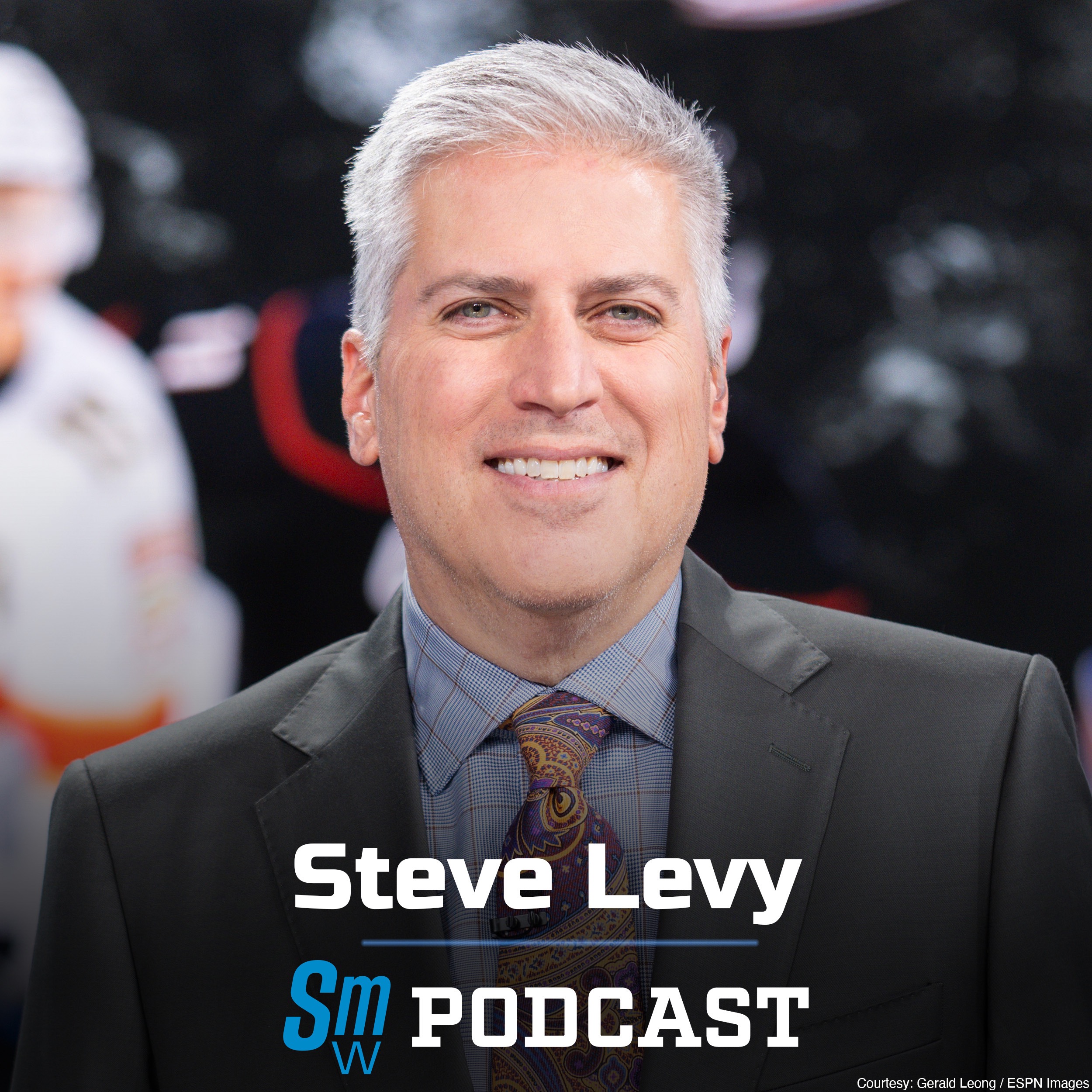
“I have to work with a different desk almost every single event that I do, and so I want to be a master of that area,” Duncan said in an interview on the “Sports Media Watch Podcast” this month. “I want to master knowing my teammates. ‘What gets them interested? What lights them up? What’s their story, and how contextually does it provide more for this broadcast?’ That is what I’ve really tried to live, and that, for me, as I’m indoctrinating myself to these new spaces, that’s a thing that I can control and handle.”
Netflix started preparing for the Home Run Derby months in advance, planning production, operations and engineering, along with the company’s league partners. The scheduling and timing for the contest is precise, something that presumably harkens back to Mussman’s days working in live event production on the Video Music Awards, Grammy Awards and Golden Globe Awards.
Although the shows are focused on different subject matter, there are clear parallels.
“While some broadcasters incorporate scripted elements — like presenter notes or teleprompter copy — the true magic of live television, whether in entertainment or sports, lies in the element of surprise,” Mussman said. “The audience simply never knows what will happen next. In entertainment, it might be a raw, unscripted acceptance speech; in sports, it’s the ultimate drama of an unpredictable outcome.”
Producing the Derby
The final moments of the Home Run Derby were in stark contrast to MLB Opening Night when the Yankees held the Giants to three hits in a 7-0 shutout victory. Whereas that game was effectively decided by the third inning, the Derby came down to the final swing.
Walker, 24, became the first Cardinals player and fifth youngest overall hitter to prevail at the event. Furthermore, he continued a trend of first-time participants winning the Home Run Derby that started three years ago when Dodgers outfielder Teoscar Hernández won in his first attempt.
“We always have to find the balance of ensuring enough rehearsal time while allowing other events to occur,” Mussman said. “Once we’re on site, rehearsals become about validating those plans. We walk through camera movements, graphics, timing, communications, and contingency scenarios so that everyone is prepared to adapt in real time. Live television, especially sports, is inherently unpredictable, so the goal isn’t to rehearse every possible outcome — it’s to build a team and workflow ready for whatever happens, as we owe it to our viewers.”
MLB Network is helping with production for all Netflix MLB broadcasts this season, as it did earlier in the week for NBC Sports’ presentation of the MLB Draft, and every week for the Peacock “Sunday Stretch” whiparound show. Beyond the league’s new media rights partners, MLB Network continues to collaborate with Apple TV on production for “Friday Night Baseball” and assisted Roku for MLB Sunday Leadoff games last season.
“This is part and parcel to everything we’ve done since our beginning,” said Marc Caiafa, SVP/production at MLB Network. “So this really plays into the fact that we’ve become, really, a production home for all of baseball, and we help, whether big or small, we help in the production of most baseball events.”
Stepping up to the plate
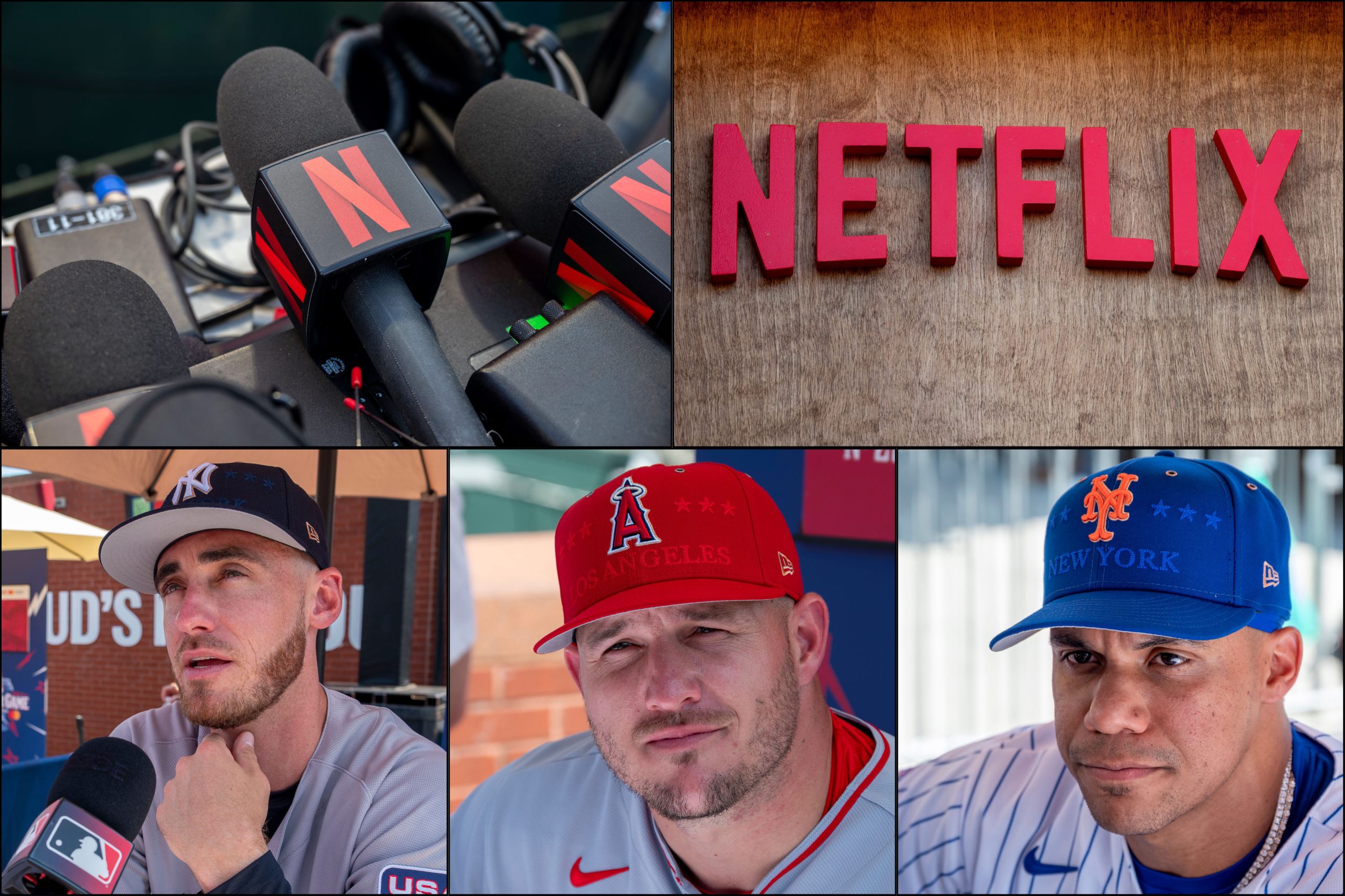
Earlier in the year, NFL commissioner Roger Goodell suggested in an interview with Lachlan Cartwright of Vanity Fair that Netflix has larger broadcast distribution than some of the networks. Yankees outfielder Cody Bellinger, a former Home Run Derby participant who competed in 2017 against current teammates Aaron Judge and Giancarlo Stanton, expressed a similar sentiment, saying that it feels “as if everyone has Netflix nowadays” — and that the streamer provides “an opportunity to get a lot of eyes on” the Derby.
The Mets’ Juan Soto was even more enthusiastic. “I think it’s going to be great,” he said ahead of the competition. “It’s going to be really good for baseball that we’re going to be [on] a stream and a platform that probably it hasn’t been, and it’s incredible [that] so many people around the world, not only baseball fans, but all kind of fans are going to be able to watch it.”
Hall of Famer and former Fox Sports television analyst Frank Thomas — who said in an appearance on an upcoming “Sports Media Watch Podcast” that he had conversations with Netflix and NBC about an on-air role — also praised the Netflix deal. “Netflix has been incredible with live sports, so I’m sure it’s going to be a great show,” Thomas said of the Home Run Derby. “Over the years, I think it just, it ran its course on ESPN. Chris Berman was the best with the ‘Back, back, back, back, back, back,’ but it’s evolved into something different.”
Although Angels outfielder Mike Trout has hit more than 400 career home runs during his ongoing 16-year MLB career, he has never participated in the Home Run Derby. Trout said before the event Monday that one of his children wants him to participate and that he may take part in the future. When asked about Netflix broadcasting the Home Run Derby over ESPN, he said he was “looking forward to it” and that “it’s something different.”
Netflix has more than 325 million paid subscribers and is actively expanding its advertising tier, generating additional revenue for the platform as it operates in an increasingly competitive streaming ecosystem. The streamer received a $2.8 billion termination payment after its bid to acquire Warner Bros. Discovery was derailed by Paramount. Netflix co-CEO Ted Sarandos has said that those funds will be reinvested in the business, presumably including any live sports acquisitions.
The company has interest in obtaining rights for the next two FIFA men’s World Cup tournaments, according to a report by Alex Sherman of CNBC. Netflix signed a deal to stream the next two women’s editions of the FIFA World Cup and also inked an expanded, five-game agreement with the NFL.
The NFL slate for the upcoming season includes the pre-existing Christmas Day doubleheader, plus a standalone Thanksgiving Eve contest, a Week 1 matchup from Melbourne, Australia, a Saturday matinee in Week 18 and the NFL Honors awards show.
After Walker won the Home Run Derby on Monday night, Netflix held a brief postgame show in which the All-Star outfielder spoke with the studio panel from the lounge set. Bonds, the league’s all-time leader in home runs and former Derby winner, called what transpired the greatest version of the event he had ever witnessed. The Derby ‘led in’ to a new spinoff series of “Hot Ones,” further leaning into the entertainment programming that helped build the streaming platform into a media powerhouse.
“That’s exactly the kind of live event that fits well on Netflix,” Mussman said of the Home Run Derby. “It appeals to dedicated baseball fans while also giving casual viewers an accessible entry point into the sport. Our goal is to present it in a way that’s exciting for longtime fans and welcoming for people who may be watching a baseball event for the very first time.”